
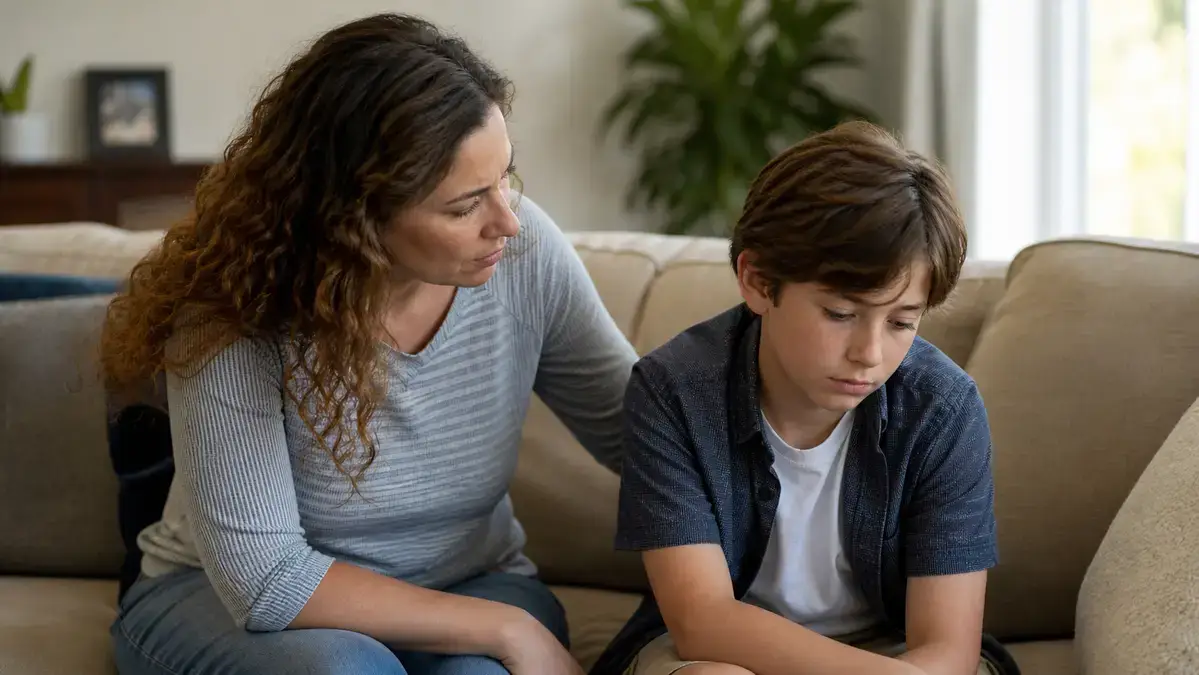
6 Signs Your Child Needs Counseling
Written By: Michael Vale, Content Writer
Medically Reviewed By: Dr. Cathy Colet, Psy.D., Licensed Psychologist
Last Reviewed: May 13, 2026
If your child has become more defiant, withdrawn, or emotionally unpredictable over the past few weeks, those aren’t just phases to wait out. They’re signals. The CDC reports that roughly 1 in 5 children ages 3 to 17 have been diagnosed with a mental, emotional, or behavioral condition, and about half of those kids still aren’t getting treatment. The gap between a rough week and a real problem can feel impossible to measure from the inside. But specific patterns do emerge, and they’re more recognizable than most parents realize.
The most common signs your child needs counseling include persistent defiance, sudden changes in eating or sleeping habits, excessive worry or sadness lasting more than two weeks, behavioral regressions, social withdrawal, and any form of self-harm. These patterns often appear together, and early professional intervention shortens the course of treatment and improves outcomes.

Is Your Child’s Defiance More Than a Phase?
Every kid pushes back. That’s normal development. The difference between healthy boundary-testing and a warning sign comes down to pattern and intensity.
A child who argues about bedtime is being a kid. A child who argues about everything, from what’s for dinner to putting on shoes, with escalating anger across multiple settings (home, school, extracurriculars), is telling you something they can’t put into words. I’ve seen this pattern dozens of times in evaluations: the behavior looks like stubbornness, but underneath it’s anxiety, frustration, or a reaction to something the child doesn’t know how to process.
Talk to teachers and coaches. If they’re seeing the same escalation you are, that’s your confirmation. A child acting out in one setting might be responding to that specific environment. A child acting out in three or four settings is asking for help. It’s also worth knowing that persistent defiance is one of the most common early presentations of ADHD, and a neuropsychological evaluation for ADHD can distinguish between behavioral issues and an underlying attention disorder.

Have Their Eating, Sleeping, or Daily Habits Changed?
Sudden shifts in sleep, appetite, or interest in activities they used to enjoy are among the clearest early signs your child needs counseling. These changes often show up before emotional symptoms do.
A 2025 Mental Health America report found that 15.4% of youth experienced a major depressive episode, and the most frequent early indicators were disrupted sleep and loss of interest in daily activities. If your child suddenly stops caring about soccer, starts sleeping 12 hours a day, or barely touches meals they used to love, pay attention to the timeline. Two weeks is the benchmark. Changes lasting longer than that warrant a conversation with their pediatrician, who can screen for emotional causes and refer to a specialist if needed.
A neuropsychological evaluation can also help rule out cognitive or developmental factors that sometimes look like mood problems on the surface.
Does Your Child Seem Excessively Worried or Sad?
Worry and sadness are normal parts of childhood. But when those feelings stop being situational and start becoming the default, you’re looking at something different.
The National Institute of Mental Health notes that anxiety disorders affect roughly 7% of children ages 3 to 17, making them the most common childhood mental health condition. What makes anxiety tricky is that it often doesn’t look like what adults expect. In younger kids, it shows up as stomachaches, headaches, and refusal to go places. In older kids, it can look like perfectionism, irritability, or constant reassurance-seeking.
If your child has been persistently sad or anxious through situations that would normally make them happy (a birthday, seeing friends, a family trip), that’s a signal worth acting on. Don’t wait for them to articulate it. Most kids can’t. A neuropsychologist can assess whether cognitive or emotional factors are driving the anxiety, which shapes what kind of treatment actually works.
Why Is My Child Regressing to Younger Behaviors?
Regressions are when a child returns to behaviors they’ve already outgrown: bedwetting after months of dry nights, baby talk, extreme clinginess, or tantrums they grew out of a year ago.
Some regressions make sense in context. A new sibling, a move, a divorce. But when regressions appear without an obvious trigger, that’s when most professionals start paying closer attention. These behaviors are the child’s nervous system saying, “I can’t handle what’s happening right now, so I’m going back to what felt safe.”
Kids involved in family court situations or custody transitions are especially prone to regression. In these cases, a forensic psychology evaluation can provide court-admissible documentation of the child’s emotional state, which often informs better custody and support decisions.
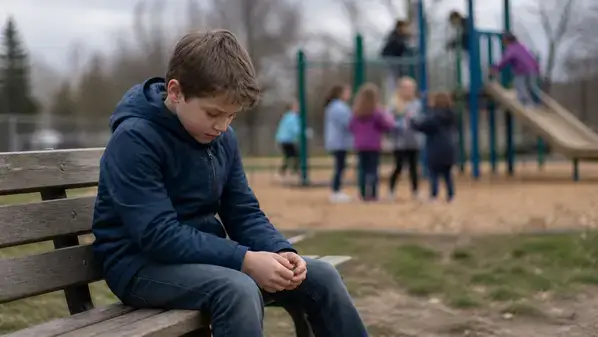
What Does Social Withdrawal Look Like in Kids?
A child pulling away from friends and family is one of the most reliable signs your child needs counseling, and one of the easiest for parents to rationalize away.
“They’re just introverted.” “They’re going through a phase.” Maybe. But if your child used to have playdates and now eats lunch alone, if they avoid birthday parties they would have been excited about six months ago, or if they’ve lost interest in leaving the house entirely, those aren’t personality traits. Those are symptoms.
CDC data from 2025 shows that 20% of adolescents ages 12 to 17 reported unmet mental health needs. Social withdrawal is often the behavior that parents notice last, because a quiet child is easier to live with than a defiant one. But isolation is where depression and anxiety gain momentum.
When Should You Take Self-Harm Talk Seriously?
Always. Every time. Without exception.
Self-harm in children doesn’t always look like cutting. In younger kids, it can show up as head-banging, hitting themselves, scratching until they bleed, or digging nails into their skin. In older children and teens, it may include cutting, burning, or expressing hopelessness through statements like “nobody would care if I wasn’t here.”
The AACAP recommends that all treatment decisions be made collaboratively between providers, patients, and families. That process starts with getting your child in front of a qualified professional as soon as you notice these behaviors. Don’t try to assess severity on your own. What looks minor to you may be the visible edge of something much bigger.
If your child is in immediate danger, call 988 (the Suicide and Crisis Lifeline) or go to your nearest emergency room.

What Should You Do If You Spot These Signs?
The single biggest mistake parents make is waiting too long. Therapists consistently report that families who delay until crisis end up in longer treatment cycles. A typical course of child therapy runs 8 to 16 sessions, and early intervention often means fewer sessions overall. Waiting until behaviors escalate doesn’t just hurt your child. It makes the whole process take longer.
Start with your pediatrician for a screening. If they recommend a specialist, ask specifically about the provider’s training with children (play therapy for younger kids, CBT for anxiety and depression in older ones). The APA’s 2026 reporting on childhood mental health trends emphasizes that prevention-focused care integrated into schools and primary settings produces the best outcomes.
For families going through custody disputes, court-ordered evaluations, or situations where a child’s behavior has legal implications, a professional psychological evaluation can give you a clinical picture that goes beyond surface-level observations. FC Psych Experts provides forensic and neuropsychological evaluations across Florida, with psychiatry services that connect the diagnostic side with treatment planning.
One thing I’ve learned from working with experienced content and marketing teams in the mental health space: families search for these answers at 2 AM, panicking. The information needs to be clear, direct, and actionable. If you’re reading this and recognizing your child in these descriptions, trust your instincts. The worst outcome of an unnecessary evaluation is peace of mind. The worst outcome of waiting is a problem that gets harder to fix.
FAQS
How do I find the right therapist for my child?
Start with your pediatrician for a referral. Ask specifically about the therapist’s training with children, including whether they use play therapy (better for ages 3-12) or CBT (stronger for anxiety and depression in teens). Choosing a therapist trained in child-specific methods from the start avoids the common problem of cycling through multiple providers before finding a good fit.
At what age can a child start counseling?
Children can begin therapy as young as age 3 through play-based approaches. The CDC reports that 21% of children ages 3 to 17 have been diagnosed with a mental, emotional, or behavioral condition, and evidence-based treatments exist for every age within that range.
How long does child counseling usually take?
A typical course of child therapy runs 8 to 16 sessions for short-term issues like adjustment problems or mild anxiety. More complex conditions may require longer treatment. Early intervention consistently shortens the total number of sessions needed.
What are common signs your child needs counseling at school?
School-specific warning signs include falling grades, frequent trips to the nurse’s office for vague complaints, difficulty concentrating, conflicts with peers or teachers, and resistance to attending school. Teachers and school counselors can provide useful observations, but they aren’t a substitute for a licensed child therapist.
Does my child need to want therapy for it to work?
Not necessarily. Younger children often respond well to play therapy even without understanding why they’re there. Older kids may resist initially, but therapists trained in child-specific methods know how to build rapport. Parental involvement is the stronger predictor of outcomes than a child’s initial willingness.
What’s the difference between a school counselor and a child therapist?
School counselors handle academic and social guidance within the school setting. Licensed child therapists hold advanced clinical degrees and provide diagnosis and treatment for mental health conditions. About 20% of adolescents report unmet mental health needs despite having access to school counseling resources.
Will a child therapist prescribe medication?
Therapists (psychologists, LCSWs, LMFTs) don’t prescribe medication. If medication is recommended, they’ll refer to a child psychiatrist. The AACAP recommends that all medication decisions for children be made collaboratively by the provider, patient, and family.

Dr. Cathy Colet, Psy.D., is a Licensed Clinical and Forensic Psychologist and founder of FC PsychExperts in Jupiter, Florida. She provides expert witness testimony across criminal, family, and immigration law, with advanced training in competency evaluations, criminal responsibility, child custody assessments, and VAWA hardship waivers.