

What To Expect In An Immigration Psychological Evaluation
Written By: Michael Vale, Content Writer
Medically Reviewed By: Dr. Cathy Colet, Psy.D., Licensed Psychologist
Last Reviewed: June 12, 2026
If your immigration case hinges on hardship, trauma, or fear of returning home, an immigration psychological evaluation can be the evidence that makes an officer take your story seriously. It is a formal assessment by a licensed psychologist that puts your mental health in writing and ties it to the legal question your case turns on. It supports your case; it does not replace your attorney.

What Is an Immigration Psychological Evaluation?
An immigration psychological evaluation is a forensic mental health assessment by a licensed psychologist that documents trauma, symptoms, and functional impairment for an immigration case. It is used in asylum, extreme hardship waivers, VAWA, and U or T visa petitions, and it links the clinical findings to the legal standard the case must meet.
Here is the part people miss. This is not therapy. It is a forensic evaluation with one job, answering a legal question in a report that goes to USCIS or an immigration judge. An evaluator assesses you in a few hours and writes findings the government will read.
Why These Evaluations Carry Real Weight
A strong evaluation turns a personal story into documented clinical evidence, and in 2026 that counts more than before. The U.S. has 46 million immigrants, about 14% of the population, and many delay mental health care out of fear or cost, so most applicants arrive with real symptoms no one has written down. The report documents the trauma behind an asylum claim or what removal would do to a U.S. citizen spouse or child. Does it guarantee approval? No. One California practice reported an 81.6% grant rate with forensic reports in 2026, but that is a single provider’s number, not controlled data.
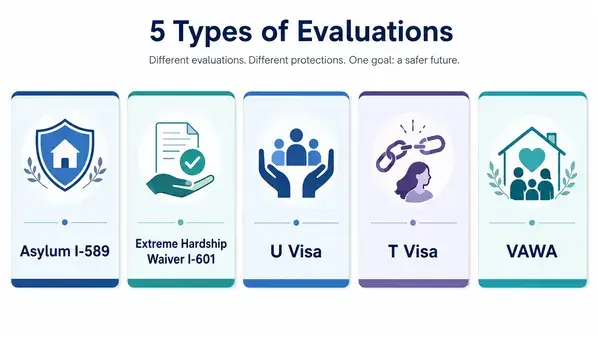
Types of Immigration Evaluations Explained
Not every case needs the same evaluation. The case type sets the questions the psychologist must answer.
| Case Type | What the Evaluation Documents |
| Asylum (Form I-589) | Trauma from persecution, PTSD or depression, fear of return, and credibility. |
| Extreme Hardship Waiver (I-601 / I-601A) | The harm a U.S. citizen or resident relative faces if you are removed. |
| U Visa | Harm from a serious crime and cooperation with law enforcement. |
| T Visa | Trauma from trafficking and ongoing safety fears. |
| VAWA | Abuse-related trauma and its effect on daily functioning. |
| N-648 (naturalization) | A condition that blocks learning English or civics; needs a physician or psychologist. |
U visas are capped at 10,000 a year, a limit USCIS has hit every year since 2010, so timing your evidence matters.
Extreme Hardship Waivers and the Qualifying Relative
The hardship waiver is the type we see most, and it surprises people, because it often is not about the immigrant at all. It is about the qualifying relative, the citizen or green card holder left behind or forced to move. Strong reports name specifics, a child’s developmental needs, a spouse’s depression.
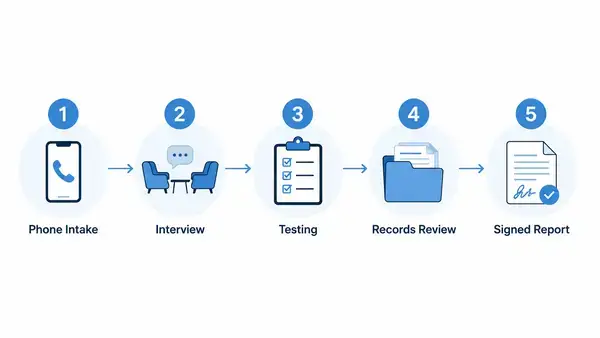
Inside the Evaluation Process, Step by Step
Most evaluations follow the same path from first call to final report.
1. Intake call to map your case, deadline, and legal standard, often with your attorney.
2. Clinical interview, the core. Expect two to four hours, sometimes split over two visits.
3. Psychological testing for trauma, mood, and response style.
4. Records review of medical, mental health, legal, and school documents.
5. Written report tied to the legal standard, then sent to you and your attorney.
How Do You Choose a Qualified Evaluator?
Pick the wrong evaluator and a weak report can sink a strong case. The biggest filter is real immigration and forensic experience, not just a therapy license. About 204,300 licensed psychologists work in the U.S., and only a small slice do immigration work, so look for someone who does these often, knows the legal standards, runs testing, and matches your language and culture. The American Psychological Association’s trauma-informed, culturally responsive standards are the bar to expect.
The mistake I see most? People ask their own therapist to write the report because that person knows them best. Don’t. APA ethics warn against one clinician being both your therapist and your evaluator, because it kills the objectivity officers want.
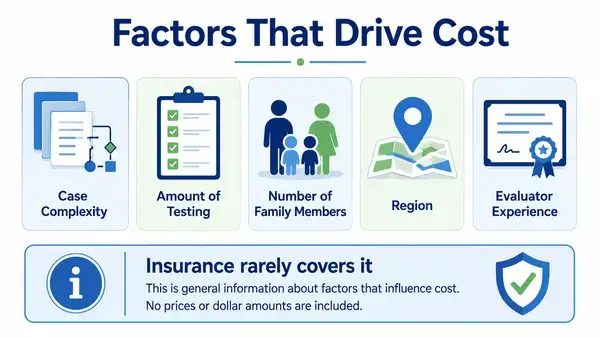
How Much Does an Immigration Psychological Evaluation Cost in 2026?
The honest answer is that it depends. Cost moves with case complexity, how much testing is needed, how many family members are involved, your region, and the evaluator’s experience. There is no government or research-backed national figure, so treat any flat price you see quoted online with caution.
One thing stays consistent. Insurance almost never covers it, because it is a legal assessment, not medical treatment. Plan to pay out of pocket, and ask any provider about deposits and payment plans up front.
Preparing for Your Evaluation
What you do before the interview shows up in the final report.
1. Schedule early, eight to twelve weeks out. Tighter means a rushed report, so book a consultation well ahead.
2. Gather records: medical and mental health history, prior evaluations, immigration forms, police or school records.
3. Write a timeline of key events and when symptoms started, so the clinician can connect cause and effect.
4. Track symptoms, sleep, mood, and anxiety, for a week or two.
5. Be honest, including the hard parts. Many applicants also see a separate clinician for ongoing trauma therapy.
What a Strong 2026 Report Looks Like
A strong report is detailed, individualized, and tied to the legal standard. USCIS and the immigration courts have gotten stricter, and short or template reports now work against you. Reviewers now flag hardship reports under roughly eight pages. A report that holds up usually runs eight to ten pages or more, uses DSM-5-TR diagnoses, shows impaired functioning, and ties every finding to the exact legal question. Actually, that isn’t quite right. Length is not the point. A padded ten-page report full of generic language is as weak as a short one. What reviewers want is specifics tied to your life and your case.
Getting Started with FC PsychExperts
An immigration psychological evaluation is one of the few pieces of evidence you control: who does it, how prepared you are. At FC PsychExperts, our licensed psychologists across Florida handle immigration psychological evaluations for asylum, hardship waivers, VAWA, and U and T visa cases, in person and online. If a deadline is coming, start early so there is time to do it right.
FAQs
Can my own therapist write my immigration psychological evaluation?
It is usually a bad idea. APA ethics caution against the same clinician acting as both your treating therapist and your forensic evaluator, because the dual role undermines objectivity. Reviewing officers and experienced attorneys often give less weight to a report written by your own therapist.
How long does an immigration psychological evaluation take?
The clinical interview usually runs two to four hours and can be split across two visits. After that, most evaluators deliver the written report in about two to four weeks, though rush turnaround is sometimes available for an added fee.
Does insurance cover an immigration psychological evaluation?
Almost never. Because the evaluation is a forensic, legal assessment rather than medical treatment, it is typically paid out of pocket. Ask about payment plans, and expect to leave a deposit before the work begins.
How many pages should the report be?
Strong reports usually run eight to ten pages or more. Since 2025, reviewers have flagged short or template-style reports under about eight pages in hardship cases, so detail and individualized analysis matter more than ever.
Can the evaluation be done online?
Often, yes. Many evaluators offer telehealth interviews, which can widen access to bilingual or specialized clinicians. For complex forensic cases an in-person session is sometimes preferred, and acceptance can vary, so confirm with your evaluator and attorney.
How far in advance should I schedule?
Aim for eight to twelve weeks before your USCIS or court deadline. Four to six weeks is the practical minimum, and tighter timelines usually mean a rushed, weaker report.

Dr. Cathy Colet, Psy.D., is a Licensed Clinical and Forensic Psychologist and founder of FC PsychExperts in Jupiter, Florida. She provides expert witness testimony across criminal, family, and immigration law, with advanced training in competency evaluations, criminal responsibility, child custody assessments, and VAWA hardship waivers.