

What Happens If You Violate Court-Ordered Rehab In Florida
Written By: Michael Vale, Content Writer
Medically Reviewed By: Dr. Cathy Colet, Psy.D., Licensed Psychologist
Last Reviewed: September 15, 2026
Leaving court-ordered rehab early in Florida is a violation, but it is not automatically the kind that puts you in front of a judge. Florida Statute 948.06 runs two separate tracks. A missed treatment session sits on the statute’s low-risk technical list, and your probation officer can resolve it through an alternative sanctioning program without filing anything with the court. A violation an officer treats as material runs the other way. Under 948.06(1)(a), any probation officer, or any law enforcement officer who knows your supervision status, can arrest you without a warrant, wherever you are. No notice, no waiting period. Which track you land on depends far less on the fact that you walked out and far more on what gets written down in the days after.
A court-ordered rehab violation in Florida is any failure to meet a treatment condition a judge attached to probation or community control. Florida Statute 948.06 governs what follows. The statute lets a probation officer resolve listed technical violations through alternative sanctions, and separately lets any aware officer arrest without a warrant when the grounds are material.

What Counts as Violating Court-Ordered Rehab in Florida?
Missing sessions, leaving before discharge, testing positive, and failing to enroll all count. What matters is which list your conduct lands on.
Section 948.06(9)(b) names 11 low-risk technical violations by statute. Four of them are things that happen routinely to someone in treatment:
| Statute item | What it says | How it shows up in treatment |
|---|---|---|
| 948.06(9)(b)1. | Positive drug or alcohol test result | A relapse during the program |
| 948.06(9)(b)2. | Failure to report to the probation office | A missed check-in while in residential care |
| 948.06(9)(b)4. | Failure to attend a required class, treatment or counseling session, or meeting | Walking out, or a run of missed sessions |
| 948.06(9)(b)5. | Failure to submit to a drug or alcohol test | Skipping a screen after a bad week |
The list also covers curfew violations, leaving the county without permission, failing to report an address or employment change, associating with someone engaged in criminal activity, missing a monthly quota on court-ordered conditions, and any other violation a circuit adds by administrative order.
Notice what is not on it. New criminal conduct is not a technical violation. Neither is anything a probation officer decides is material under 948.06(1)(a). That judgment call, made by one person who may never have met your clinician, is the real fork in the road.

Does Leaving Rehab Early Trigger a Warrant?
Not on a clock. There is no 24-hour rule, no 72-hour rule, and no statutory countdown that starts when you walk out the door.
What exists instead is a standard. Section 948.06(1)(a) reads: “Whenever within the period of probation or community control there are reasonable grounds to believe that a probationer or offender in community control has violated his or her probation or community control in a material respect, any law enforcement officer who is aware of the probationary or community control status… or any probation officer may arrest or request any county or municipal law enforcement officer to arrest such probationer or offender without warrant wherever found.”
Read that twice. Reasonable grounds, not proof. Material respect, not any respect. Without warrant, wherever found. So the answer to “how long do I have” is that the timer was never the mechanism. The mechanism is whether someone with authority forms reasonable grounds, and that can happen the same afternoon or never.
This is also why disappearing is the worst available move. It converts a documented clinical problem into an undocumented absence, and an undocumented absence is what reasonable grounds are built from.
Who Actually Tells the Court You Left?
Usually nobody, at first. The treatment program reports to your probation officer. The probation officer decides whether the court hears about it at all.
Section 948.06(1)(c) gives that officer a choice: proceed with the alternative sanctioning program “in lieu of filing an affidavit of violation with the court.” The affidavit is the document that starts a court file. Until one is filed, there is no violation hearing to attend and no judge reviewing your case.
Our breakdown of what a court-ordered therapy evaluation covers walks through what actually goes into the report that reaches that officer. The short version: attendance, participation, and whether the clinical recommendation still matches the order. Three facts, and the first one is the only one most people think about.

The Off-Ramp Florida Law Requires Every Circuit to Have
Section 948.06(9)(a) is written as a command, not an option: “Each judicial circuit shall establish an alternative sanctioning program as provided in this subsection.”
Every circuit in Florida has to have one. Your officer may offer a sanction directly instead of sending the matter to a judge. This is the part that contradicts most of what gets published about court-ordered treatment, including pages that tell readers a missed session means jail. For the 11 listed technical violations, the statute’s default is the officer, not the courtroom.
Compare that with how the drug court statute is written, and the difference is deliberate. Under Florida Statute 397.334(1), each county “may fund a treatment-based drug court program.” May, not shall. Florida made the off-ramp mandatory and the drug court optional.
What You Give Up to Take an Alternative Sanction
Plenty, and almost nobody explains it before the form gets signed.
Section 948.06(9)(c) requires the participant to admit the technical violation, agree to the officer’s recommended sanction, and waive 5 named rights:
| Right waived under 948.06(9)(c) |
|---|
| To be represented by legal counsel |
| To require the state to prove guilt before a neutral and detached hearing body |
| To subpoena witnesses and present evidence |
| To confront and cross-examine witnesses |
| To receive written findings |
Three more limits sit alongside it. You have 90 days to complete the sanction, or the timeframe in the agreed sanction, before the officer may submit a violation report, affidavit, and warrant to the court. You are ineligible if you already have 3 prior low-risk violations during the same term of supervision. You are also ineligible with a prior moderate-risk violation during the current term.
So the off-ramp is real, and it is finite. Take it for a missed session you cannot defend and it may be the fastest resolution available. Take it for a departure you had a documented clinical reason for and you have just admitted a violation you might not have had to admit, with no counsel and no record of findings.
That is a legal call, and the people who make it well are the ones who got advice before signing rather than after.
What a Judge Can Do at a Violation Hearing
Three things, and one of them gets overlooked.
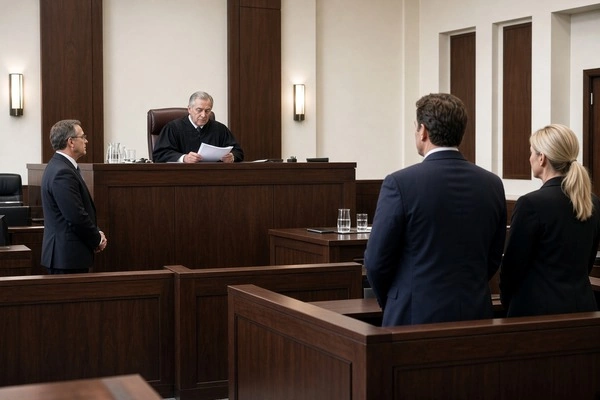
Section 948.06(2)(a) lets the court “forthwith revoke, modify, or continue the probation or community control or place the probationer into a community control program.” Revoke is the outcome everyone fears. Continue means the supervision stands as written. Modify is the middle path, and it is the one that matters when the problem was the program rather than the person.
A modification can change the treatment condition itself. That is why the reason you left is worth documenting at the time you leave, not reconstructing months later from memory.
Drug Court Runs on a Different Track
If you are in a postadjudicatory drug court program, the alternative sanctioning path is not where your violation goes.
Under 397.334(3)(b), a violation of probation or community control by a postadjudicatory drug court participant “shall be heard by the judge presiding over the postadjudicatory drug court program,” who then disposes of it “as he or she deems appropriate if the resulting sentence or conditions are lawful.” The same judge who has watched your progress reports all along handles the violation.
The statute also builds in monitoring that most probation cases do not have. Section 397.334(6)(a) requires each judicial circuit to staff a coordinator who provides case management and monitors participant compliance between the treatment team and the judiciary. Under 397.334(5), the circuit’s coordinated strategy may include a protocol of sanctions for noncompliance.
More eyes, faster response, and a judge who already knows your file. That cuts both ways.
Wrong Program Is Not the Same as No Program
Leaving and transferring are different acts with different paper trails, and courts read the paper trail.
A person placed in residential care may turn out to need a different level of support. Another may stabilize and no longer need residential care at all. A level-of-care change based on a clinical reassessment is a documented transfer. Walking out and enrolling somewhere else on your own is a gap in attendance that someone else will characterize later.
If the program is wrong for you, say so to the treatment team first and ask whether a reassessment can be completed. A level-of-care change is a clinical judgment measured against the ASAM Criteria, now in its fourth edition, not a preference for a lighter schedule. Then ask whether the proposed change satisfies the order, because a clinically sound transfer does not modify a court condition on its own. Our guide to court-ordered therapy and what it requires covers how those conditions are typically written, and the related question of what happens when someone stops attending is handled separately.
An against-medical-advice discharge describes how you left. It does not decide whether you violated a court order. Those are two different questions answered by two different people.

Who Writes the Report the Court Reads
Not your therapist, if the practice is set up correctly.
FC PsychExperts separates the treating clinician from the forensic evaluator. The clinician you talk to in session is not the person who writes an evaluative opinion for a court. That separation protects the working relationship that makes treatment possible, and it keeps the evaluation from being colored by the therapeutic role.
Most practices do not draw that line. When the same person is both your counselor and the court’s reporter, every session carries a second audience, and clients behave accordingly. You can read more about the challenges that come with court-ordered clients and about how court-ordered treatment performs for mental health conditions, both of which turn on this same question of who is in the room and who they answer to.
If you have already left a program, the useful first calls are to your attorney and to your provider, in that order, and the useful first question is what has been documented rather than what might happen. FC PsychExperts provides court-ordered therapy across Palm Beach County and evaluations statewide.
Violating court-ordered rehab is not one outcome. It is a fork with a statute at every branch, and the branch you take is still open on the day you leave.
Frequently Asked Questions
Does leaving court-ordered rehab early automatically mean a warrant in Florida?
No. Florida has no statutory countdown that starts when you leave. Section 948.06(1)(a) sets a standard instead: on reasonable grounds to believe a violation occurred in a material respect, any probation officer or aware law enforcement officer may arrest without a warrant, wherever you are found. That can happen quickly or not at all, depending on what is documented.
Is missing a treatment session a technical violation?
Yes. Florida Statute 948.06(9)(b)4. lists “failure to attend a required class, treatment or counseling session, or meeting” as a low-risk technical violation. That places it among the 11 violations a probation officer may resolve through an alternative sanctioning program rather than by filing with the court.
What is Florida’s alternative sanctioning program?
It is a route that resolves listed technical violations without a court filing. Section 948.06(9)(a) requires every judicial circuit in Florida to establish one, and 948.06(1)(c) lets an officer use it in lieu of filing an affidavit of violation. The judge never sees the matter unless the sanction fails.
What do you give up by accepting an alternative sanction?
Five rights, named in 948.06(9)(c): counsel, requiring the state to prove guilt before a neutral and detached hearing body, subpoenaing witnesses and presenting evidence, confronting and cross-examining witnesses, and receiving written findings. You also admit the violation. Get advice before signing rather than after.
How long do you have to complete an alternative sanction?
90 days, or the timeframe written into the agreed sanction. If it is not completed in that window, 948.06(9) allows the probation officer to submit a violation report, affidavit, and warrant to the court. You are also ineligible once you have 3 prior low-risk violations during the same term of supervision.
What can a judge do if you violate court-ordered rehab?
Section 948.06(2)(a) allows the court to revoke, modify, or continue the probation or community control, or place the person into a community control program. Modify is the one most people overlook, and it can change the treatment condition itself when the clinical need no longer matches the order.
Is drug court handled the same way?
No. Under 397.334(3)(b), a violation by a postadjudicatory drug court participant is heard by the judge presiding over that drug court program, who disposes of it as he or she deems appropriate within lawful limits. Drug court also runs circuit-level coordinators who monitor compliance under 397.334(6)(a).

Dr. Cathy Colet, Psy.D., is a Licensed Clinical and Forensic Psychologist and founder of FC PsychExperts in Jupiter, Florida. She provides expert witness testimony across criminal, family, and immigration law, with advanced training in competency evaluations, criminal responsibility, child custody assessments, and VAWA hardship waivers.