
How Is Emotional Distress Evaluated In A Personal Injury Case?
A Florida forensic psychologist on what an emotional distress evaluation tests, why 29% of injury referrals raise validity flags, and what holds up in court.

A Florida forensic psychologist on what an emotional distress evaluation tests, why 29% of injury referrals raise validity flags, and what holds up in court.

Florida gives three examiners 15 days to file separate reports on eight of your parent’s rights. See what each exam covers and when a second opinion pays off.

Florida law says a vocational assessment must review intellectual capability. None of the six credentials it names is a psychology license. What that gap means for injured workers and the attorneys reading their reports.

Florida sets no age. Statute 61.13(3)(i) and Rule 12.407 decide who hears your child. A licensed evaluator explains how preference is weighed.

Mild cognitive impairment hits 20% to 50% of people with Parkinson’s. See what a neuropsychological evaluation tests and where to get one near you in Florida.
How a Florida forensic psychologist handles confidentiality, court-ordered consent, and bias, and what a 2013 study reveals about expert objectivity.
Immigration evaluations for non-English speakers, done to survive court. Florida forensic team, 1,000+ testimonies. Interpreters, test validity. Call us.
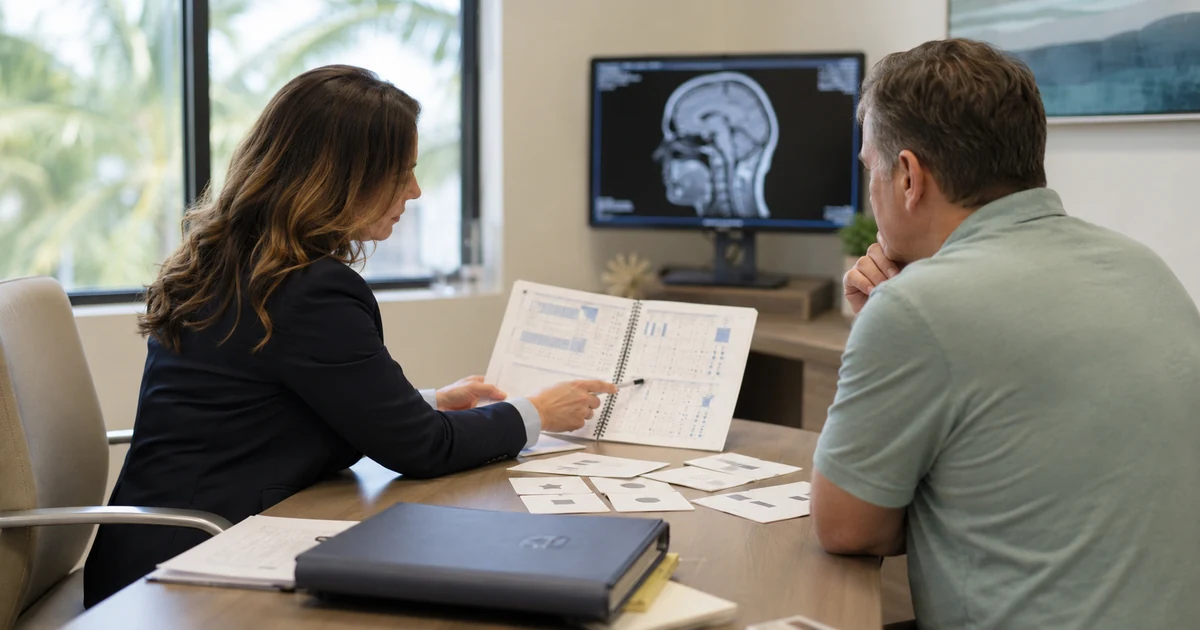
A normal MRI does not disprove a brain injury. See how a forensic neuropsychological evaluation proves a TBI under Florida’s Daubert standard.
Psychological evaluations that hold up in Florida personal injury cases: prove emotional distress, survive Daubert, raise settlement value. Book a consult.

Most children need a psychoeducational re-evaluation every 2 to 3 years, sooner for active cases. A licensed psychologist explains the timing, the IDEA 3-year rule, and the practice-effect trap that catches families who re-test too soon.