

How Does Couples Therapy Work In 2026?
Written By: Michael Vale, Content Writer
Medically Reviewed By: Dr. Cathy Colet, Psy.D., Licensed Psychologist
Last Reviewed: September 29, 2026
Couples therapy is treatment where both partners sit with 1 licensed clinician and work on the relationship itself. At our Jupiter office, sessions run 50 to 80 minutes. The relationship is the client, not either person, so the clinician doesn’t pick a side.
Most couples want to know 3 things before they call. What happens in the room. How long it takes. And who else can ever hear about it.
The first 2 get answered on every therapy website. The third one usually doesn’t, and in Florida it matters more than people expect. If a divorce or custody case is running next to your therapy, state law decides what stays private and what doesn’t. This guide covers all 3.
What Is Couples Therapy?
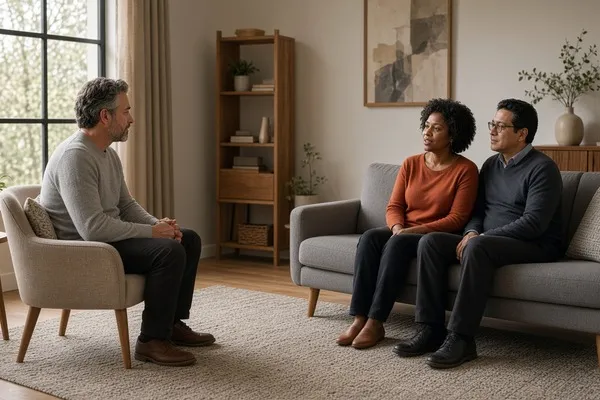
Couples therapy is treatment in which both partners meet together with a licensed clinician to change how they communicate, handle conflict, repair after a fight, and make decisions. The relationship is the client. Sessions usually run 50 to 80 minutes and can be held in person or by secure video.
That last part matters for the rest of this article. Because the relationship is the client, couples therapy doesn’t fit the rules written for 1 patient in 1 room. Insurance struggles with it. So does the law.
Inside A Session: Who Talks And Who Runs It
A couples session is structured, and the clinician runs it, not the louder partner. Both people get airtime on purpose.
Here’s the shape of it. You each describe the problem, and the 2 descriptions rarely match. The clinician doesn’t referee which version is right. Instead the work goes after the pattern underneath. One partner pushes. The other pulls back. Both walk away feeling unheard. With high-conflict couples we’ll often ask you to have the fight in the room, briefly, then stop it and take it apart. Most couples see their own loop inside 30 minutes.
What it isn’t: a trial, a 2-against-1, or an hour of venting. Complaints are the raw material, not the session. You leave with 1 thing to try that week.
Between sessions you practice. That’s where most of the change happens, not in the chair.

How Long Does Couples Therapy Take?
It depends on which problem you bring, and the ranges differ a lot. These are the ones we quote at intake.
| What you’re bringing | Who attends | Typical length |
|---|---|---|
| Drifted apart, no real fighting | Both partners from session 1 | 8 to 12 sessions, then check-ins |
| Same fight on repeat, high conflict | Both partners, structured turns | 12 to 20 sessions |
| Rebuilding after a betrayal | Both partners, staged plan | 3 to 6 months |
| One of you isn’t sure you should stay | Mostly separate, brief joint time | 1 to 5 sessions |
That last row is worth a pause. When 1 partner has quietly checked out, ongoing couples therapy is the wrong tool, because it assumes both people want to fix it. The short format built for that spot is called discernment counseling. Its goal is a clear decision: stay as is, separate, or commit to a set attempt. It isn’t a sales pitch.
Couples who drifted apart tend to move fastest. Nothing’s broken yet, only neglected.
What Insurance Covers In 2026
Couples therapy for relationship problems alone is usually not covered. Insurers pay to treat a diagnosed condition, and a struggling marriage isn’t one.
There’s a workaround the industry uses, and it has a catch worth knowing before you call anyone.
The billing code most often used is CPT 90847, family psychotherapy with the patient present. It requires 1 partner to be the identified patient carrying a diagnosis, and the couples work then gets billed as part of that person’s care. If neither of you has a diagnosis and the problem is the relationship, there’s usually nothing to bill.
Here’s the part nobody mentions. Once 1 partner is the identified patient, that diagnosis sits in a medical record. In a custody case later, that record is something the other side may want. A billing decision made in month 1 can turn into a discovery request in month 14.
Our office confirms fees and insurance on the intake call, and can give you a superbill where your plan may pay you back. Ask before the first session, not after.
When Only 1 Of You Is Willing
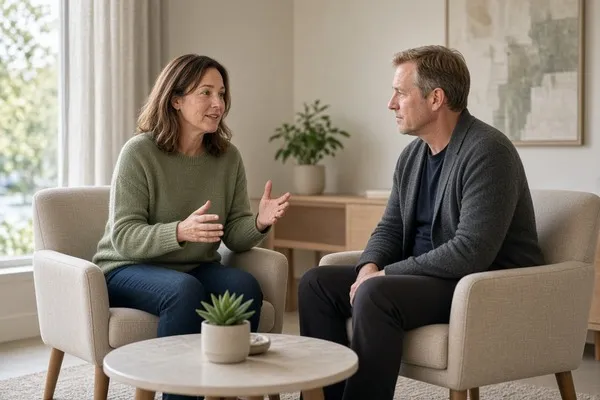
Roughly 7 in 10 first calls to our office come from 1 partner. If that’s you, you’re the normal case, not the exception.
You can start alone. A session on your own helps you work out what you want to say and how to say it. The pattern shifts on its own once 1 person changes how they raise things. Many partners join within a month.
If you’re going to ask them, 4 things help. Pick a calm moment, not the end of an argument. Lead with you, not them, because “I want us to be better” lands where “you need help” doesn’t. Make the ask small, like a free 15-minute call instead of a course of therapy. Then stop talking and let them answer.
Is Couples Therapy Confidential In Florida?
Mostly. The exceptions are the part that catches people out. Florida’s psychotherapist-patient privilege protects what you say to a licensed psychologist, psychiatrist, clinical social worker, marriage and family therapist, or mental health counselor. A second person in the room doesn’t break it. The statute covers what you share with people “present to further the interest of the patient.”
So far so good. Now the exceptions under section 90.503(4).
The privilege doesn’t apply to a court-ordered exam of someone’s mental state. It also drops away when a patient leans on their mental or emotional state as part of a claim or defense. Lawyers call that the shield and sword rule. You can’t use your mental health to win a point, then claim privilege over the parts that hurt you.
The Florida Bar Journal’s analysis of privilege in family court adds a third point that surprises most couples. Counseling a court ordered you into carries no expectation of privacy, so the privilege drops. Court-ordered counseling and private therapy are not the same thing, even in the same office with the same clinician.
One more wrinkle specific to couples work. The privilege belongs to the patient. When the relationship is the client and 2 people are in the room, who holds it and who can waive it gets messy. Ask your clinician at intake, not after a subpoena lands.
Inside the therapy, there’s a separate rule about secrets between the 2 of you. Most couples clinicians, including ours, use a no-secrets policy. Something you share in a one-on-one part that affects the relationship can be brought into the joint work. You agree to those rules in writing before you start.
The takeaway: decide what the therapy is for before the first session. If a case is filed or close to it, say so at intake. It changes the advice, and it’s the most useful thing you can tell a clinician on day 1.
Can A Florida Judge Order You Into Counseling?
Yes, and there’s a statute for it. Under Florida Statute 61.052, subsection (2)(b)(1), a court can order either or both parties to consult with “a marriage counselor, psychologist, psychiatrist, minister, priest, rabbi, or any other person deemed qualified by the court.”
It isn’t automatic. The court gets that power when there’s a minor child of the marriage, or when the other party denies the marriage is irretrievably broken. Under 61.052(2)(b)(2) the judge can also pause the case for up to 3 months to let the couple try to reconcile.
Read that against the privilege rules above and the point lands hard. A judge can send you to counseling, and that counseling may not be private. If you’ve been ordered to go, our guide on what to expect from court-ordered marriage counseling walks through the process, and our court-ordered therapy service covers what compliance documentation looks like.

The Wall Between Your Therapist And An Evaluator
Your couples therapist should not turn around and become the evaluator in your custody case. This is the position we hold, and it isn’t a preference.
The AFCC Model Standards of Practice for Child Custody Evaluation set it out. Standard 8.1 tells evaluators to take reasonable steps to avoid multiple relationships, because it’s hard to stay neutral about people you already know. Standard 8.3 goes further. When a court asks the same clinician for both forensic and therapy work, the evaluator “shall inform the court of the disadvantages of this arrangement and shall decline one of the assigned tasks.”
The reason is plain once you see it. A therapist’s job is to help you. An evaluator’s job is to form an opinion for a judge, including one you won’t like. The same person can’t do both honestly. And a couple who opened up to a therapist never agreed to hand that material to an expert witness.
FC PsychExperts always separates the treating clinician from the forensic evaluator. We do both kinds of work, which is why the line is drawn and said out loud. If you’re in therapy with us and your case later needs an evaluation, that evaluation goes to a different doctor.
Most therapy offices never have to think about this, because they don’t do court work. Most court experts don’t treat couples. Ask any office that does both how they handle it. If the answer is vague, that’s your answer.
Choosing A Couples Therapist In Florida
Credentials first. Under Florida law a psychotherapist can be a licensed psychologist, psychiatrist, clinical social worker, marriage and family therapist, or mental health counselor. All of them can do good couples work. The license letters matter less than the training in relationship work, so ask how many couples they see and what methods they use. Our post on the difference between psychologists and therapists breaks the license types down.
Then ask 4 questions most people don’t:
- What’s your confidentiality policy between us, and is it no-secrets?
- If we end up in a divorce or custody case, what happens to these records?
- Would you ever act as an evaluator for us, and if not, why not?
- What happens if 1 of us wants out and the other doesn’t?
A clinician who answers those clearly has thought about the spot you might be walking into. One who hasn’t, hasn’t.
At FC PsychExperts the couples work is handled by Jessica T. Aloise, a Licensed Clinical Social Worker with more than 20 years of relationship-focused practice, with clinical supervision from Dr. Cathy Colet, who founded the practice in 2008. Dr. Colet’s background in family law is why splitting and co-parenting couples get sent her way. If children are already in the middle of it, co-parenting counseling or family therapy may fit better than couples work, and a damaged parent-child relationship is what reunification therapy is built for.
First couples therapy appointments are usually available within the same week, in person in Jupiter or by secure video anywhere in Florida. Call (561) 834-5849.
Couples Therapy FAQ
How does couples therapy work if only 1 partner attends?
It still works, and it’s how a lot of couples start. Roughly 7 in 10 first calls to our office come from 1 partner. A session on your own helps you get clear on what you want to change and how to raise it. Many partners join within a month once they hear it isn’t about blame.
Does couples therapy work after an affair?
Rebuilding after infidelity is one of the most common reasons couples call. The work is staged: working out what happened, getting through the raw early weeks, then deciding together what the relationship becomes. It usually runs 3 to 6 months, longer than most other couples work, and it isn’t a place where 1 partner is put on trial.
Can couples therapy records be subpoenaed in a Florida divorce?
Sometimes. Florida Statute 90.503 protects what you say in therapy, but subsection (4) drops that protection for court-ordered exams and for cases where a person leans on their mental state as part of a claim or defense. Counseling ordered by a court carries no expectation of privacy. Tell your clinician at intake if a case is filed or coming.
How many sessions does couples therapy take?
It depends on the problem. Couples who have drifted apart often see change in 8 to 12 sessions. High-conflict couples usually run 12 to 20. Rebuilding after a betrayal takes 3 to 6 months. Discernment counseling, for couples where 1 partner isn’t sure they want to stay, is 1 to 5 sessions.
Does insurance cover couples therapy?
Usually not on its own. Insurers cover treatment of a diagnosed condition, so couples sessions get billed under CPT 90847, family psychotherapy with the patient present, which needs 1 partner to be the identified patient with a diagnosis. That puts a diagnosis in a medical record, which matters if a custody case follows. Our office confirms your fees and options on the intake call.
What’s the difference between couples therapy and couples counseling?
In practice the 2 terms get swapped freely, including by clinicians. Where people draw a line, counseling means shorter work on 1 current problem, often 6 sessions or fewer, while therapy means longer work that goes after the pattern underneath. Ask any provider what they mean by the word rather than guessing.
Can a couples therapy session be used in a custody case?
It can, in set cases. Beyond the privilege exceptions in Florida Statute 90.503, a judge can order counseling under Florida Statute 61.052(2)(b), and court-ordered counseling isn’t private. Separately, your treating clinician should never become the evaluator in your case. AFCC Standard 8.3 says a professional asked to do both must decline one of the 2 roles.

Dr. Cathy Colet, Psy.D., is a Licensed Clinical and Forensic Psychologist and founder of FC PsychExperts in Jupiter, Florida. She provides expert witness testimony across criminal, family, and immigration law, with advanced training in competency evaluations, criminal responsibility, child custody assessments, and VAWA hardship waivers.