

Can You Control Who Is Around Your Child During Custody?
Written By: Michael Vale, Content Writer
Medically Reviewed By: Dr. Cathy Colet, Psy.D., Licensed Psychologist
Last Reviewed: May 12, 2026
Short answer: no, you usually can’t control who your co-parent allows around your child during their custody time. Florida courts treat each parent’s parenting time as their own, and judges won’t restrict who’s present unless there’s documented evidence of harm to the child. Your discomfort with your ex’s new partner doesn’t meet that bar. A history of violence, substance abuse, or criminal behavior involving minors? That’s a different conversation.
In Florida, a parent who wants to restrict a third party’s access to their child during the other parent’s custody time must show that the person poses a direct risk to the child’s safety or well-being. Courts evaluate these requests under the “best interests of the child” standard outlined in Florida Statute 61.13, and they require specific evidence, not general objections.
I’ve watched dozens of parents drain their savings on legal fees trying to block an ex’s new girlfriend or boyfriend, only to have a judge tell them the same thing: your feelings aren’t evidence. This article covers what actually works, what Florida law allows, and the specific tools you can build into your parenting plan before problems start. We won’t cover child support calculations or relocation disputes, as those are separate issues with their own legal frameworks.
What Restrictions Can You Add to a Florida Parenting Plan?
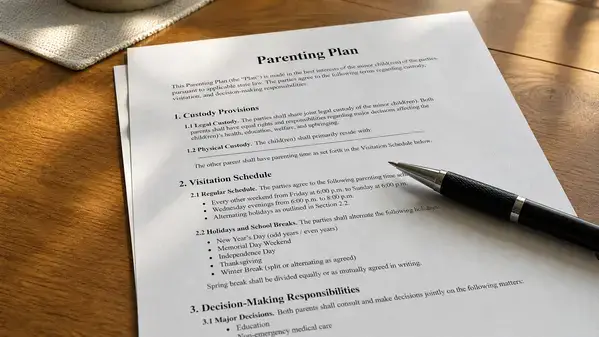
You can add specific provisions to your parenting plan that limit certain behaviors during custody time. But here’s what most parents miss: these restrictions almost always apply to both parents equally. Ask for a rule that bans overnight guests while your child is home, and you’re bound by the same rule.
The most common restrictions parents negotiate include overnight guest clauses (sometimes called “paramour clauses”) that prevent romantic partners from sleeping over while the child is present, designated pick-up and drop-off rules that limit who can handle custody exchanges to named individuals or family members, and notification requirements for introducing new romantic partners to the child.
Florida updated its parenting plan requirements in 2025 to demand more specific schedules, communication rules, and exchange logistics. Vague plans are less likely to get court approval now. The ABA Family Law Section reviewed 35 new family law statutes across 25 states in 2024, and many addressed safe custody exchanges and domestic violence protections in parenting plans. Florida was among the states that tightened these rules.
State courts process roughly 3.8 million family law cases each year, including an estimated 290,000 to 330,000 child custody proceedings, according to Pew Charitable Trusts data from 2025. That volume means judges have seen every version of “I don’t like my ex’s new partner.” The ones that succeed in court are the ones backed by documentation, not emotion.

How Does the Right of First Refusal Work in Florida Custody Cases?
The right of first refusal is an optional clause in a Florida parenting plan that says: before you call a babysitter, your mom, or anyone else to watch the kids during your custody time, you have to offer that time to the other parent first. It’s not required under Florida law, but it’s one of the most effective tools for parents who want more control over who cares for their child.
Here’s how it plays out in practice. Say it’s Dad’s weekend, but he gets called into work Saturday morning. Before he calls Grandma or drops the kids at a friend’s house, he has to text or call Mom and ask if she wants to take the kids. If she says yes, she takes them. If she says no (or doesn’t respond within the agreed window), Dad is free to make other arrangements.
Most right of first refusal clauses include a time trigger, typically four to six hours. If the parent will be away for less than that, the clause doesn’t kick in. You’ll also want to spell out the notice method (text, email, or a co-parenting app), response deadline, and exceptions for emergencies. Parents going through forensic psychological evaluations during custody disputes often find that these details matter more than they’d expect.
One contrarian point worth raising: the right of first refusal can actually backfire. I’ve seen cases where one parent uses it as a control mechanism, demanding notification for every two-hour absence. That approach tends to increase conflict, not reduce it. And if you consistently refuse when offered the time, the other parent may stop calling altogether. Judges notice those patterns.

What Evidence Do Courts Actually Need to Restrict Someone?
This is where most parents fail. Courts require evidence of direct adverse impact on the child, not your personal discomfort with someone. “I don’t like him” or “she’s a bad influence” won’t get you anywhere without documentation.
The types of evidence that carry weight include police reports documenting incidents while the third party was present, therapist notes or evaluations showing emotional harm to the child, criminal background information (active charges, sex offender registry status, or recent violent convictions), and input from a guardian ad litem appointed by the court to represent the child’s interests.
Over 90% of child custody cases settle outside of court, with only about 4% going to trial, according to a 2025 analysis of U.S. court trends. That means most parents resolve these issues through negotiation or mediation, not courtroom battles. Professionals who understand how forensic psychology intersects with family law can provide evaluations that carry real weight in settlement discussions.
A person’s past alone usually isn’t enough. A conviction from 15 years ago, with no recent incidents, probably won’t persuade a judge. Courts look at current conduct and current risk. The 2025 AFCC mediation standards, developed in collaboration with the ABA, now place extra emphasis on a “child-centered process” that considers the child’s voice, especially for older children. That standard mirrors the approach courts already use in forensic evaluations involving juveniles, where the child’s perspective carries similar weight.

Do Overnight Restrictions and Morality Clauses Still Work in 2026?
Morality clauses (also called paramour clauses) restrict a parent from having a romantic partner spend the night while the child is in the home. Ten years ago, these were standard in many states. Today, they’re increasingly hard to enforce.
Courts in states like New Jersey, North Carolina, and Georgia have pushed back on indefinite overnight bans unless there’s specific evidence tying the arrangement to harm. Florida, with its rebuttable presumption favoring equal time-sharing (a 2024 law shift that carried into 2025 and 2026), generally treats each parent’s household decisions as their own business. The California courts self-help guide on child custody reflects a similar trend nationally, noting that courts prioritize the child’s relationship with both parents over parental preferences about household composition.
That said, a temporary morality clause (say, for the first six months post-separation) can work if both parents agree to it and the court finds it reasonable. The key word is temporary. Indefinite bans signal control, not concern for the child.
Regional differences matter here. Southern and Midwestern courts tend to be slightly more open to these restrictions when tied to stability concerns. But enforcement is inconsistent everywhere. Even with a clause in your parenting plan, proving a violation and getting a judge to act on it is a separate fight.
The Biggest Mistake Parents Make When Filing for Restrictions
Filing a modification motion without strong evidence. The legal fees alone can wipe out a savings account, it requires time off work for hearings, and gets denied more often than not. I’ve seen parents spend their entire emergency fund on a motion that a judge dismissed in 20 minutes because the only “evidence” was a bad feeling about the new partner.
The smarter approach is to build a record before you file anything. Keep a simple log of incidents with dates, times, and specifics. Save text messages. If your child has a therapist, ask them to document any behavioral changes. If things are serious enough to warrant a formal evaluation, a forensic psychologist can provide court-admissible assessments that carry far more weight than your testimony alone.
Another option that’s cheaper and faster: a designated caregiver list. Both parents agree in writing to a list of approved people (grandparents, specific family members, a long-time babysitter) who can care for the child during either parent’s custody time. This avoids the courtroom entirely and solves roughly 80% of the “who’s watching my kid” anxiety. If you’re struggling with how to structure these conversations, working with an experienced team that understands your situation can make the process less overwhelming.
Florida’s 2026 legislative session introduced Senate Bill 1128, which would require at least one judge in each circuit to be available on weekends and after hours for enforcement motions. If it passes with its July 2026 effective date, parents dealing with time-sharing violations could get faster court access. But even with faster access, you still need evidence. The bill changes the speed of the process, not the standard.
The single best thing you can do right now? Ask yourself this question honestly: Am I concerned for my child’s safety, or am I trying to control my ex? If you can’t answer that clearly, talk to a therapist before you talk to a lawyer. And if you need a professional assessment of how your child is being affected, scheduling an evaluation with a forensic psychologist is a concrete first step.
FAQs
Can I stop my ex’s new partner from being around my child during custody time?
Not without a court order based on documented harm. Florida courts don’t restrict third-party access during the other parent’s custody time unless there’s evidence of direct risk to the child’s safety or well-being, such as a criminal history involving minors, active substance abuse, or documented domestic violence. Your personal disapproval isn’t enough.
Can a parenting plan ban overnight guests while my child is present?
Yes, but only if both parents agree or a judge finds it’s in the child’s best interests. These “paramour clauses” are reciprocal, meaning they apply to both parents equally. Courts are increasingly skeptical of indefinite bans. Temporary restrictions (six months post-separation, for example) have a better chance of holding up.
What is the right of first refusal in Florida custody cases?
The right of first refusal is an optional clause in a Florida parenting plan. It requires that before a parent arranges third-party childcare during their custody time (typically for absences of four to six hours or more), they must first offer that time to the other parent. It isn’t required by Florida law, but it’s one of the most effective tools for maximizing both parents’ time with the child.
How much does it cost to file a custody modification to restrict someone from being around my child?
Modification motions are expensive. Between attorney fees, court filing costs, and time away from work, the total can drain your savings quickly, especially if the motion gets denied. Courts reject many of these motions when the evidence is weak. Before filing, build a record of documented incidents and consult with a family law attorney about whether your evidence meets the threshold.
Does Florida require notification before introducing a new partner to my child?
Not by default. Florida law doesn’t mandate partner-introduction notifications. But you can include a notification provision in your parenting plan if both parents agree or if the court orders it. Enforcement requires court approval and proof that the requirement serves the child’s best interests. About 90% of custody cases settle out of court, so these provisions are most often negotiated, not litigated.
What evidence do I need to restrict someone from being around my child?
Courts look for police reports, therapist evaluations documenting emotional harm, criminal background evidence (especially involving violence or minors), and input from a court-appointed guardian ad litem. Text messages and dated incident logs can also support your case. A past criminal record from years ago, with no recent incidents, probably won’t be enough on its own.
Can a forensic psychologist help with custody disputes about third-party access?
Yes. A forensic psychologist can provide court-admissible evaluations that assess how a child is affected by specific people or living situations. These evaluations carry more weight than parental testimony alone, and they’re used in both settlement negotiations and courtroom proceedings. The 2025 AFCC mediation standards now place added emphasis on including the child’s voice in these evaluations.

Dr. Cathy Colet, Psy.D., is a Licensed Clinical and Forensic Psychologist and founder of FC PsychExperts in Jupiter, Florida. She provides expert witness testimony across criminal, family, and immigration law, with advanced training in competency evaluations, criminal responsibility, child custody assessments, and VAWA hardship waivers.