

Psychoeducational Testing For Specific Learning Disorders: A 2026 Parent’s Guide
Written By: Michael Vale, Content Writer
Medically Reviewed By: Dr. Cathy Colet, Psy.D., Licensed Psychologist
Last Reviewed: April 20, 2026
Psychoeducational testing is a one-on-one evaluation that measures how your child thinks, processes information, and performs academically. It’s the most reliable way to identify a specific learning disorder (SLD) and build a plan around it. If your child has been struggling with reading, writing, or math for months and nothing seems to be moving the needle, this is probably the next step.
Psychoeducational testing combines IQ testing, academic achievement measures, and information processing assessments to pinpoint where your child’s brain works well and where it doesn’t. A licensed psychologist compares your child’s cognitive ability to their actual academic performance, and the gap between those two numbers tells the story. The whole process typically takes 4 to 8 hours spread across one or two sessions, and the result is a detailed report with a diagnosis (if one applies) plus specific recommendations for school and home.
I’ve worked with families who waited years before pursuing testing, and almost every one of them said the same thing afterward: “We should have done this sooner.” The data from a psychoeducational evaluation doesn’t just give you a label. It gives you leverage for IEPs, 504 plans, and accommodations your child is legally entitled to.
This guide won’t cover neuropsychological evaluations, which are broader and more expensive. It also won’t get into gifted testing or autism-specific assessments. Those are different tools for different questions.
How Is a Specific Learning Disorder Diagnosed in 2026?
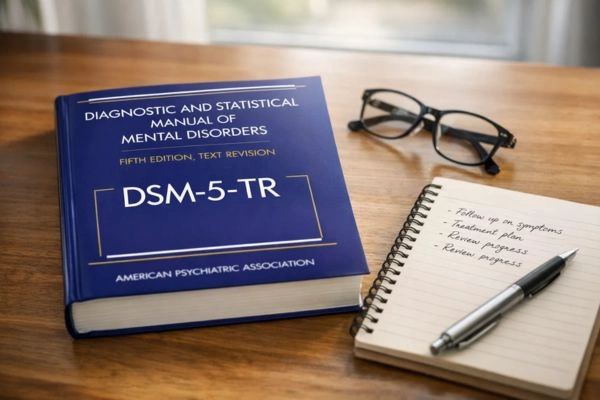
A specific learning disorder is diagnosed when a child shows persistent difficulty in reading, writing, or math that doesn’t improve after at least six months of targeted instruction. The DSM-5 is the standard reference, and in July 2025, the APA released a clarification making it clear that SLD diagnosis criteria should not be interpreted in ways that delay diagnosis or block access to services.
That’s a bigger deal than it sounds. For years, some evaluators and school districts relied on the old IQ-achievement discrepancy model, which required a large gap between IQ scores and academic performance before a child could qualify. The DSM-5 dropped that requirement back in 2013, but many professionals still act like it’s the standard. It isn’t. Clinical judgment plus documentation of academic struggles is enough.
There’s also an ongoing debate around Processing Strengths and Weaknesses (PSW) models. A 2024 systematic review published in School Psychology Review by Dombrowski and colleagues found that PSW models lack strong evidence for reliably identifying SLDs and show inconsistency across different versions. Some evaluators still push PSW-heavy batteries because they’re profitable (they require more testing hours). But the research doesn’t support them as the gold standard.
The bottom line: if your child has been struggling academically for six months or more despite receiving help, they may meet the criteria for an SLD diagnosis. You don’t need to wait for a crisis.

What Does Psychoeducational Testing Include?
A psychoeducational evaluation isn’t a single test. It’s a battery of assessments administered by a licensed psychologist across several hours, usually in one or two sessions.
The process starts with a clinical interview. The psychologist meets with you (and sometimes your child) to collect background information, including birth history, developmental milestones, academic records, and your specific concerns. This conversation shapes the rest of the evaluation.
Next comes cognitive testing, commonly called IQ testing. Tools like the Wechsler Intelligence Scale for Children (WISC-V) or the Stanford-Binet measure verbal reasoning, nonverbal reasoning, working memory, and processing speed. These scores establish a baseline for what your child’s brain is capable of.
Then the psychologist administers achievement testing. The Woodcock-Johnson IV or the Kaufman Test of Educational Achievement (KTEA) are typical choices. These measures include reading accuracy, reading comprehension, spelling, written expression, math calculation, and math reasoning. The scores show where your child actually performs compared to same-age peers.
The evaluator also looks at information processing skills. Auditory processing, visual-motor integration, phonological processing, and memory all get assessed. These are the gears turning behind academic performance. A child might have strong IQ scores but slow processing speed, which explains why they can’t finish tests on time despite knowing the material.
Finally, the psychologist may include social-emotional and behavioral screeners to check for anxiety, depression, or attention issues that could be contributing to the academic picture. I’ve seen cases where a child’s “learning problem” turned out to be undiagnosed anxiety interfering with test performance. The evaluation catches that.
The full evaluation for children with suspected learning disabilities usually takes 4 to 8 hours of direct testing, plus additional time for scoring, report writing, and a feedback session with parents.
What Do Psychoeducational Testing Results Mean?
You’ll receive a written report, usually 10 to 20 pages long. It looks intimidating, but the structure is fairly predictable.
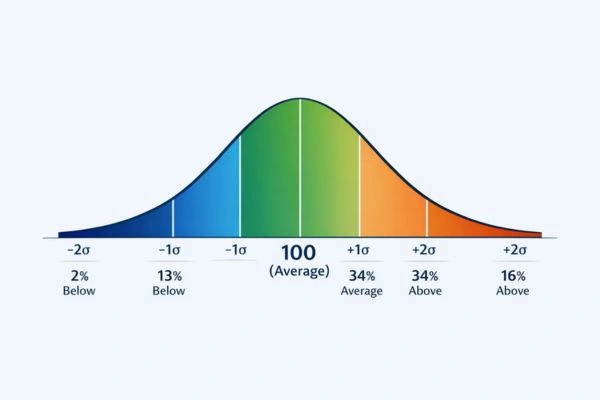
Scores are reported as standard scores, percentile ranks, and sometimes confidence intervals. The average standard score is 100, with a standard deviation of 15. So a score of 85 means your child falls one standard deviation below the mean, which places them around the 16th percentile. That means roughly 84% of same-age children scored higher on that measure.
The report will identify your child’s cognitive strengths and weaknesses. Maybe verbal reasoning scores 115 (above average) while processing speed scores 82 (low average). That gap is meaningful. It tells you the child understands complex ideas, but takes much longer to produce written output.
On the achievement side, the evaluator compares your child’s actual academic performance to what would be expected based on their cognitive ability and age. If IQ is 110 but reading accuracy is 78, there’s a clinically significant discrepancy. That’s the kind of data that supports an SLD diagnosis.
The most actionable part of the report is the recommendations section. Good evaluators don’t just identify problems. They lay out specific accommodations (extended time, preferential seating, audiobooks), instructional strategies (Orton-Gillingham for reading, multisensory math methods), and whether your child qualifies for an IEP or 504 plan. If the recommendations section is vague or generic, that’s a red flag about the evaluator.
One thing parents don’t always realize: a psychoeducational evaluation report is a legal document. It carries weight in IEP meetings, 504 plan reviews, and college accommodation requests. Treat it like one.

When Should Your Child Get Psychoeducational Testing?
There’s no magic age, but earlier is almost always better.
Most psychologists can reliably test children starting around age 6 or 7, once they’ve had enough formal instruction for academic patterns to become visible. Testing a 4-year-old for a reading disorder doesn’t make sense because they haven’t been taught to read yet. But if your first-grader is falling behind despite good instruction, that’s a reasonable time to pursue testing.
The best age for testing depends on the specific concern. Reading and writing disorders often surface in first or second grade. Math disorders tend to appear later, around third or fourth grade, when math shifts from memorization to reasoning. Attention and executive function problems sometimes don’t become obvious until middle school, when the workload demands more self-management.
According to NCES data for the 2022–23 school year, roughly 7.5 million students ages 3 to 21 were served under IDEA, with specific learning disabilities making up 32% of that total, about 2.4 million children. SLD remains the single largest disability category in public schools.
If your child’s teacher is consistently flagging concerns, if homework takes two or three times longer than it should, or if your child’s effort never seems to match their grades, don’t wait for things to improve on their own. They rarely do.

School Evaluations vs. Private Psychoeducational Testing
Under IDEA, your child has the right to a free evaluation through the school district. You request it in writing, the school has a set timeline (usually 60 days), and they conduct their own assessment at no cost.
So why would anyone pay out of pocket?
Speed is one reason. School evaluations often take months from request to results. Private evaluations can be scheduled within weeks.
Scope is another. School-based evaluations focus on educational impact. They determine whether a child qualifies for special education services, but they often avoid giving a formal DSM-5 diagnosis. A school might say your child has a “processing deficit” without calling it a specific learning disorder. That distinction matters if you need documentation for college accommodations, standardized testing (SAT, ACT, GRE), or legal proceedings.
Schools are also not required to accept a private diagnosis. This frustrates a lot of parents. You can pay $3,000 for a private evaluation with a clear SLD diagnosis, and the school district can still insist on conducting its own assessment. Your private report supports the case, but it doesn’t replace the school’s process.
The smartest play for most families is to request the school evaluation first (it’s free) and pursue private testing simultaneously if you can afford it. The private report gives you the formal diagnosis and stronger documentation. The school evaluation gives you access to services. You want both.

What Happens After Psychoeducational Testing?
The feedback session is where the results come to life. A good evaluator spends 60 to 90 minutes walking you through the report, explaining what each score means, and connecting the data to your child’s daily experience. If the evaluator hands you a report and says, “call with questions,” find a different evaluator next time.
If the testing identifies an SLD, you have several paths forward.
For school-age children, an IEP (Individualized Education Program) provides specialized instruction and services. A 504 plan offers accommodations (like extended time or modified assignments) without changing the curriculum. The evaluation report is the evidence that drives either process. Bring it to the IEP meeting and make sure the team reads it before, not during, the meeting.
For older students and college-bound teens, the evaluation supports accommodation requests for standardized tests and college disability services offices. Most colleges require documentation from within the past 3 to 5 years, so if your child was tested in elementary school, they’ll likely need updated testing before heading to college.
The evaluation results also guide tutoring and intervention strategies. Working with a team that understands your specific situation means recommendations get implemented rather than filed away. A diagnosis without follow-through is just a label.
Read the report multiple times before sharing it with the school. Understand what it says and what it recommends. If anything seems wrong or incomplete, call the evaluator before the IEP meeting, not after.
Frequently Asked Questions
Does insurance cover psychoeducational testing for learning disabilities?
Almost never when the primary purpose is identifying a learning disorder or getting school accommodations. Aetna and Cigna policies updated in 2025 explicitly exclude coverage for educational testing. Some families succeed with medical billing codes for co-occurring conditions like ADHD or anxiety, but the SLD evaluation itself is typically $1,200 to $3,900 out of pocket.
How long does psychoeducational testing take?
Most evaluations require 4 to 8 hours of direct testing, typically split across one or two sessions. Add another 2 to 4 weeks for report writing and scoring. The feedback session with parents runs 60 to 90 minutes. From start to finished report, expect 3 to 6 weeks with a private evaluator.
Does DSM-5 still require an IQ discrepancy for SLD diagnosis?
No. The IQ-achievement discrepancy model was removed from diagnostic requirements when the DSM-5 was published in 2013. The APA reinforced this in a July 2025 clarification, stating that six months of targeted instruction plus clinical judgment is sufficient. Many outdated articles and some evaluators still reference the old model, but it is no longer required.
Can a school refuse to accept my child’s private psychoeducational evaluation?
Yes. Under IDEA, school districts must conduct their own evaluation to determine special education eligibility. A private evaluation with a DSM-5 diagnosis supports your case and adds documentation, but schools are not legally required to accept it as a substitute for their own assessment.
What is the difference between psychoeducational testing and neuropsychological testing?
Psychoeducational testing focuses specifically on IQ and academic achievement to identify learning disorders. Neuropsychological testing is broader and includes memory, executive function, language, and visuospatial processing. Neuropsychological evaluations are more common in forensic, medical, and complex diagnostic situations and typically cost $1,000 or more above a standard psychoeducational evaluation.
What age should a child get psychoeducational testing?
Most psychologists can reliably test children starting at age 6 or 7 after they’ve had enough formal instruction for academic patterns to show. Reading disorders often surface in first or second grade, while math disorders tend to appear in third or fourth grade. About 2.4 million students in U.S. public schools have a specific learning disability under IDEA.
Can psychoeducational testing help with college accommodations?
Yes, but the evaluation must be recent. Most colleges require documentation from within the past 3 to 5 years and expect the report to include specific accommodation recommendations tied to the diagnosed disability. A psychoeducational evaluation from elementary school typically won’t be accepted for a college freshman.

Dr. Cathy Colet, Psy.D., is a Licensed Clinical and Forensic Psychologist and founder of FC PsychExperts in Jupiter, Florida. She provides expert witness testimony across criminal, family, and immigration law, with advanced training in competency evaluations, criminal responsibility, child custody assessments, and VAWA hardship waivers.