

5 Reasons To Schedule A Psychological Assessment In 2026
Written By: Michael Vale, Content Writer
Medically Reviewed By: Dr. Cathy Colet, Psy.D., Licensed Psychologist
Last Reviewed: May 3, 2026
A psychological assessment is a structured evaluation conducted by a licensed psychologist using standardized tests to measure cognitive ability, emotional functioning, and personality traits. It produces a written report with a diagnosis (when appropriate) and specific treatment recommendations. Most assessments take 4-20 hours across multiple sessions and generate results within 2–6 weeks.
People put this off for years. I’ve watched clients cycle through months of therapy aimed at the wrong diagnosis before a single assessment clarified the real issue in two weeks. The U.S. psychological testing market hit roughly $2.5 billion in 2024 and is growing at 7.1% annually (Mordor Intelligence). If you’ve been wondering whether testing is worth it, these are the five situations where it almost always is.

Your Therapist Thinks You Need Deeper Answers
A therapist who’s worked with you for months has real clinical data on what’s working and what isn’t. When sessions keep stalling or you’re cycling through the same problems, a clinical psychological evaluation gives your therapist an objective map. Practitioners report that assessments can cut treatment timelines in half by pinpointing what talk therapy alone can’t isolate.
Figuring Out If Medication Belongs in Your Treatment Plan
Assessment psychologists don’t prescribe medication, but their testing results often reveal whether a psychiatric referral makes sense. Anxiety and ADHD overlap in roughly 25% of adult cases according to APA assessment guidelines. Without testing, you might get prescribed stimulants when the root issue is anxiety. That’s an expensive mistake to fix later.
Getting the Right Diagnosis the First Time
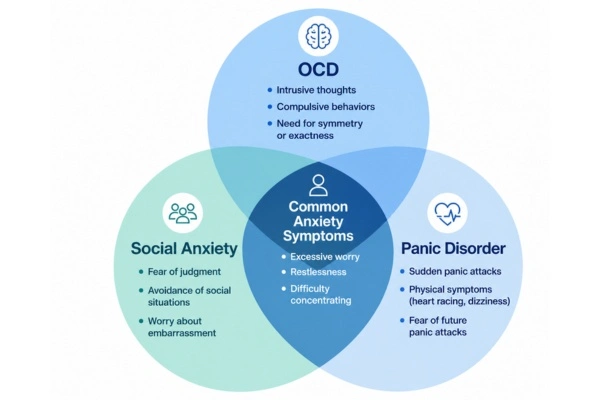
OCD, social anxiety, and panic disorder are all anxiety-based. But each one responds to a different treatment protocol. A psychological assessment uses normed, standardized instruments to differentiate between overlapping conditions. A psychiatrist’s 15-minute interview can identify broad categories. A full evaluation, which typically includes 8–15 hours of testing, can distinguish the specific subtype. That precision is what keeps you from spending another year in the wrong treatment.
When Does a Legal Case Require Psychological Testing?
Courts order psychological testing in custody disputes, competency hearings, and personal injury cases. If you’re involved in a forensic evaluation, the results carry legal weight. Over 122 million Americans live in mental health shortage areas (HRSA, 2025), so booking early matters.
You Just Want to Know What’s Going On
Not everyone needs a court order or a therapist’s referral. Some people are just tired of guessing why certain situations drain them or why they react the way they do. A psychological assessment gives you a baseline, identifying what you’re good at and where you’re working harder than you should be. Plenty of clients at FC Psychexperts schedule assessments purely for self-knowledge, and that’s a perfectly valid reason.
What’s Your Next Step?
If any of these reasons sound familiar, a psychological assessment is the fastest way to stop guessing and start making real progress. Common misconceptions about testing keep people on the fence longer than they should be. An experienced team that understands your situation can help match you with the right type of evaluation for your specific needs.
FAQs
What types of psychological assessments are there?
The three most common types are clinical psychological evaluations (personality and emotional functioning), neuropsychological evaluations (brain function, memory, and attention), and psychoeducational evaluations (learning disabilities and ADHD). Each uses a different battery of standardized tests, and the right one depends on the referral question. A qualified psychologist can help determine which type fits your situation.
Is a psychological assessment worth it if I already see a therapist?
Yes, especially when therapy has stalled or symptoms keep shifting. Practitioners report that a single assessment can cut treatment timelines in half by identifying the root condition. The cost of testing is almost always less than months or years of mismatched therapy aimed at the wrong diagnosis.
What’s the difference between a psychological assessment and a psychiatric evaluation?
A psychological assessment uses standardized, normed tests across multiple hours to measure cognitive ability, emotional functioning, and personality. A psychiatric evaluation is typically a shorter interview focused on symptom identification and medication management. Assessments produce a detailed written report; psychiatric evaluations usually don’t.
Can I do a psychological assessment through telehealth?
Many evaluations now include telehealth components thanks to Medicare telehealth extensions through December 2027. Some tests still require in-person administration for validity. Your provider can tell you which portions need to happen face-to-face and which can be completed remotely.
How long does a psychological assessment take from start to finish?
Expect 4–20 hours of testing across multiple sessions, depending on the type and complexity. After testing, scoring and report writing typically take 2–6 weeks. Most people receive a 10–20 page written report followed by a feedback session with the psychologist.
Will my insurance cover psychological testing?
Coverage varies by plan. Diagnostic codes tied to psychological assessment are often partially covered, but full testing batteries may require pre-authorization. Some plans cover only a portion of the total hours, leaving the rest as out-of-pocket. Always verify with your carrier before scheduling.
What if the assessment doesn’t find anything wrong?
Testing includes built-in validity checks that measure response consistency. A clean result isn’t wasted money. It rules out specific conditions and gives you a baseline for future comparison. Knowing what isn’t the problem is just as useful for directing your next steps.

Dr. Cathy Colet, Psy.D., is a Licensed Clinical and Forensic Psychologist and founder of FC PsychExperts in Jupiter, Florida. She provides expert witness testimony across criminal, family, and immigration law, with advanced training in competency evaluations, criminal responsibility, child custody assessments, and VAWA hardship waivers.