
A neuropsychological evaluation measures how a specific brain is working right now, and compares that measurement against what the same person could do before.
It is testing, not conversation. Memory, attention, language, processing speed, executive function and visual-spatial reasoning each get measured separately against normative data, because a person can be badly impaired in one and intact in the others. That separation is the point. A general psychological evaluation will not produce it, and neither will an interview.
Courts, schools, employers and disability adjudicators ask for this testing when somebody’s capacity is in question and nobody wants to decide on impressions.
Possible reasons for a neuropsychological evaluation (not limited to):
- Traumatic Brain Injury
- Sports Concussion
- Alzheimer’s Disease and Other Dementias
- Psychiatric Disorders including Somatoform Disorders
- Stroke
- Attention Deficit/Hyperactivity Disorder
- Epilepsy and Seizure Disorders
- Learning Disorders (Reading- dyslexia, Writing, Math)
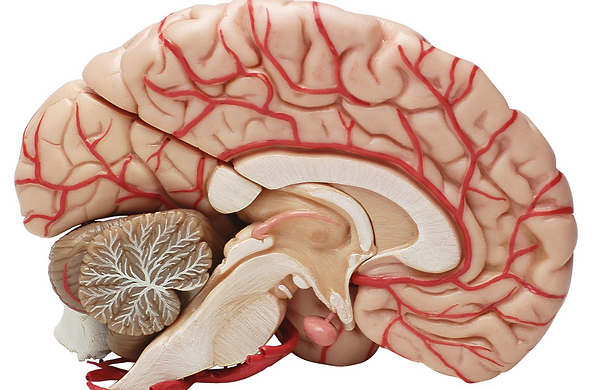
What the Testing Measures That an Interview Cannot
Cognitive impairment hides behind ordinary conversation, and neuropsychological testing is what finds it.
A person in the early stages of a dementia can hold a pleasant 20-minute conversation, answer every social question correctly, and still be unable to track a bank balance or follow a 3-step instruction an hour later. Social skills survive long after executive function goes. Families notice this and cannot prove it. Judges hear it and cannot act on it.
Standardized testing turns that gap into a score with a normative comparison behind it, which is what makes it evidence instead of opinion.
Testing also runs in the other direction, and this is the part people do not expect. It identifies who is not impaired. A person sent for evaluation because a relative is worried, or because of a single bad week, frequently tests within normal limits. That result is worth as much as the other one and it prevents a great deal of harm.

Individuals may seek a neuropsychological evaluation for the following reasons:
- Guardianship
- Ability to return to work
- Disability
- Competency
- Accommodations for college and graduate school entrance examinations
- Determination of treatment needs including making a distinction between medical and mental health dysfunction
Guardianship in Hillsborough County Runs on a 15-Day Clock
When a guardianship petition is filed in Tampa, the court has 5 days to appoint a 3-member examining committee, and each member has 15 days from appointment to examine the person and file a report.
Section 744.331(3) of the Florida Statutes sets the structure. One member must be a psychiatrist or physician. The other 2 come from a defined list that includes psychologists, gerontologists, advanced practice registered nurses, registered nurses, licensed social workers and people holding an advanced degree in gerontology. One of the 3 must have knowledge of the type of incapacity alleged in the petition.
Each member’s examination must be, in the statute’s words, a “comprehensive examination,” and it “must include, if indicated: 1. A physical examination; 2. A mental health examination; and 3. A functional assessment.”
Reports go to the clerk within 15 days of appointment. The clerk serves them within 3 days of receipt, and counsel for the alleged incapacitated person must have all reports at least 10 days before the hearing.
The Thirteenth Judicial Circuit publishes how this runs in Hillsborough County, and 4 details there change what families should expect.
- Appointments come off a rotation. “Appointments are made on a rotational basis from the Court’s master list.” The Chief Judge issues an annual member list. The Clerk sends notice to each appointee no later than 3 days after appointment. Nobody chooses the examiner, including you.
- The examiner travels to your parent. “Most often the committee member must come to where the subject is residing (which will always be within Hillsborough County), due to the subject’s physical or health limitations.” The circuit treats this as the norm rather than the exception.
- Location is not an excuse. Refusals based on “where the subject resides or the subject not being able to come to the committee member’s office are not considered good cause refusals,” and 2 refusals without good cause may result in removal from the committee.
- Committee members are screened for conflicts. A member cannot be related to or associated with the petitioner, the petitioner’s counsel, the proposed guardian or the alleged incapacitated person, cannot be employed by an agency providing services to the subject or the family, and cannot later be appointed guardian for a person they examined.
Members also file an affidavit confirming they have completed, or will complete within 4 months of appointment, an initial training course of at least 4 hours approved for credit by the Statewide Public Guardianship Office.
Fees for Hillsborough examining committee members are set under section 744.331(7) and by Administrative Order S-2024-077, Guardianship Examining Committee Fees, effective 1 December 2024.
The Committee Seat Is a Court Rotation, Not Something You Hire
You cannot retain an examining committee member, and a retained neuropsychological evaluation does a different job than the committee report does.
This is the single most useful thing to understand before spending money, and almost nobody says it out loud. The committee is the court’s instrument. It is appointed, rotational, local to Hillsborough, and it answers the court’s question on the court’s schedule.
A privately retained evaluation answers yours. There are 4 situations where it is the right instrument:
- Before a petition is filed. Establishing current capacity while the person can still participate in the decision. This is where a well-drafted power of attorney or health care surrogate designation gets made instead of a guardianship.
- To support a less restrictive alternative. Florida guardianship is not supposed to be the first option. Testing that documents preserved capacity in specific domains is the evidence that a narrower arrangement will work.
- To contest or respond to a committee report. A committee member has 15 days and a travel visit. A retained neuropsychologist has the records, the full battery and the time. Where the 2 disagree, the court hears both.
- To answer a question the committee was not asked. Return-to-work capacity, treatment planning, driving safety and the difference between a medical and a mental health cause are not the incapacity question, and the committee report will not resolve them.
Guardianship Is Decided Right by Right
Florida removes rights individually, not in a block, which is why the testing has to be granular.
Section 744.3215 splits rights into 3 groups. Some can never be removed, including the right to be treated with dignity, the right to a qualified guardian, the right to counsel, the right to privacy and the right to have the guardianship reviewed annually.
Some can be removed but never delegated to a guardian, including the right to vote, the right to a driver license, the right to travel and the right to marry.
And some can be removed and handed to a guardian. That list is where the evaluation does its work: the right “to contract,” the right “to sue and defend lawsuits,” the right “to manage property or to make any gift or disposition of property,” the right “to determine his or her residence,” the right to make health care decisions, and the right “to make decisions about his or her social environment or other social aspects of his or her life.”
A person can lack the capacity to manage a portfolio and retain the capacity to decide where they live. The examining committee report has to describe the extent of incapacity to exercise the rights enumerated in 744.3215, right by right. An evaluation that returns a diagnosis and stops has not answered the question the court asked.
Competency in a Criminal Case Is a Different Appointment
Competency to proceed is decided by court-appointed experts under Fla. Stat. 916.115, and the qualification rules changed in 2025.
The court appoints no more than 3 experts to determine a defendant’s mental condition. Each must be a psychiatrist, licensed psychologist or physician. Each must have completed initial and annual forensic evaluator training provided by the department, and the “to the extent possible” qualifier that used to soften that requirement is gone from the current text.
The transition deadline has already run. Existing evaluators as of 1 July 2024 had until 1 July 2026 to complete department-provided annual forensic evaluator training in order to remain active. Anyone checking an evaluator’s standing should be checking against the current departmental list rather than a report from 2023.
Section 916.115(2) covers retained experts. Where the defense or the state retains its own expert and waives confidentiality of that expert’s report, the court may pay for no more than 2 additional experts appointed by court order.
Neuropsychological testing enters a competency case where the question is cognitive rather than psychiatric: acquired brain injury, intellectual disability, dementia, or a defendant whose presentation does not fit a mental illness picture. It is also where symptom and performance validity testing matters most, because the incentive structure is obvious to everyone in the courtroom.
Get Expert Support Today
What the ADA Requires for Testing Accommodations
A testing entity may only require documentation that is “reasonable and limited to the need for the requested testing accommodations,” and if your child already has accommodations, you may need less than you have been told.
The Department of Justice technical assistance on testing accommodations is direct about this, and it is worth reading before commissioning anything.
- Prior accommodations usually carry. “Proof of past testing accommodations in similar test settings is generally sufficient to support a request for the same testing accommodations for a current standardized exam.”
- A current IEP or 504 plan is usually enough on its own. Where a candidate shows receipt of testing accommodations in their most recent IEP or Section 504 Plan and certifies a current need due to disability, a testing entity “should generally grant those same testing accommodations” without requesting further documentation.
- Qualified means credentialed in the relevant disability. The guidance defines qualified professionals as those “licensed or otherwise properly credentialed and possess expertise in the disability for which modifications or accommodations are sought.”
- And the entity is supposed to defer. “Testing entities should defer to documentation from a qualified professional who has made an individualized assessment of the candidate that supports the need for the requested testing accommodations.”
- Timing is part of the obligation. A testing entity must respond in a timely manner, and the process has to leave a candidate able to respond to requests for more information and still sit the exam in the same testing cycle.
The practical read: if there is an established accommodation history, start by submitting it. Where there is no history, where the diagnosis is new, or where a previous request was denied on documentation grounds, a full neuropsychological evaluation by a credentialed examiner is what the guidance describes as an individualized assessment.
Where the question is academic rather than a standardized exam, psychoeducational testing is usually the better-matched instrument.
Who Performs the Evaluation
Dr. Lauren Miller is FC PsychExperts’ clinical and forensic neuropsychologist, with nearly 20 years of experience as a clinician, consultant, lecturer and writer.
She provides forensic and clinical neuropsychological, psychoeducational and psychological evaluations, reviews and analyzes treatment, educational, vocational and financial records, consults with treatment providers and with attorneys, analyzes opposing experts’ work, develops deposition questions for attorneys, and provides testimony. She has served as adjunct faculty at 2 Florida universities, teaching graduate-level courses in psychological assessment and adult psychopathology, and as a clinical supervisor for doctoral trainees and postdoctoral fellows. She has extensive experience reviewing psychological and neuropsychological disability claims.
She assesses people of all ages.
What the Evaluation Involves
The evaluation runs in 4 stages, and most of the work happens before anyone is tested.
Records first. Medical, psychiatric, educational, employment and prior testing records. Where the referral question is change over time, a baseline has to be built from documents, because the person being tested cannot supply it.
Clinical interview. History, current function, and collateral interview with a family member or caregiver where the referral question needs it. For a capacity question, how someone actually manages a week is as informative as any score.
Standardized testing. A battery selected for the referral question rather than a fixed panel, covering memory, attention, processing speed, language, visual-spatial function, executive function and mood, with performance and symptom validity measures embedded throughout rather than bolted on at the end.
The report. Findings, diagnostic impressions where the criteria are met, a plain statement where they are not, and answers written to the referral question. For a guardianship, that means addressing capacity right by right against 744.3215. For a school or testing body, it means naming the accommodation and the finding that supports it. A report that stops at a diagnosis makes the reader do the work the evaluation was commissioned to do.
The report. Findings, diagnostic impressions where the criteria are met, a plain statement where they are not, and answers written to the referral question. For a guardianship, that means addressing capacity right by right against 744.3215. For a school or testing body, it means naming the accommodation and the finding that supports it. A report that stops at a diagnosis makes the reader do the work the evaluation was commissioned to do.
Where the referral question is emotional harm from an injury rather than cognitive function, a personal and emotional injury evaluation is the matched instrument, and the 2 are frequently commissioned together after a head injury. Where the question is diagnostic rather than forensic, a clinical psychological evaluation may be sufficient on its own.

Frequently Asked Questions
Who examines my parent after a guardianship petition is filed in Hillsborough County?
A 3-member examining committee appointed by the court within 5 days of the petition. Under Fla. Stat. 744.331(3), one member must be a psychiatrist or physician, and the other 2 are drawn from a list that includes psychologists, gerontologists, advanced practice registered nurses, registered nurses, licensed social workers and people with an advanced degree in gerontology. One of the 3 must have knowledge of the type of incapacity alleged. In the Thirteenth Judicial Circuit, appointments are made on a rotational basis from the court’s master list, and the Clerk sends notice to each appointee no later than 3 days after appointment.
How long does the examining committee have?
Each member must examine the person and file a report with the clerk within 15 days after appointment. The clerk serves each report within 3 days of receipt, and the attorney for the alleged incapacitated person must be served with all reports at least 10 days before the hearing.
Can I choose who examines my parent?
No. Appointments come off the court’s master list on a rotational basis, and the Chief Judge issues the member list annually. You can retain your own neuropsychologist separately, and that evaluation serves a different purpose than the committee report.
Does the examiner come to my parent, or do we travel?
In Hillsborough County the examiner usually travels. The Thirteenth Circuit states that most often the committee member must come to where the subject is residing, which will always be within Hillsborough County, because of the subject’s physical or health limitations. The circuit does not treat the subject’s inability to come to the member’s office as good cause for refusing a case.
Which rights can actually be taken away in a Florida guardianship?
Rights are removed individually. Section 744.3215 lists rights that cannot be removed at all, rights that can be removed but not delegated to a guardian, such as voting, a driver license, travel and marriage, and rights that can be removed and delegated, including the right to contract, to sue and defend lawsuits, to manage property or make a gift or disposition of property, to determine residence, to make health care decisions, and to make decisions about one’s social environment.