
The Risks Of Hiring An Unqualified Forensic Psychologist
Written By: Michael Vale, Content Writer
Medically Reviewed By: Dr. Cathy Colet, Psy.D., Licensed Psychologist
Last Reviewed: June 11, 2026
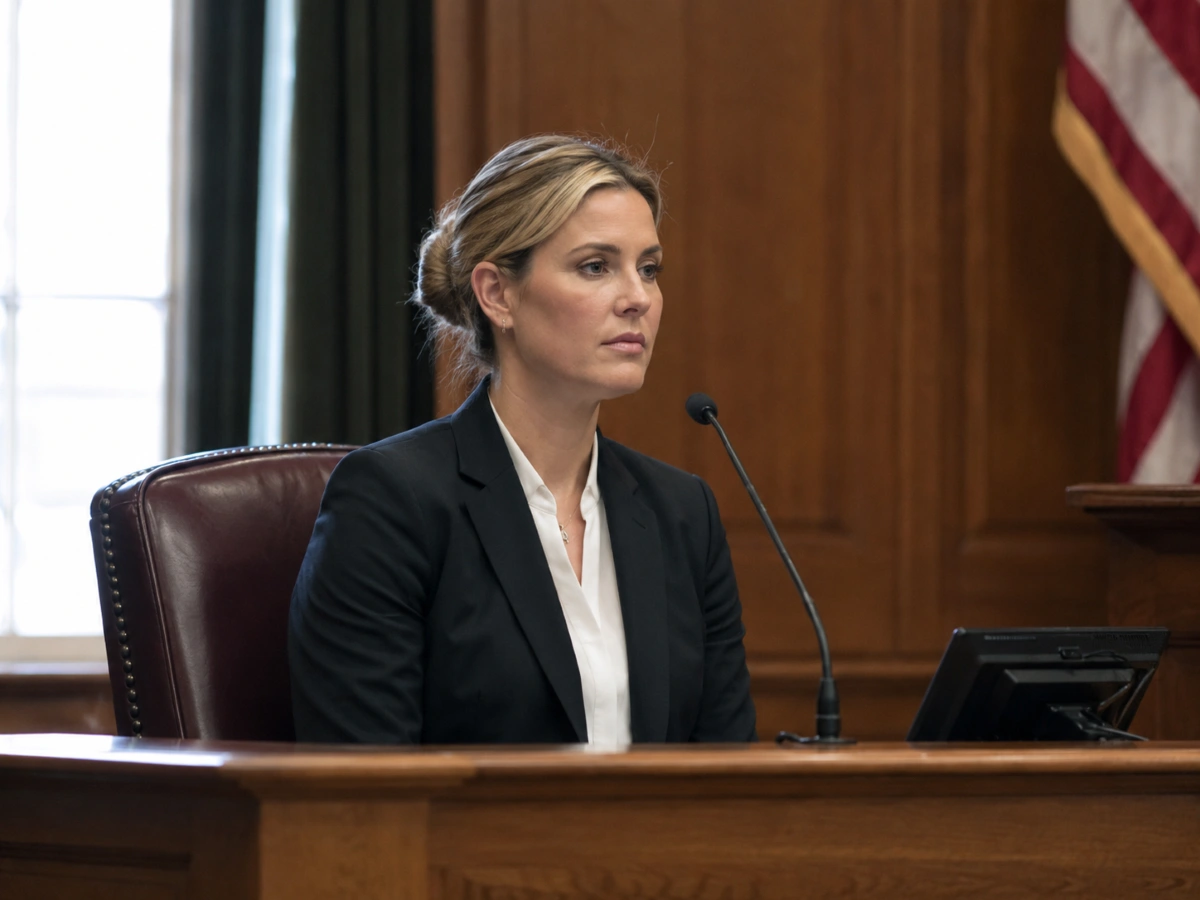
Hire the wrong forensic psychologist and you can lose a case you should have won. A weak expert misreads the data, misses the legal standard, or falls apart on cross-examination, and the whole opinion goes down with them. I’ve watched one thin report undo months of solid legal work. Custody, freedom, and a person’s reputation often ride on a single evaluation.
A forensic psychologist applies psychological science to legal questions like competency to stand trial, criminal responsibility, child custody, and emotional injury. Unlike a therapist, this expert answers to the court, not a patient. The work demands specialized training, courtroom experience, and strict neutrality, which is exactly what a poorly trained evaluator lacks.
Most people assume any licensed psychologist can do this. That’s where cases quietly fall apart.
Inaccurate Evaluations Change the Outcome
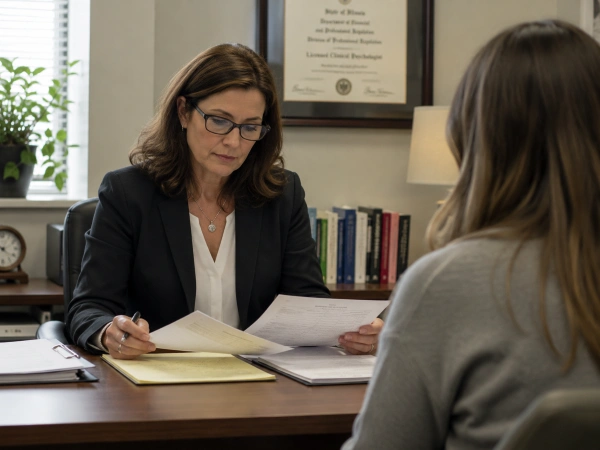
The first risk is the obvious one. Wrong conclusions. An evaluator who picks the wrong tools, skips key records, or trusts a gut read over a validated forensic evaluation can hand the court an opinion that isn’t true.
A 2025 review in the Journal of the American Academy of Psychiatry and the Law found that some examiners lack the basic skills the work requires, with documented quality problems in competency and criminal-responsibility reports, mostly among practitioners without board certification.
On the ground, that means a botched competency finding that pushes someone toward the wrong plea, a flawed report that lands a child in the wrong home, or a sloppy neuropsychological evaluation that misreads a brain injury. The opinion looks authoritative on paper, and that’s the trap.
Bias Is Harder to Spot Than You Think
Neutrality is the whole job. An expert who lets a hunch or an attorney’s preferred story steer the findings serves one side instead of the truth.
Bias rarely looks like cheating. It looks like an examiner who locks onto the first theory and reads every fact to fit it. Research on context effects shows that even irrelevant case details can sway a clinician without them noticing. Actually, that’s the part people underestimate. The worst bias is the kind the expert can’t feel.
A trained specialist builds guardrails. Structured tools, documented reasoning, a clear line between the data and what the hiring side wants. A generalist running a clinical psychological evaluation like a therapy intake usually has none.
Does Your Forensic Psychologist Actually Understand the Legal Standards?
If your expert can’t speak the court’s language, their opinion may never reach the jury. The law sets the bar for what gets admitted.
In federal court and most states, testimony has to clear the federal standard for expert testimony, where the judge acts as a reliability gatekeeper. A 2023 amendment tightened that screen, and judges enforce it harder now. States like California, New York, New Jersey, and Pennsylvania still use a version of the older Frye test. An expert who doesn’t know which one applies, or who oversteps the limits on “ultimate issue” opinions, gets challenged or thrown out.
National specialty guidelines for forensic psychology, extended through 2026, add an ethics line: practice only within your training. Someone dabbling in emotional injury evaluations without forensic grounding is already across it.
A Weak Expert Hands the Other Side an Easy Win
Here’s the part that stings. Even a partly flawed expert is a gift to opposing counsel. They’ll spend cross-examination shredding a thin resume, exposing a sloppy method, or surfacing a bias the evaluator missed. Once credibility cracks, the judge and jury discount everything that person said.
A discredited opinion can taint your whole position, and a verdict built on excluded testimony can be challenged on appeal. I’ve watched a strong case wobble because one expert couldn’t defend their report. The other side won on the weak link, not the facts.
How Do You Vet a Forensic Psychologist in 2026?
Start before you hire. Confirm the license, check for board certification, dig into forensic-specific experience, and ask how they handle bias. The label “forensic psychologist” is broad, and that’s the problem.
The U.S. The Bureau of Labor Statistics counts more than 200,000 psychologists nationwide, a field projected to grow 6% through 2034. But only about 4% hold any board certification, and in a 2024 survey of forensic practitioners, roughly 30% were board certified. A title alone tells you little.
| What to weigh | Board-certified specialist | Minimally experienced practitioner |
| Report quality | Higher reliability, fewer errors | More variable, more errors |
| Courtroom challenge | Built to withstand scrutiny | Higher risk of exclusion |
| Forensic training | 100+ hours plus a fellowship or 1,000+ supervised hours | A few cases or a workshop |
Board certification through the American Board of Professional Psychology is the strongest signal you’ll find. It calls for a doctoral degree from an accredited program, licensure, at least 100 hours of forensic training, and either a formal fellowship or 1,000 supervised hours over five years, plus a credential review, a written exam, and a three-hour oral exam.
Before you sign, ask:
- What share of your practice is forensic, and how many cases like mine in five years?
- Are you board certified in forensic psychology? If not, what training have you completed?
- Which validated, structured instruments do you use, and how do you guard against bias?
- Will you produce raw test data and defend your method under a courtroom challenge?
Location matters too. Certified experts cluster in states like California, New York, Florida, and Texas, and by late 2025 about 40% of the country sat in a mental health professional shortage area, nudging people toward the nearest name over the right one. If you’re a forensic psychologist building a practice, that scrutiny extends to how you present your expertise online, where a marketing partner who understands the legal-services space earns its keep.
The simplest safeguard is a few minutes of verification before you retain anyone, because the wrong forensic psychologist can quietly take the one thing no appeal returns: a fair shot. Work with an experienced forensic psychology practice, confirm the credentials, and make the other side earn every inch.
FAQ
What does a forensic psychologist do?
A forensic psychologist applies psychological science to legal questions, such as competency to stand trial, criminal responsibility, child custody, and emotional injury. They evaluate people, review records, and often testify in court. Unlike a treating therapist, they answer to the court and are expected to stay neutral.
Can any licensed psychologist perform a forensic evaluation?
Not really. A license permits practice within a psychologist’s competence, but forensic work demands specialized training, knowledge of legal standards, and validated methods. In a 2024 survey of forensic practitioners, only about 30% were board certified, so a general license is no guarantee of forensic skill.
How do I know if a forensic psychologist is qualified?
Check the active license, ask about board certification in forensic psychology, and request a resume that shows forensic-specific training and recent case experience. Only about 4% of licensed psychologists hold any board certification, so it is a strong signal worth confirming. Ask how many cases like yours they have handled in the past five years.
What is the difference between a clinical and a forensic psychologist?
A clinical psychologist diagnoses and treats patients. A forensic psychologist applies psychology to legal questions and serves the court rather than a patient. Many start with clinical training, then add forensic education, supervision, and courtroom experience. The roles carry different duties and ethical obligations.
What happens if an expert’s report is biased or unreliable?
The testimony can be challenged, narrowed, or excluded, and a verdict that relied on it can be questioned on appeal. A 2025 review in the Journal of the American Academy of Psychiatry and the Law documented quality and reliability problems in reports, especially from examiners without board certification. A weak report can damage your entire case.
How long does a forensic evaluation take?
It usually takes weeks to months, depending on the case and the records involved. The process typically includes a records review, clinical interviews, psychological testing, contact with collateral sources, and a detailed written report. It is far more involved than a standard therapy session.

Dr. Cathy Colet, Psy.D., is a Licensed Clinical and Forensic Psychologist and founder of FC PsychExperts in Jupiter, Florida. She provides expert witness testimony across criminal, family, and immigration law, with advanced training in competency evaluations, criminal responsibility, child custody assessments, and VAWA hardship waivers.