
8 Tips For Passing A Psychological Test In 2026
Written By: Michael Vale, Content Writer
Medically Reviewed By: Dr. Cathy Colet, Psy.D., Licensed Psychologist
Last Reviewed: April 8, 2026
You can’t “pass” or “fail” a psychological test the way you’d bomb a math final. These assessments measure personality traits, cognitive abilities, and emotional patterns. But you can absolutely prepare so your results reflect the real you, not a stressed-out, sleep-deprived version of yourself.
A psychological test is a standardized assessment administered by a licensed psychologist to measure cognitive function, personality traits, emotional regulation, and behavioral patterns. These tests are used in clinical, forensic, and employment settings to inform treatment plans and legal decisions.
I’ve reviewed hundreds of evaluation reports, and the biggest mistake people make is trying to outsmart the test. Modern instruments like the MMPI-3 and PAI have built-in validity scales that catch exactly that behavior. The smarter move? Walk in prepared, not rehearsed.
This article won’t give you specific test answers (nobody can). It covers how to prepare physically, mentally, and strategically so your evaluation reflects your actual abilities.
Can You Actually “Pass” a Psychological Test?
Not in the traditional sense. There’s no score of 70% that gets you through the door. Psychological tests produce a profile of your strengths, weaknesses, personality traits, and cognitive patterns. Evaluators compare that profile against clinical norms for your age and background.
What you can “fail” at is credibility. The MMPI-3, PAI, and similar instruments include validity scales (F, Fp, L, K on the MMPI; NIM and PIM on the PAI) designed to flag exaggerated, minimized, or inconsistent responses. According to the APA’s forensic psychology guidelines, evaluators are trained to identify response patterns that don’t match clinical expectations. If your profile gets flagged as invalid, that’s worse than any honest answer you could give.
So the real question isn’t “how do I pass?” It’s “how do I show up so my results are accurate and credible?”
Common Types of Psychological Tests in 2026
The U.S. psychological testing market hit roughly $2.5 billion in 2024 and is projected to reach $4.5 billion by 2033, growing at about 7.1% annually. That growth means more people encounter these tests in more settings than ever. The global psychologist services market alone is forecast to grow from $43.76 billion in 2025 to $66.33 billion by 2030.
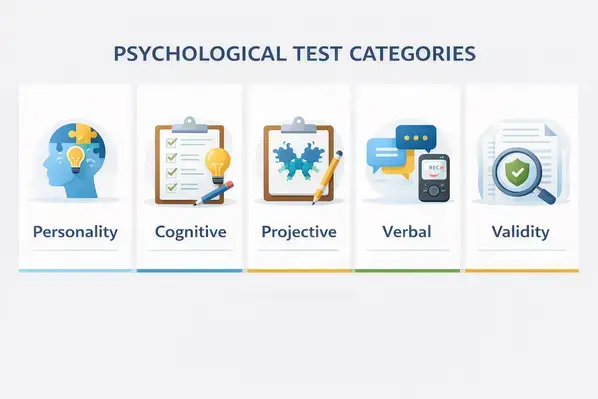
The tests you’ll face depend on why you’re being evaluated. Forensic evaluations use different batteries than clinical screenings. Personality inventories like the MMPI-3 and PAI measure emotional functioning and include malingering-detection scales. Cognitive and IQ tests (WAIS-V, Raven’s Progressive Matrices) measure memory, processing speed, and reasoning. Projective tests like the Rorschach and Draw-a-Person look at unconscious thought patterns. Verbal ability tests assess language skills and sentence comprehension. And effort or validity tests like the TOMM and SIMS specifically check whether you’re giving genuine effort.
Most evaluations combine several of these into a battery. A single test rarely tells the full story, which is exactly why comprehensive neuropsychological evaluations exist.
8 Tips to Prepare for Your Psychological Test
1. Learn What the Test Measures Before You Walk In
Don’t show up blind. Ask the evaluator’s office which tests are included in your battery. If it’s a forensic evaluation, you’ll probably face personality inventories with validity scales. If it’s cognitive testing, expect timed problem-solving tasks. Knowing the format reduces anxiety, and anxiety is one of the biggest score distorters I’ve seen in practice.
2. Be Honest (Don’t Try to Game It)
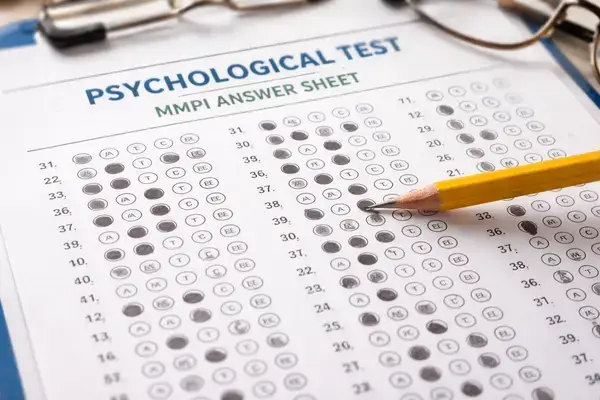
This is the contrarian take most test-prep articles skip: trying to “look good” on a psychological test is the fastest way to torpedo your results. Validity scales on instruments like the MMPI-3 detect over-reporting and under-reporting with high accuracy. Attempting to present a flawless image triggers defensiveness indicators. An honest profile with normal human flaws is infinitely more credible than a suspiciously perfect one.
The most expensive mistake in psychological testing? Faking it. Invalid profiles often require retesting at $2,000–$5,000+, and in forensic contexts, they can lead to adverse legal findings like denied competency or lost custody.
3. Get Your Body Ready the Night Before
Sleep 7–9 hours. Eat a real breakfast, not just coffee. Skip stimulants. This sounds basic, but cognitive tests are timed, and fatigue or caffeine jitters measurably lower scores on attention and processing-speed subtests. I’ve seen evaluations where poor sleep was the difference between a clinically significant finding and a normal range result.
4. Read Every Question Before You Answer
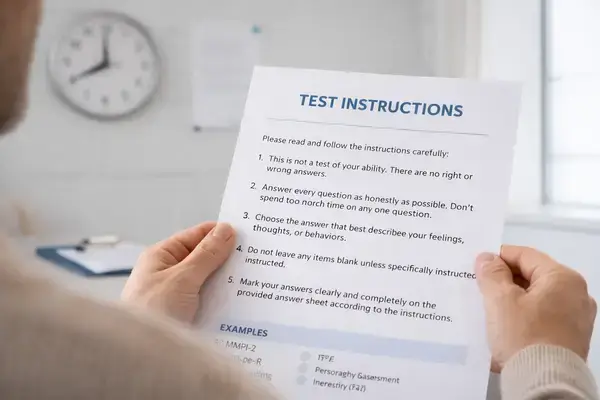
When you get your test materials, take a moment to scan the format. How many questions? What types? Multiple choice, true/false, or open-ended? This takes 30 seconds and gives you a mental map of what’s coming. Rushing into question one without context is a setup for careless errors.
5. Should You Skip Hard Questions and Come Back?
Common advice says do the easy ones first. I’d push back on that for psychological tests. Most personality inventories require you to answer every item, and skipping questions can invalidate sections. On timed cognitive tests, questions typically go from easy to hard by design. Work in order. Budget roughly 30–60 seconds per multiple-choice item and move on if you’re stuck.
6. Go With Your First Response
Overthinking personality test questions creates inconsistency, and inconsistency is exactly what validity scales flag. Your first instinct is usually your most accurate self-report. If a question asks whether you “sometimes feel anxious,” don’t spend two minutes debating what “sometimes” means. Just answer.
7. How Does Process of Elimination Work on Psych Tests?
On cognitive and verbal-ability tests with multiple-choice answers, elimination is your best friend. Cross out answers that clearly don’t fit, then choose from what’s left. On personality tests with only two options (like the EPPS), this doesn’t apply. Pick whichever statement sounds more like you and don’t look back.
8. Stay Focused for the Full Session
Psychological evaluations run anywhere from 4 to 12+ hours across sessions. Your concentration will fade. That’s normal. But the evaluator is watching your effort level, and tests like the TOMM specifically measure whether you’re still trying. Take breaks when offered. Ask for water. Stretch. The Bureau of Labor Statistics reports that roughly 204,300 psychologists practiced in the U.S. in 2024, and experienced evaluators can tell the difference between genuine cognitive difficulty and someone who checked out.
What Happens If Your Test Results Are Invalid?
An invalid profile doesn’t just mean “try again.” The evaluator will likely discount your self-report data entirely and rely on records, interviews, and collateral sources instead. In forensic settings, an invalid profile can lead to an adverse inference, meaning the court may assume you were being deceptive.
Retesting costs real money. Court-appointed evaluations run $650–$2,000 depending on jurisdiction, while private forensic psychological evaluations cost $2,500–$5,000+ with hourly rates of $350–$600. Add legal delays, and you’re looking at thousands more in attorney fees. Honest responding from the start is cheaper than a do-over every single time.
How Much Does a Psychological Evaluation Cost in 2026?
Costs vary wildly by setting and scope:
| Evaluation Type | Cost Range | Duration | Court Weight |
| Court-Appointed Basic | $650–$1,500 | 2–4 hours | Moderate |
| Private Diagnostic + Personality | $2,500–$4,000 | 4–8 hours | Strong |
| Full Forensic + Neuropsych | $5,000–$10,000+ | 8–12+ hours | Strongest |
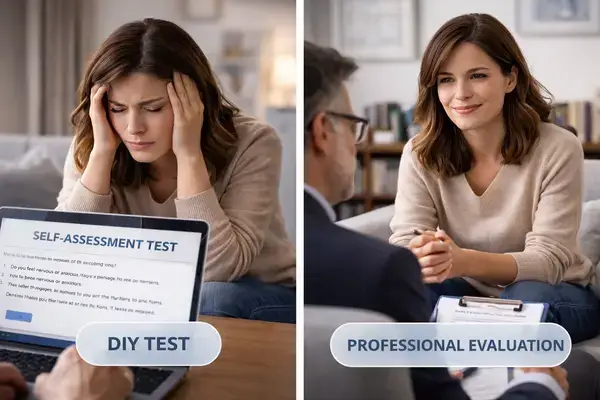
| Online Screeners / DIY | $0–$50 | Minutes | None |
Online practice tests and DIY screeners have zero legal weight and no validity controls. If your evaluation matters (and if you’re reading this, it probably does), the investment in a professional assessment through a qualified evaluation practice pays for itself in credible, defensible results. Working with an experienced team that understands your goals makes the process smoother whether you’re preparing for a legal matter or a clinical referral.
HRSA’s 2025 workforce report projects a 48% shortage of psychologists by 2038 (roughly 99,840 fewer than needed). Wait times are already long in many areas. Book early, prepare well, and don’t waste your appointment by trying to be someone you’re not.
FAQs
Can you fail a forensic psychological evaluation?
Not in the pass/fail sense, but your results can come back “invalid.” Validity scales on instruments like the MMPI-3 detect exaggerated or minimized responses with high accuracy. An invalid profile can lead to adverse findings in court, such as denied competency or lost custody. Honest responding is the only reliable strategy.
How long does a psychological evaluation take?
Most evaluations run 4–12+ hours spread across one or more sessions. A basic court-appointed competency screening might take 2–4 hours, while a full forensic battery with neuropsychological testing can take 8–12 hours. Factor in additional time for record review and report writing on the evaluator’s end.
How do I prepare for a court-ordered psych test without looking like I’m faking?
Review your own records, be consistent with prior statements, and answer honestly. Over-preparation and rehearsed responses often trigger defensiveness scales. Collateral data (interviews with family, medical records) and the clinical interview carry more weight than any single test score. The goal is consistency, not perfection.
Are forensic psychological tests the same as therapy assessments?
No. Forensic evaluations focus on legal questions like competency, risk, and capacity. They include response-style analysis that therapy assessments don’t. The stakes and norms are different. A therapy assessment aims to inform treatment planning. A forensic evaluation aims to inform the court. Private forensic batteries typically cost $2,500–$5,000+, compared to therapy-focused assessments that may be covered by insurance.
What questions are asked during a psychological assessment?
This depends on the test type. Personality inventories (MMPI-3, PAI) ask true/false or scaled questions about your feelings, behaviors, and thought patterns. Cognitive tests present puzzles, word problems, and memory tasks. Clinical interviews cover your history, current symptoms, and daily functioning. Projective tests may ask you to interpret images or draw figures. The evaluator is measuring patterns, not looking for specific “right” answers.
Can I bring notes or records to my psychological evaluation?
Usually yes for background information. Evaluators prefer original records (medical files, legal documents). Bringing detailed notes can appear rehearsed, so keep it simple. A list of your current medications and relevant dates is helpful. Don’t bring notes about how to “answer correctly.”
Do forensic psychologists share test questions with attorneys?
Test security is protected under professional ethics guidelines. Raw test data may be released only under court order with a protective order in place. The American Academy of Forensic Psychology issued a position statement in November 2024 affirming this: disclosure can happen when court-ordered, but test materials must remain confidential to preserve their validity for future use.

Dr. Cathy Colet, Psy.D., is a Licensed Clinical and Forensic Psychologist and founder of FC PsychExperts in Jupiter, Florida. She provides expert witness testimony across criminal, family, and immigration law, with advanced training in competency evaluations, criminal responsibility, child custody assessments, and VAWA hardship waivers.