
A neuropsychological evaluation measures how your brain is actually working. Memory, attention, language, problem solving, speed, mood. You sit for an interview, then a set of standardized tests, and what comes back is a written report explaining what’s going on and what to do next.
Reasons for a considering a neuropsychological evaluation (not limited to):
- Traumatic Brain Injury
- Sports Concussion
- Alzheimer’s Disease and Other Dementias
- Psychiatric Disorders including Somatoform Disorders
- Stroke
- Attention Deficit/Hyperactivity Disorder
- Epilepsy and Seizure Disorders
- Learning Disorders (Reading- dyslexia, Writing, Math)
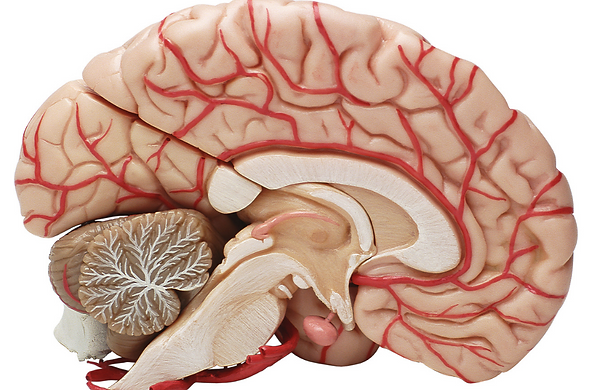

Individuals may seek a neuropsychological evaluation for the following reasons:
- Guardianship
- Ability to return to work
- Disability
- Competency
- Accommodations for college and graduate school entrance examinations
- Determination of treatment needs including making a distinction between medical and mental health dysfunction
What Is A Neuropsychological Evaluation?
It’s testing that shows how the brain is functioning, in numbers, compared against people of your age and background.
A neuropsychological evaluation uses standardized tests to measure thinking and behavior and find out how the brain is working. StatPearls, hosted by the National Library of Medicine, describes it as covering eight cognitive domains: intelligence, attention, learning and memory, language, visuospatial skills, executive function, processing speed, and sensory-motor function.
A brain scan shows structure. This shows function. Someone can have a clean MRI and still be unable to hold a schedule, follow a recipe, or keep a job. Testing catches that, and puts a number on it.
People come to us after:
- A traumatic brain injury
- A sports concussion
- Alzheimer’s disease or another dementia
- A stroke
- A psychiatric diagnosis, including somatoform disorders
- An ADHD question
- Epilepsy or a seizure disorder
- A learning disorder in reading, writing, or math
If you’re still working out whether you need this or a different kind of testing, the practice has a plain explanation of how a neuropsychological evaluation differs from a psychological evaluation.
Why Would Someone In Stuart Need One?
Usually because a decision is waiting on it, and nobody can make that decision without hard data.
The referrals we get from Martin County break down into a few groups. A family notices Dad is repeating himself and can’t manage the checkbook, and someone has raised guardianship. A worker had a fall, went back to the job, and can’t keep up anymore. A student can’t get accommodations approved without documentation. An attorney needs to know whether a client can meaningfully participate in their own case.
Common reasons people ask for testing:
- Guardianship
- Ability to return to work
- Disability
- Competency
- Accommodations for college and graduate school entrance exams
- Sorting out whether a problem is medical or psychiatric
What A Neuropsychological Evaluation In Stuart, Fl Can Settle
Testing answers questions that opinion alone can’t. Here’s where it does the most work.
Getting the diagnosis right
Cognitive complaints overlap badly. Depression looks like early dementia. Sleep apnea looks like ADHD. Anxiety looks like a memory disorder. Testing separates them by showing the pattern of what’s intact and what isn’t, which is why the results point toward a specific treatment plan rather than a general one.
Guardianship and legal capacity in Martin County
Guardianship cases in Stuart run through Florida’s 19th Judicial Circuit, which covers Martin, Indian River, Okeechobee, and St. Lucie counties. In a guardianship case the court appoints an examining committee, and the circuit sets who may sit on it and what they’re paid. Testing gives that process something concrete: not “he seems confused,” but a measured account of which decisions this person can still make and which ones they can’t.
Capacity isn’t one switch. Managing money, choosing where to live, and consenting to medical treatment are separate abilities, and someone can hold onto one while losing another. A report that says “incapacitated” and stops there doesn’t give a judge much to work with. A report that takes them apart one at a time does.
School and exam accommodations
Extra time on the SAT, LSAT, MCAT, or a bar exam isn’t granted on a request letter. Testing boards want data. Documented processing speed and reading scores are what move those applications, and the same data supports classroom accommodations. For younger students, psychoeducational testing is often the better fit.
Is it medical or psychiatric?
This is the question I get asked most by physicians, and it’s the one testing is best at. After a stroke, cognitive changes get read as depression. After a concussion, real deficits get written off as stress. Both mistakes send people to the wrong treatment for months. The pattern of scores across domains usually tells you which one you’re looking at.
Here’s how that works in practice. Depression tends to drag down attention, speed, and effortful recall while leaving recognition memory fairly intact, so a cue rescues the answer. Alzheimer’s disease damages storage itself, and a cue doesn’t help because the information was never filed. The patient describes the same complaint either way. The pattern on the page is not the same.
After a brain injury or concussion
The problem after a TBI is rarely that someone can’t function. It’s that they can’t function at the level they used to, and nobody can say by how much. Testing puts a number on the gap, which is what a return-to-work plan or a workplace accommodation actually needs.
Help For Families And Caregivers
Families adjust better when they know what they’re dealing with. Knowing that a parent’s short-term memory is impaired but their judgment is intact changes how you talk to them, what you hand off, and what you stop arguing about.
How The Evaluation Runs, From Interview To Report
Five stages, in order, and one of them is the part almost nobody explains.
The clinical interview
We start with history: medical, psychiatric, educational, and what changed and when. This shapes everything after it. Two people with identical complaints get different test batteries depending on what the history suggests.
Cognitive testing
Standardized tests across the domains listed earlier. Each one maps to brain systems, so the pattern of strengths and weaknesses points somewhere specific.
Emotional and behavioral assessment
Structured interviews and self-report measures covering mood, anxiety, stress, and behavior. This isn’t a side note. Depression alone can drag memory scores down, and reading those scores as dementia would be a serious error.
What is validity testing, and why does it matter?
Validity testing checks whether your test results are a true picture of your ability. Without it, every other number on the report is unanchored.
This is the part I’d push back on the rest of the field about. Most testing pages in this area will tell you what gets measured. Almost none will tell you whether anyone checks that the measurement is real, and in a claim or a court case that’s the first thing an opposing expert goes after.
The professional bodies are not ambiguous here. The National Academy of Neuropsychology’s position paper on symptom validity states that validity assessment “is an essential part of a neuropsychological evaluation” and that “the clinician should be prepared to justify a decision not to assess symptom validity.” In forensic settings it goes further: skipping it “would need to be justified.” The American Academy of Clinical Neuropsychology’s 2021 consensus statement says all clinical and forensic evaluations “must proactively address the degree to which results of neuropsychological and psychological testing are valid.” A 2015 National Academies review noted that both bodies endorse PVT measures in any neuropsychological examination.
The reason this matters in dollars: that same National Academies review cited estimates that somewhere between 19 and 68 percent of Social Security disability applicants may be performing below their real capability or misreporting symptoms. That’s a huge spread, and the honest reading is that nobody knows the true rate. But it explains why claims examiners and defense attorneys treat an unvalidated report as worthless.
Here’s the part people find surprising: validity testing protects the honest claimant more than it catches the dishonest one. If you’re really impaired and your report documents valid effort, that report is far harder to dismiss. If you want the longer version, we’ve written about whether you can fail a neuropsychological evaluation.
And one thing worth saying plainly, because it worries people. An invalid result doesn’t mean someone got caught lying. Pain, broken sleep, medication side effects, and plain exhaustion all push effort scores down. That’s the reason a finding like this belongs in the report with an explanation attached rather than being quietly dropped. A report that says scores were affected by pain and fatigue, and here’s how we accounted for it, is stronger than one that pretends the question never came up.
What changes when a report is headed somewhere legal
| Evaluation for treatment | Evaluation headed to a claim or a courtroom | |
|---|---|---|
| Question being answered | What’s wrong, and what helps? | Will these findings survive a challenge? |
| Who reads it | You, your physician, your family | A claims examiner, opposing counsel, a judge |
| Validity testing | Recommended in any evaluation | Expected, and its absence has to be justified |
| Records review | Usually brief | Extensive, because inconsistencies get found |
| Report detail | Enough to guide care | Enough to defend every conclusion |
| Cost of a weak report | Care plan gets adjusted | Report gets excluded or taken apart on cross |
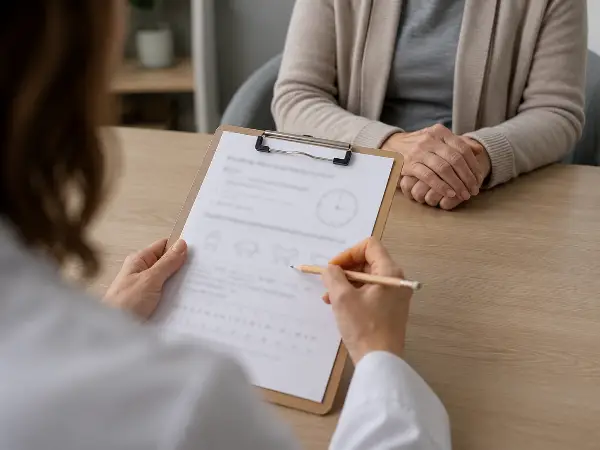
The written report
The report lays out performance by domain, interprets it against your history, and makes specific recommendations. Rehabilitation, therapy, accommodations, changes at work or at home. For a legal file it also has to explain the reasoning well enough to hold up when someone attacks it.
The recommendations are the part that actually gets used. A report that stops at scores is a document. A report that names which accommodations to request, which specialist to see next, and what’s worth re-testing in a year is a plan, and a plan is what the person who paid for it needed.
How do Martin County courts use these evaluations?
Stuart cases run through the 19th Judicial Circuit, and the circuit has written rules about who may serve as a court-appointed expert and how the work must be done.
Who actually does the testing?
You should ask this before you book anywhere, and the 19th Circuit agrees with you.
In April 2026 the circuit issued Administrative Order 2026-05, covering court-appointed expert witnesses in Martin, Indian River, Okeechobee, and St. Lucie counties. Experts on the circuit’s registry must “perform and complete all aspects of an evaluation or examination personally and not delegate any portion of an evaluation or examination to employees, subcontractors, or agents.” The order also requires at least three years of experience in the expert’s field, completed forensic evaluator training, and licensure as a psychiatrist, psychologist, or physician. Written reports are due with the court within fourteen days of the examination.
Plenty of practices hand test administration to a technician. That’s legal and it’s common. But if your evaluation might end up in front of a Martin County judge, the standard the court applies to its own appointed experts is a reasonable standard to hold your evaluator to.
There’s a practical reason the court cares. The person sitting across from you for several hours picks up things a score sheet never records. Whether you quit early on the hard items. Whether you were still sharp after lunch. Whether your account of your own history drifted between morning and afternoon. If the examiner never met you, none of that reaches the report, and none of it is available when someone asks how the conclusion was reached.
Disability and injury claims
Insurers and disability carriers want measured findings, not impressions. Testing gives them cognitive performance documented against normative data, with the validity of that performance addressed on the record. That’s the difference between a claim that gets reviewed and one that gets denied for insufficient objective evidence. We go deeper on this in our piece on what a neuropsychological evaluation does in a disability claim.
For litigated matters, testing often sits alongside forensic psychological evaluations or personal injury evaluations, depending on what the case needs.
Working with FC PsychExperts in Stuart, FL
Let’s be direct about location. Our office is at 210 Jupiter Lakes Blvd, Unit 4-201, Jupiter, FL 33458, a short drive south of Stuart on I-95. We don’t have a Stuart street address, and I’d rather say that than let you find out on the day.
What we do have is the thing that’s harder to move: a practice that has worked in Florida’s 19th Judicial Circuit and four others since 2008, and evaluators who put their names and license numbers on the report. Dr. Cathy Colet, PY9058, founded the practice and reviewed this page. My own background, PY8992, is on my bio page, and the same neuropsychological evaluation work is available across Palm Beach County, including Palm City.
Two things worth knowing before you call. You don’t need a physician referral to schedule with us. And if you’re not sure this is the right testing for your situation, say so on the phone. Sending someone for the wrong evaluation wastes their money and mine.
Call 561-870-0411 to set up neuropsychological evaluations in Stuart, FL, or to work out whether that’s even the testing your situation calls for. Monday to Friday, 7:30 AM to 4:30 PM.