
How To Prove A Traumatic Brain Injury
Written By: Michael Vale, Content Writer
Medically Reviewed By: Dr. Cathy Colet, Psy.D., Licensed Psychologist
Last Reviewed: August 11, 2026
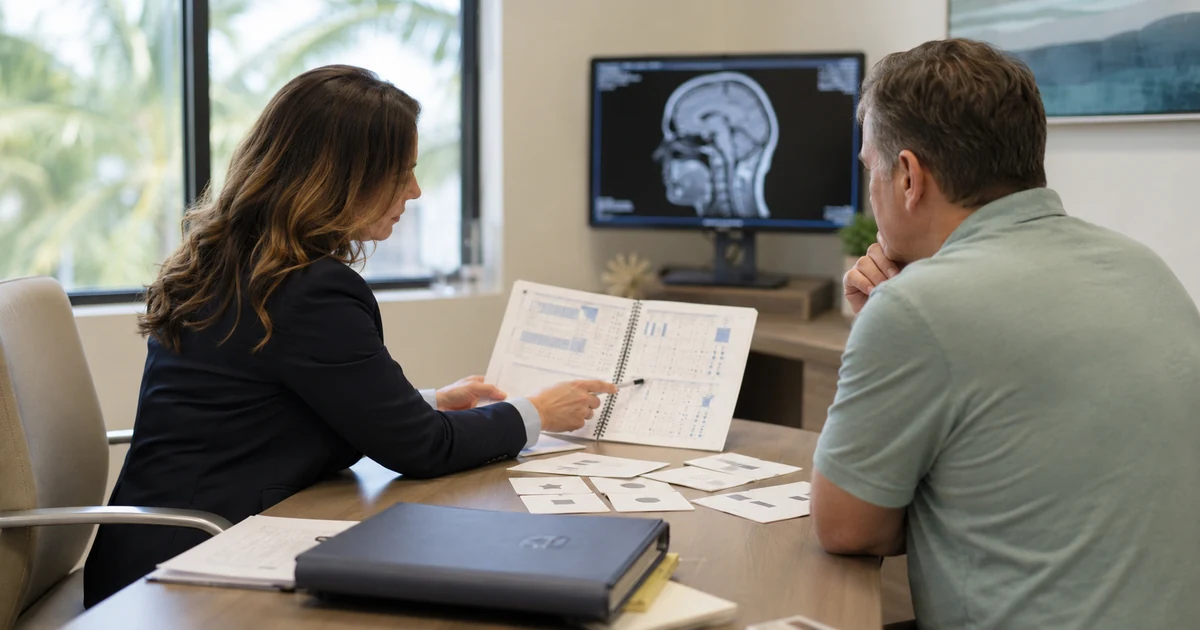
You prove a traumatic brain injury with a forensic neuropsychological evaluation, not a brain scan. That order surprises most people, because the scan feels like the hard proof. Here is the problem. The CDC says a CT scan is not even needed to identify a mild TBI, and most mild brain injuries never show up on a standard MRI. The damage is real. The picture just comes back clean. What proves the injury is a structured battery of standardized tests that measures memory, attention, and processing speed, links those results to the event that caused them, and shows the scores are valid. In Florida, that evaluation also has to clear the Daubert standard before a jury hears a word of it. Skip that last step and the whole opinion can be thrown out.
A forensic neuropsychological evaluation is a set of standardized tests that measure how the brain is working after an injury. It scores memory, attention, language, and processing speed, checks whether the effort behind those scores is genuine, and ties the pattern back to the injury. In court, it turns invisible symptoms into documented data.

Why a Normal Brain Scan Does Not Disprove a Tbi
A clean MRI or CT does not mean your brain is fine. It means the scanner did not see bleeding or a gross structural lesion, which is a different thing entirely. Most traumatic brain injuries are mild, and the CDC states plainly that a brain scan is not needed to spot a mild TBI or concussion. Standard imaging is built to catch bleeds, swelling, and large lesions. It was never designed to see the stretched and sheared nerve fibers that drive concussion symptoms.
This is exactly where the defense goes to work. Normal scan, so no injury, so no damages. It is a clean argument and it is wrong on the science. The injury lives at the cellular level, below what routine imaging resolves. The person still cannot follow a conversation, hold a thought, or work a full day. Proving that gap between a normal picture and a changed life is the entire job.
What Actually Proves a Traumatic Brain Injury?
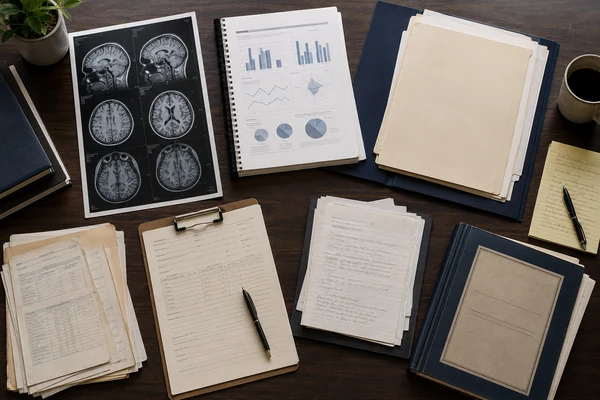
The proof is a stack of evidence, and each layer does one thing the others cannot. No single test carries a TBI case. Here is what each piece shows and where it stops.
| Evidence type | What it proves | What it cannot do |
|---|---|---|
| CT / MRI | Bleeds, swelling, skull fracture, gross lesions | Detect most mild TBIs; the scan is often normal |
| Neuropsychological testing | Measured deficits in memory, attention, processing speed | Prove cause on its own; needs history and validity data |
| Validity / effort testing | That the scores are genuine, not exaggerated | Diagnose the injury by itself |
| Pre-injury baseline records | The person functioned differently before the event | Show current status without new testing |
| Family and lay witnesses | Day-to-day changes in mood, memory, behavior | Quantify the deficit or survive alone in court |
Read down that table and the order of importance flips from the version most law firm articles tell. The scan is near the bottom for a mild TBI. The testing and the effort data are the spine.

What a Neuropsychological Evaluation Measures, and How It Proves Brain Injury
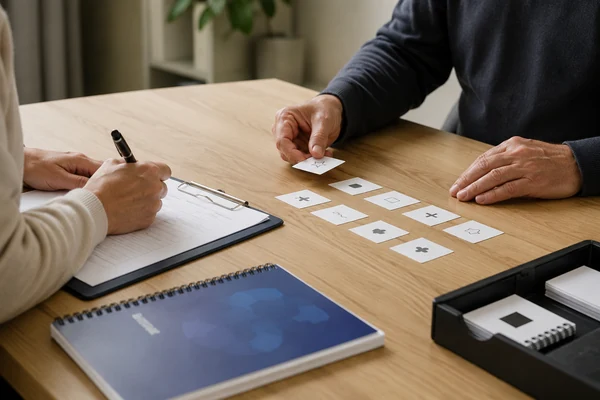
A neuropsychological evaluation measures the specific brain functions an injury tends to damage, then compares your scores to what someone your age and background should score. It usually runs several hours across a clinical interview and standardized tests. The evaluator scores memory, attention, language, processing speed, and executive function, the planning-and-multitasking system that head injuries hit hardest.
The CDC calls these neuropsychological or neurocognitive tests and notes they help identify the effects of a mild TBI, adding that you can still have an injury even when it does not show on testing. The pattern is what matters. A real TBI leaves a fingerprint: slowed processing, weak new learning, shaky attention, with older knowledge and vocabulary left intact. A neuropsychologist reads that pattern and explains to a jury why it fits the mechanism of the injury. At FC PsychExperts, neuropsychological evaluations are conducted by Dr. Lauren Miller, Psy.D., J.D., who then documents how the results connect to the event.
The Evidence most TBI articles Skip is Validity Testing
Here is the part no law firm page will tell you, and the part that decides cases. A credible TBI evaluation has to prove the scores are genuine. Neuropsychologists build in performance validity and symptom validity measures, tools that flag when results look exaggerated or feigned. Leaving them out is not a small gap. It is the first thing a good defense expert attacks.
The numbers explain why. In a national survey of board-certified neuropsychologists, Mittenberg and colleagues found that 39% of mild head injury claims produced a diagnostic impression of probable malingering. Probable malingering or symptom exaggeration showed up in 29% of personal injury cases and 30% of disability cases, against just 8% of medical cases where no money was on the line. Financial stakes change how some people perform on tests, and courts know it.
So the counterintuitive truth is this: the evaluation that tries hardest to catch faking is the one that best proves a real injury. When a neuropsychologist runs validity testing and the plaintiff passes it, the deficits become far harder to dismiss. The American Academy of Clinical Neuropsychology’s consensus statement treats validity assessment as a standard part of a defensible evaluation, not an optional add-on. An expert who skips it is handing the other side an opening.
How Do You Prove the Accident Caused the Tbi?
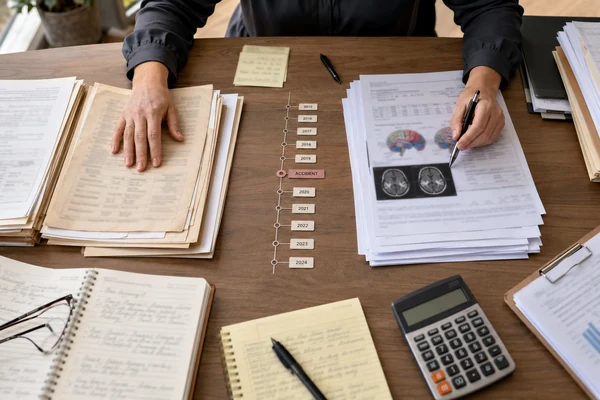
Causation is a separate fight from diagnosis, and you win it with a before-and-after picture. A deficit today proves nothing unless you can show the person did not have it before the event. That is why the personal injury evaluation does a pre-injury and post-injury comparison, the way FC PsychExperts frames its injury work.
The strongest corroboration sits in records that predate the case. School transcripts, job performance reviews, productivity metrics, and old medical charts establish the baseline. If testing shows slowed processing speed and the employer’s file shows output dropping in the same window after the crash, the two data sets reinforce each other. The evaluator also has to rule out other explanations, such as prior concussions, depression, sleep loss, or substance use, and account for anything that predates the injury. Causation that ignores those alternatives does not survive cross-examination.
Will a Neuropsychologist’s Testimony Hold Up in a Florida Court?
Only if the methods are sound. Florida applies a reliability test before an expert says anything to a jury, and a polished resume will not rescue weak science. On May 23, 2019, the Florida Supreme Court adopted the Daubert standard, and Florida Statute 90.702 now allows an expert opinion only when three things are true. It rests on sufficient facts or data. It uses reliable principles and methods. And the expert applied those methods correctly to the facts of the case.
For a TBI opinion, that means standardized, properly normed tests, validity measures, and a documented chain from the injury to the findings. This is why forensic training matters more than a license. A clinician can be excellent in a therapy room and still write a report that gets struck. The value of a court-qualified forensic evaluator is an opinion built from the start to pass that reliability test, not one dressed up for court after the fact.
Does Proof Change for a Mild, Moderate, or Severe Tbi?
Yes, and the severity flips which evidence carries the weight. A severe TBI often shows on imaging, comes with a documented loss of consciousness, and has an emergency record that speaks for itself. Proof there is more about extent and long-term impact than about whether an injury happened.
Mild TBI is the hard case, and it is the most common one. The scan is usually clean, the ER note may say little, and the symptoms are real but invisible. That is precisely where neuropsychological testing and validity data move from helpful to decisive. When the picture is blank, the numbers become the evidence.
What Weakens a Traumatic Brain Injury Claim?
Gaps do. We see the same avoidable problems again and again. A long delay between the injury and the first evaluation lets the defense argue the symptoms came from something else. No baseline records means no clean before-and-after. An evaluation with no validity testing looks incomplete the moment an opposing expert reads it. Inconsistent symptom reporting, where the story shifts across providers, invites a credibility attack.
None of these mean the injury is fake. They mean the proof was assembled loosely. A TBI is provable when the testing is rigorous, the records line up, the effort data is clean, and one qualified expert can walk a jury from the event to the deficits without a gap.
When to Bring In a Forensic Neuropsychologist
Sooner helps. An early evaluation captures deficits while they are measurable and starts the baseline comparison before memories and records fade. FC PsychExperts works across criminal and civil matters as court-qualified experts in Florida’s 1st, 15th, 17th, 19th, and 20th Judicial Circuits, with offices in Jupiter and Fort Lauderdale.
Whether you are an attorney building an injury case or a person trying to prove what happened to you, the injury being real is rarely the hard part. Whether the evidence survives cross-examination is. That is decided by how the evaluation is built, and it is the difference between proving a traumatic brain injury and merely claiming one. To discuss an evaluation, contact FC PsychExperts or call (561) 870-0411.
Frequently Asked Questions
How do you prove a traumatic brain injury?
You prove a traumatic brain injury with a forensic neuropsychological evaluation that documents measured deficits, confirms the scores are valid, and links them to the event, backed by medical records and pre-injury baselines. Imaging supports a severe TBI but is often normal in a mild one, so the testing carries the proof.
Can you have a TBI with a normal MRI or CT scan?
Yes. Most TBIs are mild, and the CDC says a brain scan is not needed to identify a mild TBI or concussion. Standard imaging detects bleeds and gross lesions, not the microstructural damage behind most concussions, so a normal scan alongside real symptoms is common rather than contradictory.
What is the strongest evidence to prove a TBI?
A neuropsychological evaluation with validity testing is usually the strongest evidence in a mild TBI case, because it measures real-world cognitive function and shows the results are genuine. In a severe TBI, imaging and emergency records carry more weight. Most cases use several layers together.
What is symptom validity testing, and why does it matter?
Symptom and performance validity tests flag when results look exaggerated or feigned. They matter because a large share of litigated claims involve suspected exaggeration. Mittenberg and colleagues found probable malingering in 39% of mild head injury claims, so an evaluation that passes validity testing is far harder to challenge.
Is a neuropsychologist’s testimony admissible in a Florida court?
It can be, but it must meet the Daubert standard. Under Florida Statute 90.702, an opinion is admissible only if it rests on sufficient facts or data, uses reliable methods, and applies those methods correctly to the case. A TBI opinion built on properly normed tests and validity data is designed to clear that bar.
How soon after an accident should I get a neuropsychological evaluation?
As soon as your condition is stable enough to test. An early evaluation records deficits while they are measurable and starts the pre-injury and post-injury comparison before records and memories fade. Waiting gives the defense room to argue the symptoms came from another cause.
Who diagnoses and proves a TBI, a neurologist or a neuropsychologist?
Both contribute. A neurologist addresses the medical and physical side, including imaging. A neuropsychologist measures how the injury affects thinking and function through standardized testing, which is what proves the cognitive impact in court. Many strong cases use both.

Dr. Cathy Colet, Psy.D., is a Licensed Clinical and Forensic Psychologist and founder of FC PsychExperts in Jupiter, Florida. She provides expert witness testimony across criminal, family, and immigration law, with advanced training in competency evaluations, criminal responsibility, child custody assessments, and VAWA hardship waivers.