
Family Therapy In West Palm Beach, FL
Therapy for the whole family: a teen who has shut down, co-parents who cannot agree, a step-family finding its footing, or a court order that says family counseling. Doctoral-level practice, first sessions this week, by secure video across Florida or in person in Jupiter.
- Licensed in Florida
- Confidential
- Working with Florida family courts since 2008
Quick answer: Family therapy brings 2 or more family members together with a licensed clinician to change the patterns between them, not just 1 person. Sessions run 50 to 80 minutes, by secure video anywhere in Florida or in person at 210 Jupiter Lakes Blvd in Jupiter. The practice, founded in 2008 by Dr. Cathy Colet, also handles reunification, co-parenting and court-referred family cases for West Palm Beach families. Call (561) 870-0411.
What Family Therapy Is, And Who Is In The Room
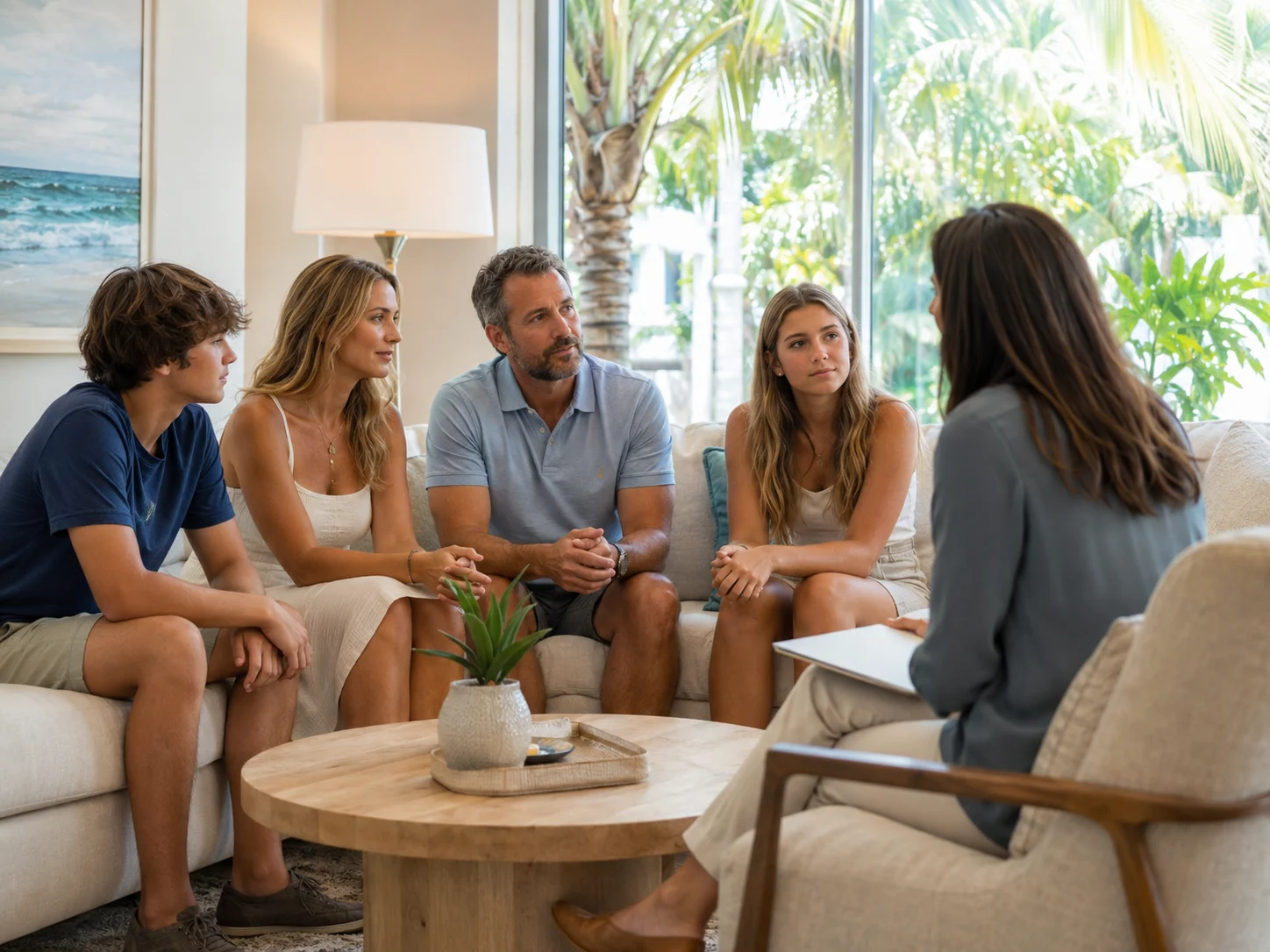
Family therapy is treatment where 2 or more family members meet with a licensed clinician together.
Instead of treating 1 person, it works on the patterns between people: how conflict starts, how it escalates, and how the family recovers. The approaches used here are structural, systemic and attachment-based, matched to the family rather than applied off a shelf.
Who attends depends on the goal. Some sessions include everyone in the household. Others are a parent and 1 child, or 2 co-parents with no children present. Your clinician plans that in the first session, and the mix changes as the work moves.
Sessions run 50 to 80 minutes.
A 13-Year-Old Can Start Therapy Without You
Under Fla. Stat. 394.4784, a Florida minor aged 13 or older can request and consent to outpatient crisis intervention on their own. That covers diagnostic and evaluative services, and it covers verbal therapy: individual psychotherapy, group therapy and counseling from a licensed mental health professional. No parental consent is needed to begin.
The limits are specific, and they are the part that gets left out.
The statute excludes medication and somatic treatment. Services cannot exceed 2 visits in any 1-week period before a parent or guardian has to consent for treatment to continue. No provider is required to offer this at all.
Parents hear that 2 ways. Some hear a loophole. What it does in practice is give a teenager who will not talk to you a door that is not you, and it gives a clinician 2 sessions to see what is actually happening. Most of the time the next move is bringing the parents in. That is the point of it.
If your teenager has shut down and will not agree to anything you arrange, this is the statute to know about.
There Is A Code For The Session He Skips
Family therapy has a procedure code for the session your missing member does not attend.
The CPT code set, published by the American Medical Association, splits family psychotherapy in 2. Code 90847 is family psychotherapy with the identified patient present for most of the session. Code 90846 is family psychotherapy without the identified patient present. Both are 50-minute family psychotherapy. Both are recorded under the identified patient. The only difference between them is who is in the chair.
In plain terms: the work can start without the person who will not come.
A parent and 1 sibling can do real family therapy about a teenager who is still refusing. 2 co-parents can work on the handoffs with no child in the room. A spouse can work on the pattern while the other one is still deciding. None of that is a workaround. It is a code that has existed for years, and almost nothing on page 1 of this search explains it.
Ask for it by name when you call. “Will you see us under 90846 while we work on getting him in?” A clinician who does family work answers immediately. One who does not will ask you to repeat the question.

What The Letters After The Name Actually Mean
A directory card that says “family conflict” can belong to 4 different license types, and Florida regulates them under 2 separate chapters.
Chapter 491 covers marriage and family therapists, mental health counselors and clinical social workers. Chapter 490 covers psychologists. A registered intern is supervised and not independently licensed. All 4 can appear on the same results page with the same 3 words under the photo.
Fla. Stat. 491.003(9) defines the practice of marriage and family therapy as the use of “scientific and applied marriage and family theories, methods, and procedures for the purpose of describing, evaluating, and modifying marital, family, and individual behavior, within the context of marital and family systems.”
Licensure under 491.005(3)(d) takes at least 2 years of post-master’s clinical experience. At least 50% of the applicant’s clients have to be receiving marriage and family therapy services during it. Supervision has to come from a licensed marriage and family therapist with at least 5 years of experience. And the direct therapy has to include unmarried couples, married couples, separating or divorcing couples, and family groups with children present.
That last clause is the one to hold onto. Florida does not let anyone qualify as a marriage and family therapist without having sat in a room with separating couples and with families that have children in it. A directory card tells you none of that.
Look the name up on the Florida board’s license verification before you book. It takes under a minute and it settles the question.
At FC PsychExperts, family sessions are run by Jessica T. Aloise, LCSW, with more than 20 years in practice. Clinical oversight sits with Dr. Cathy Colet, Psy.D., licensed clinical and forensic psychologist, Florida license PY9058, who founded the practice in 2008.
Family Therapy Compared With Couples And Individual Work
Families often book the wrong service first. This is how we sort it on the phone.
| Family therapy | Couples therapy | Individual therapy | |
|---|---|---|---|
| Who is in the room | 2 or more family members, mix can change | The 2 partners | 1 person |
| The client is | The family system | The relationship | The individual |
| Best when | A child or teen is struggling, roles are unclear, a transition hit everyone | The issue lives between 2 adults | 1 person wants change regardless of what others do |
| Court referrals | Yes – reunification, co-parenting, dependency cases | Rarely | Yes – court-ordered individual therapy |
| Typical length | 8-12 sessions, longer for reunification | 8-20 sessions | 6-12 sessions for focused goals |
| Session length | 50-80 minutes | 50-80 minutes | 50 minutes |
Not sure which column is you? Say so when you call and the office matches you to the right service and clinician. If individual therapy is the better starting point, we will tell you that instead of booking the wrong thing.
Court-Referred Families, And The Line Most Practices Do Not Draw
Palm Beach County sits in Florida’s 15th Judicial Circuit, and the main courthouse for family matters is in West Palm Beach. Under Fla. Stat. 61.13, a parenting plan can carry requirements the court expects somebody to document. FC PsychExperts has worked with Florida family courts since 2008, and takes referrals from family-law attorneys, guardians ad litem and the court directly, in the 15th, 17th, 19th, 20th and 1st circuits.
Here is the line that matters, and that almost nobody draws for you. The clinician who treats your family should not be the one who later writes a capacity opinion about it. Those are 2 different jobs with 2 different duties. A treating clinician works for the family. An evaluator works for the court. Collapsing them looks efficient right up until the day it is challenged, and then the whole file is in question.
We separate them on purpose. Ask every practice you call whether they do the same. The ones that do not will cheerfully offer you both from the same person.
If your order names therapy specifically rather than family work, start at court-ordered therapy in West Palm Beach.
Ask about a court-referred caseYour First Family Session
Most families arrive braced for a blame session. It is not that.
- Minutes 0 to 15
Everyone gets the same question
What would need to be different for you to say this helped. Each person answers. Nobody is interrupted. The clinician is already watching how your family handles taking turns.
- Minutes 15 to 45
The pattern, not the person
We map the loop. Who reacts to whom, what happens next, where it ends. Families are usually surprised the fight has a shape, and that the shape is the target.
- Minutes 45 to 65
Short one-on-one time if needed
A teen or a co-parent may get a short stretch alone. What gets shared back is agreed in advance, so nobody is ambushed.
- Minutes 65 to 80
1 thing to try before next time
Small, specific, doable by Sunday. Plus a plan for who attends the next session and how often you meet.
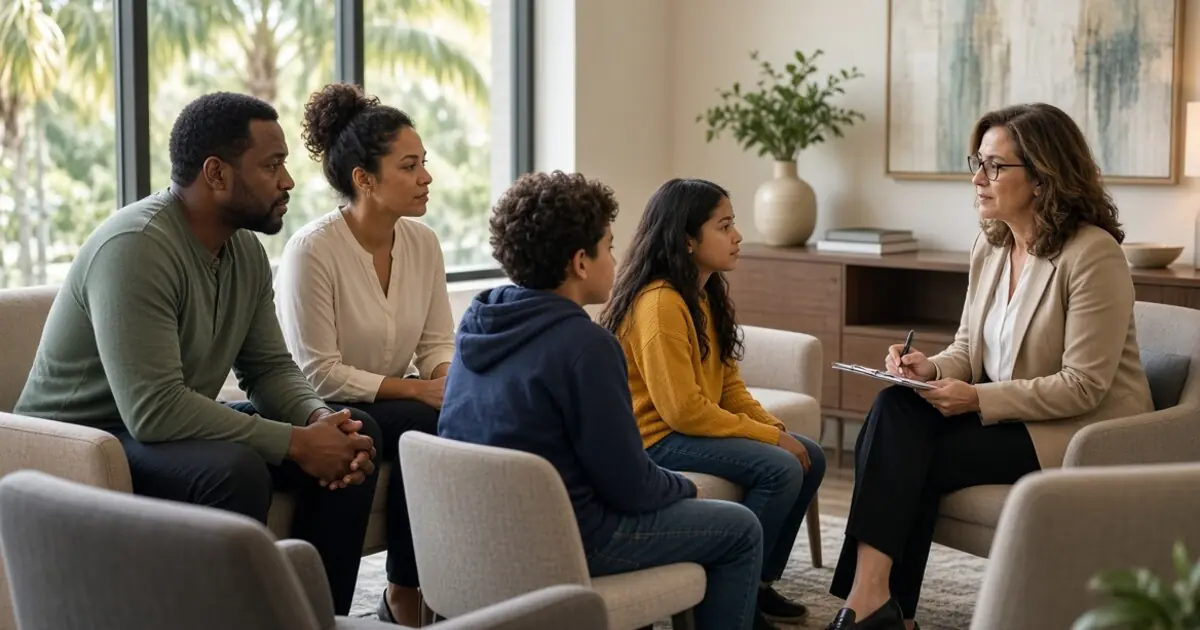
The Clinicians Behind Your Family’s Care
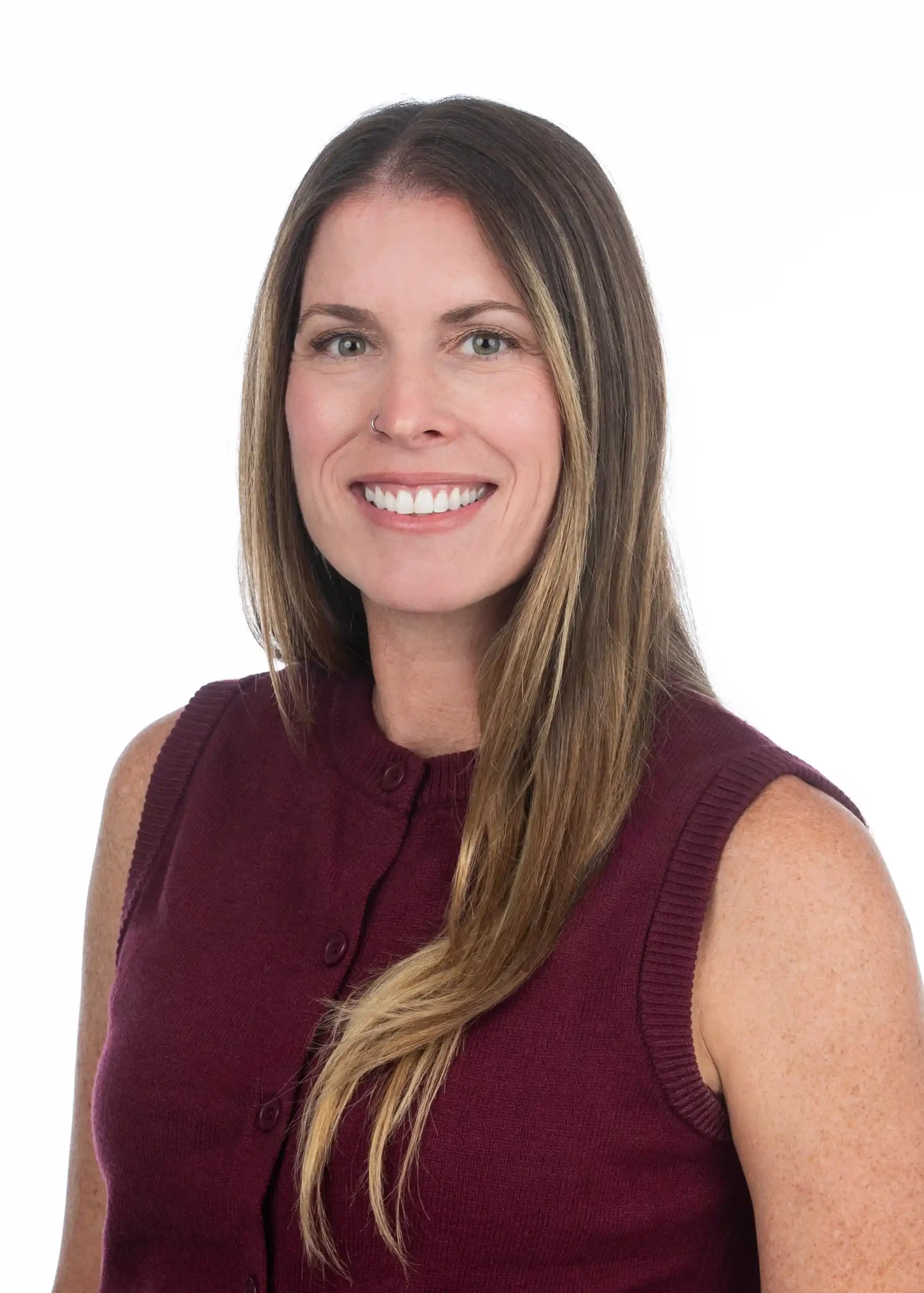
Jessica T. Aloise, LCSW
Licensed Clinical Social Worker · 20+ years
With over 20 years in practice, Jessica works with parents, teens and whole households on the emotional and behavioural patterns that keep a family stuck. Her family work centres on communication, regulation and repair: helping each member say what they need in a way the others can hear.
Works with: parents and teens · co-parents · blended families · adult families

Dr. Cathy Colet, Psy.D.
Licensed Clinical & Forensic Psychologist · Founder · Florida license PY9058
Since founding the practice in 2008, Dr. Colet has built a family-law caseload that includes evaluations and expert testimony in Florida family courts. She oversees court-referred family cases and the documentation they require.
Works with: court-referred families · reunification · custody-related evaluation · treatment oversight
What Families And Attorneys Say
★★★★★I am truly grateful for what Dr. Colet has done for our family. Everything about her was above and beyond what I had experienced before with other psychologists. Matter of fact, doesn’t waste any time, and yet there is a sense of compassionate wisdom.
Georgia W.Client
★★★★★I have worked with Dr. Colet for several years. Dr. Colet places her clients first and provides each with individualized care, attention to detail, and real-world guidance. I do not hesitate to refer clients to her.
Maria CammarataAttorney at Law
★★★★★The staff took the time to explain each step, and the entire experience was both professional and supportive. It has been a crucial part of our treatment plan, and I’m very grateful for their help.
Christopher S.Client
How West Palm Beach Families Reach Us
- Office in Jupiter, not downtown West Palm Beach. 210 Jupiter Lakes Blvd, Unit 4-201, Jupiter, FL 33458, at the north end of Palm Beach County.
- Most West Palm Beach families meet by secure video. Same clinician, same session, no drive. Available anywhere in Florida.
- In person is up I-95 if you would rather be in the room.
- Split households run on separate screens. Co-parenting sessions can have each parent joining from their own location. No shared waiting room.
- Saturdays, 9 AM to 4 PM, the slot families with school-age children ask for most.
We work the same way for families across the rest of the county. If you are north or west of the city, start at family therapy across Palm Beach County.
Family Therapy FAQ
What is family therapy?
Family therapy is treatment where 2 or more family members meet with a licensed clinician together. Instead of treating 1 person, it works on the patterns between people: how conflict starts, how it escalates, and how the family recovers. Sessions here run 50 to 80 minutes and use structural, systemic and attachment-based approaches matched to the family.
Who needs to attend family therapy sessions?
It depends on the goal. Some sessions include everyone in the household; others are a parent and 1 child, or 2 co-parents without the children. Your clinician plans this with you in the first session, and the mix can change over time.
Can my teenager start therapy without my consent?
In Florida, yes, within limits. Fla. Stat. 394.4784 lets a minor aged 13 or older request and consent to outpatient crisis intervention including verbal therapy. It excludes medication, caps services at 2 visits in any 1-week period before a parent must consent for treatment to continue, and does not require any provider to offer it.
What if 1 family member refuses to attend?
Start anyway. CPT 90846 is family psychotherapy without the identified patient present, and 90847 is the same session with them there. A clinician who does family work can begin with whoever is willing and work toward bringing the rest in.
Is an LMFT different from an LMHC or a psychologist?
Yes. Chapter 491 licenses marriage and family therapists, mental health counselors and clinical social workers. Chapter 490 licenses psychologists. LMFT licensure specifically requires post-master’s experience with separating couples and with family groups that have children present. Verify any name on the Florida board site before booking.
Can family therapy be court ordered?
Yes. Florida family courts order family, reunification or co-parenting therapy as part of a parenting plan or dependency case. FC PsychExperts accepts court-referred families and provides attendance and progress documentation when the order requires it.
Does FC PsychExperts provide reunification therapy for West Palm Beach families?
Yes. Reunification therapy helps rebuild contact between a child and a parent after separation, estrangement or a court order. It runs in stages with clear criteria for moving to the next one, and the practice can provide the documentation courts and attorneys request, within the limits of confidentiality your clinician explains at intake.
How long does family therapy take?
Focused goals such as a specific conflict or a transition often improve in 8 to 12 sessions. Reunification and high-conflict co-parenting cases typically take longer and follow a structured, staged plan. Progress is reviewed with the family at set points.
Is family therapy confidential?
Yes, with 2 notes. What each family member says in a one-on-one portion is handled according to a confidentiality agreement set at intake, and court-ordered cases may require specific reports to the court. Your clinician explains exactly what is and is not shared before you begin.
How fast can our family be seen?
First family sessions are usually available within the same week. Call (561) 870-0411 Monday to Friday 7:30 AM to 4:30 PM or Saturday 9 AM to 4 PM, or send the form on this page and the office calls back within 1 business day.
Do you offer virtual family therapy sessions?
Yes, by secure video anywhere in Florida. Most West Palm Beach families use it, and co-parenting sessions can run with each parent on their own screen.
Book A 15-Minute Call
A short call with our office. We work out who should come to the first session, answer your questions, and if it feels right, book it. Nothing is decided until you say so.
Mon-Fri 7:30 AM-4:30 PM · Sat 9 AM-4 PM
If you are in crisis or thinking about harming yourself, call or text 988, or call 911.