
Forensic Psychologist In Lake Clarke Shores, FL
Two Routes Exist, And Most Pages Show You One
There are two ways to get a forensic psychological evaluation for a Lake Clarke Shores case.
| Palm Beach County Forensic Psychology | Privately retained (us) | |
|---|---|---|
| Who can refer | 15th Judicial Circuit courts only. Every referral must arrive with an appropriate court order | Attorney, party, agency, or court |
| Where | Room 5.1130, Main Judicial Complex, 205 N Dixie Hwy, West Palm Beach. Satellite coverage at the North, South and West County courthouses. Evaluations also at detention centers and certain hospitals | Jupiter office, plus ICE detention centers and correctional facilities |
| What it covers | Competency to proceed, adult and juvenile. Pro se competency. Mental status at time of offense. Intellectual disability. Juvenile threat assessment and delinquency evaluations. Dependency parental and child evaluations. Domestic violence risk. Criminal risk assessment and conditional release. Guardianship. Emergency evaluations available | Competency and criminal responsibility. Miranda waiver capacity. Violence and sexual behavior risk. Mitigation, including downward departure and diminished capacity. Custody, parental capacity and child custody evaluations. Personal and emotional injury. Neuropsychological evaluation. Immigration hardship, asylum, VAWA and spousal abuse. Involuntary commitment. Psychoeducational testing. Litigation consulting |
| Who pays | The court. Under Fla. Stat. 916.115 the court pays the experts it appoints and the fee is taxed as costs in the case. Administrative Order 2.601 sets the flat rates | The retaining party |
| Testimony compensation | Capped by AO 2.601 | Not capped |
| Choice of evaluator | None. The court assigns | Yours |
| Credentials | Doctorate in clinical psychology, active Florida license, completed Florida Forensic Examiner training | Florida-licensed doctoral psychologists. Dr. Colet’s license is published below |
| Contact | (561) 355-2108, PSD-CourtPsychology@pbcgov.org, Monday to Friday 8:30am to 5:00pm. Program Manager: Nicole Bishop | (561) 870-0411, drcolet@fcpsychexperts.com, Monday to Friday 7:30am to 4:30pm |
Source: Palm Beach County Forensic Psychology Services.
If you hold a qualifying court order, that office is the correct first call. It is county-funded, its psychologists are doctoral-level and Florida-licensed, and it is nearer to Lake Clarke Shores than we are. An attorney who skips it and retains privately for a routine court-ordered competency question is spending a client’s money on something the court would have paid for.
What Administrative Order 2.601 sets
The 15th Judicial Circuit publishes its expert fee schedule as a downloadable administrative order. Almost nobody in this field tells you that.
The order is AO No. 2.601-10/21, “In Re: Selection and Payment of Court Appointed Experts,” effective 19 October 2021, superseding AO 2.601-06/17. Read it before you retain anyone. Four things it establishes:
Flat fees, not hourly billing. Court-appointed psychologists and psychiatrists are paid a set amount per evaluation type, covering the examination and the preparation of the report. Adult competency, juvenile competency, competency combined with an intellectual disability examination, and neuropsychological evaluation each carry their own figure. Evaluations at the Belle Glade jail, the Treasure Coast Forensic Treatment Center and the South Florida Evaluation and Treatment Center are paid at a separate rate that includes travel time.
Court testimony is capped. The order pays an hourly rate for court testimony up to a stated maximum, after which compensation stops. That cap is the most useful line in the document and the clearest structural argument for private retention. Direct, cross, redirect and recross in a hard-fought competency or family hearing can run past what the order compensates. The cap says nothing about a county psychologist’s competence. It does say the public fee schedule is built for evaluations nobody expects to fight line by line.
A no-show still costs the case something. If the defendant fails to appear or refuses the examination, the order still pays the psychologist a reduced amount.
Who pays is not always the court. The order carves out exceptions. Where a defendant is found competent, the party that requested a second expert bears that cost. Where an evaluation covers sanity, the defense bears that portion. The State Attorney pays when it requests access to an expert.
Where The Public Route Runs Out
Four limits, all published by the county, none of them about quality.
You cannot refer yourself. Every referral to the county office must arrive with an appropriate order from a 15th Judicial Circuit court, and only courts of that circuit may refer. A defense attorney building mitigation before the case reaches an evaluation stage, a plaintiff’s lawyer who needs psychological damages documented, an immigration attorney preparing a hardship waiver: none of them can use that office at all.
Several evaluation types are not on the county’s published list. Privately retained custody and parenting-plan evaluations. Civil independent medical examinations. Personal and emotional injury evaluations. Immigration hardship, asylum and VAWA evaluations. Psychoeducational testing. Litigation consulting against an opposing expert. The county performs court-ordered dependency and guardianship work; it does not perform the private civil work.
You do not pick the evaluator. The court assigns. If your case turns on cognitive data and needs a neuropsychological evaluation specifically, that assignment is out of your hands.
The timeline belongs to the court. Court-ordered competency work runs on the deadlines in Fla. R. Crim. P. 3.210, which requires a status hearing no later than 20 days after the motion date and, absent good cause, a final hearing no later than 45 days from that date. That schedule serves the docket. Whether it serves your strategy is a separate question.
Those four limits, plus the AO 2.601 testimony cap, are the honest boundary of the public route. What sits on our side of it is what we do.
Get Expert Support Today
The Tests We Run, Matched To The Legal Question The Court Asked
Florida requires the naming. Fla. R. Crim. P. 3.211(c)(2) says a competency report must “describe the evaluative procedures, techniques, and tests used in the examination and the purpose or purposes for each.” Most forensic psychology websites write “validated instruments” and name none. Opposing counsel will ask in deposition, so here they are.
Competency to proceed is the clearest case, because the rule dictates the target. Rule 3.211(a)(1) sets the Dusky criteria, then 3.211(a)(2)(A) requires the expert to address six capacities: appreciate the charges, appreciate the range and nature of possible penalties, understand the adversary nature of the legal process, disclose pertinent facts to counsel, manifest appropriate courtroom behavior, and testify relevantly.
| Referral question | Instruments | Administration |
|---|---|---|
| Competency to proceed, adult | ECST-R, whose three competency scales map to Dusky and whose five atypical-presentation scales screen feigned incompetency; MacCAT-CA, 22 items across Understanding, Reasoning and Appreciation; ILK for response style | 25 to 45 min; 25 to 55 min; 15 min |
| Criminal responsibility, sanity at the offense | R-CRAS, with records and collateral reconstruction | Untimed |
| Miranda waiver capacity | SAMA: Miranda Quiz, Vocabulary Scale, Comprehension Template, Acquiescence Questionnaire, Reasoning Measure | 60 to 90 min |
| Malingering and effort | SIRS-2; SIMS or M-FAST as screens; TOMM and VSVT for cognitive effort; MMPI-3 and PAI validity indices | 30 to 40 min; 5 to 15 min; 15 to 25 min |
| Violence risk, adult | HCR-20 V3, 20 factors under structured professional judgment; PCL-R 2nd Ed. where psychopathy is at issue | Untimed; 90 to 120 min interview plus collateral review |
| Sexual offense risk | Static-99R, 10 static items requiring no interview, paired with a measure of changeable risk factors | Scoring only |
| Juvenile risk and competency | SAVRY, 24 risk and 6 protective factors for ages 12 to 18; J-SOAP-II, 28 items and expressly not actuarial; ILK, validated to age 12 | 10 to 15 min; varies |
| Custody and parental capacity | PSI-4, 120 items with a Defensive Responding validity subscale; CAPI-2, 160 items measuring physical abuse potential only; MMPI-3 or PAI on each parent | 20 min; 15 min; 25 to 50 min |
| Personal and emotional injury | TSI-2, 136 items with an Atypical Response validity scale; CAPS-5, 30 items covering all 20 DSM-5 PTSD symptoms; MMPI-3 for over-reporting indices | 20 min; 45 to 60 min |
| Neuropsychological, brain injury and capacity | WAIS-5, the 2024 edition; WMS-IV; performance validity testing throughout | 45 to 60 min; varies |
| Immigration hardship | Clinical interview against the USCIS extreme-hardship standard, with MMPI-3 or PAI and CAPS-5 or PCL-5 | Varies |
Two disclosures most pages leave out.
The R-CRAS decision model was built around the ALI insanity standard. Florida does not use ALI. Fla. Stat. 775.027 codifies a cognitive test: a mental infirmity, disease or defect, and because of it the defendant either did not know what he was doing or its consequences, or knew but did not know it was wrong. The defendant carries the burden by clear and convincing evidence. The R-CRAS publisher labels its M’Naghten decision model experimental. A defensible Florida sanity evaluation uses the instrument for structure and argues the statutory elements directly.
There is no validated psychological test for immigration hardship. None exists in any publisher’s catalogue. The legal standard comes from USCIS policy and the clinical picture comes from interview plus general symptom and trauma measures. Anyone advertising a hardship instrument is selling something that does not exist.
On Florida admissibility. Florida has applied Daubert since 23 May 2019, when the Florida Supreme Court adopted the Fla. Stat. 90.702 amendments in In re: Amendments to the Florida Evidence Code, SC19-107, 278 So. 3d 551. Under the statute, testimony must rest on sufficient facts or data, be the product of reliable principles and methods, and reflect reliable application of those methods to the facts. Florida appellate rulings on instrument admissibility that predate that date were decided under Frye. An expert who tells you an instrument is “accepted in Florida” on the strength of a pre-2019 case is quoting the superseded test.
Which Route is Yours
| Your situation | The evaluation | Governing authority | Who orders it | Route |
|---|---|---|---|---|
| A judge signed an order questioning your client’s competency to proceed | Competency to proceed | Fla. R. Crim. P. 3.210 and 3.211; Fla. Stat. 916.115, no more than three experts | Court | County |
| The same question, and the client is a juvenile | Juvenile competency | Fla. Stat. 985.19, not less than two nor more than three experts | Court | County |
| The same question, and intellectual disability or autism is also in issue | Competency plus intellectual disability | Fla. Stat. 916.301; the Agency for Persons with Disabilities makes the disability determination | Court | County |
| You are raising insanity and need your own expert | Criminal responsibility | Fla. Stat. 775.027; Fla. R. Crim. P. 3.216, notice due no later than 15 days after arraignment | Defense retains, or the court appoints one expert for an indigent defendant not represented by the public defender | Either. The defense bears the sanity portion under AO 2.601 even on court appointment |
| Contested time-sharing, and you need an evaluation the county does not perform privately | Parenting-plan evaluation against the 20 factors in Fla. Stat. 61.13(3) | Fla. Stat. 61.20 permits a Chapter 490 psychologist to conduct the social investigation; Fla. Fam. L. R. P. 12.363 governs evaluation of a minor child | Court order or a party retains | Private |
| A plaintiff claims psychological injury from an accident | Personal or emotional injury evaluation | Fla. Stat. 90.702 governs admissibility | Attorney retains | Private |
| Cognition is in issue and you need brain data rather than an interview | Neuropsychological evaluation | Fla. Stat. 90.702 | Court or attorney | Either |
| An immigration client faces removal and a qualifying relative would suffer | Extreme or exceptional hardship evaluation | USCIS waiver standards | Attorney or applicant retains | Private |
| The opposing expert’s methodology looks thin and you need deposition questions | Litigation consulting, no evaluation | Not applicable | Attorney retains | Private |
| The evaluation is going to a fought hearing with hours of cross-examination | Any of the above | – | – | Private. The AO 2.601 testimony cap is why |
Who Evaluates your Case
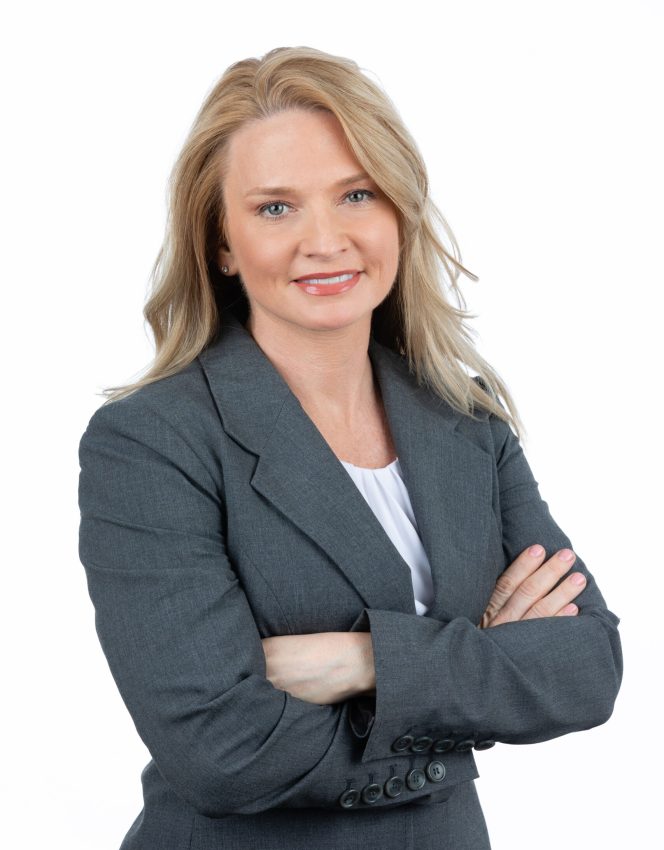
Dr. Cathy Colet
Forensic PsychologistDr. Cathy Colet is a Licensed Clinical and Forensic Psychologist and founder of Forensic and Clinical PsychExperts, LLC.
Read More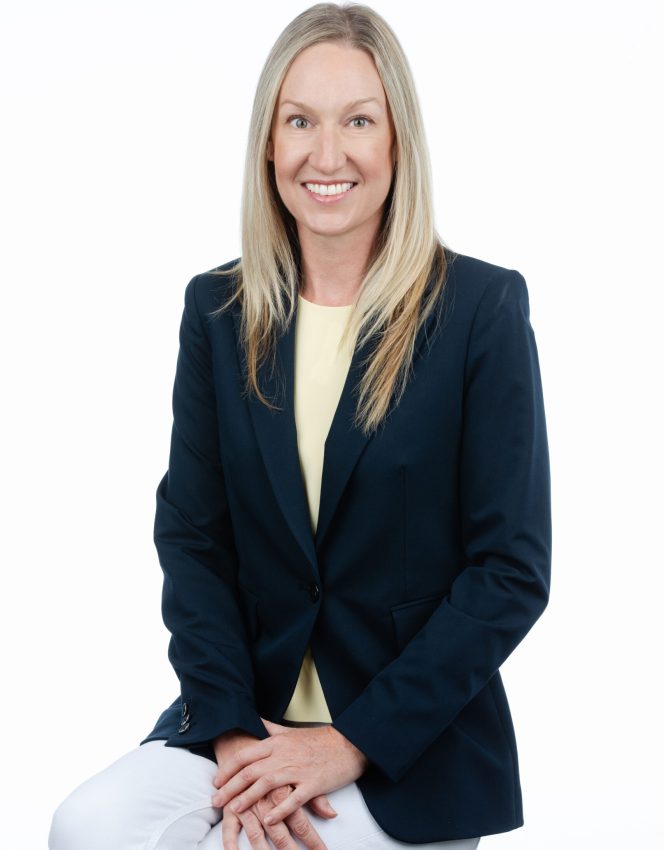
Dr. Lauren Miller
Clinical and Forensic NeuropsychologistDr. Miller has nearly 20 years of experience as a clinician, consultant, lecturer, and writer.
Read More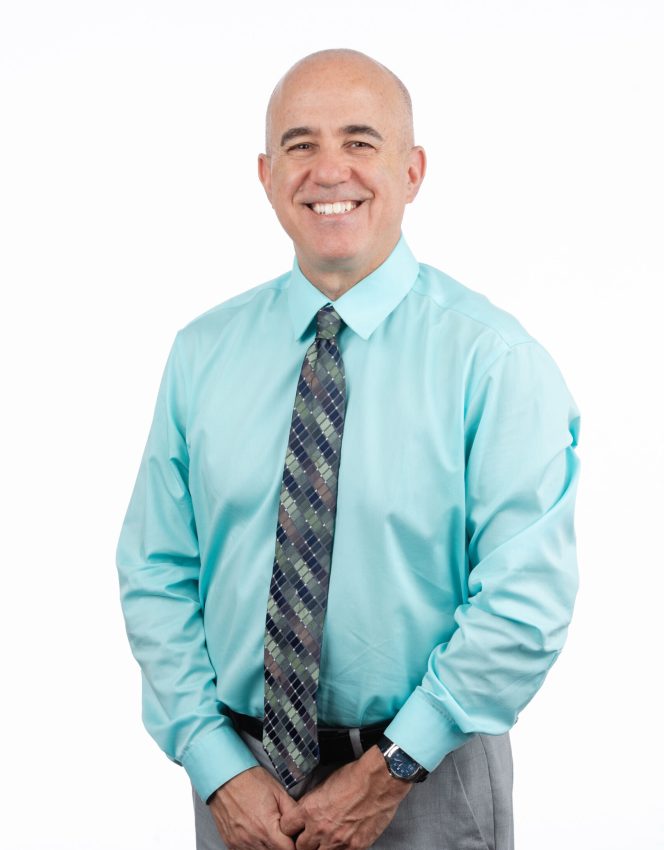
Dr. Matthew J. Jalazo
Forensic PsychologistDr. Matthew J. Jalazo is a licensed psychologist who has practiced forensic psychology on a full-time basis for the last fifteen years.
Read More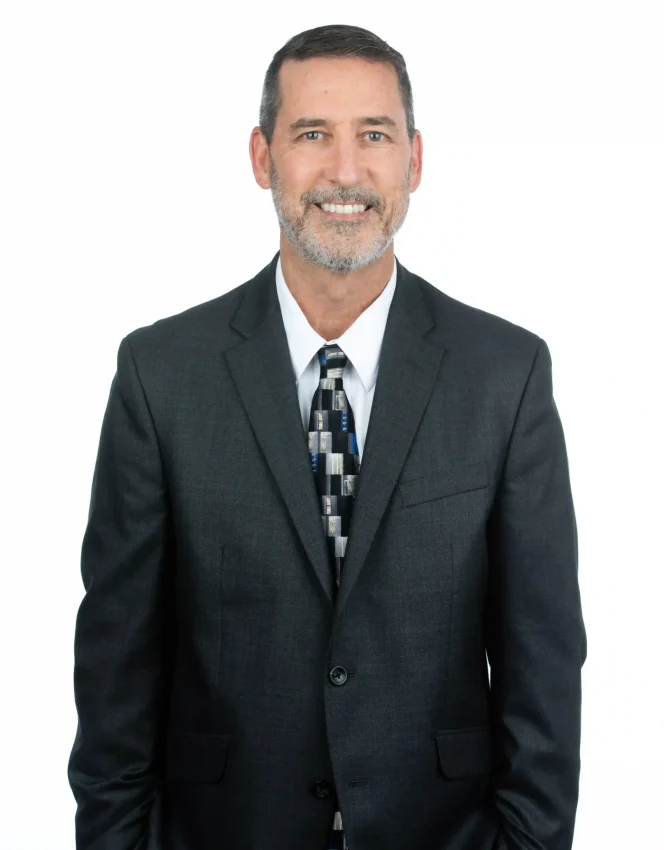
Dr. Christopher J. Beltran
Forensic PsychologistDr. Beltran is a Licensed Forensic Psychologist with over twenty-five years of experience in criminal and family law
Read More






Client Testimonials
The forensic evaluation provided by this team was incredibly thorough and meticulously detailed. Their expertise and careful approach made a significant impact on our legal case, providing us with the clarity and support we needed. I can't thank them enough for their outstanding work.
I underwent a neuropsychological evaluation here, and the entire experience was both professional and supportive. The staff took the time to explain each step, and the detailed report offered valuable insights into my cognitive health. This evaluation has been a crucial part of my treatment plan, and I'm very grateful for their help.
My clinical psychological evaluation was a deeply insightful experience. The evaluators were thorough and attentive, helping me understand my mental health on a deeper level. This evaluation has been pivotal in guiding me towards the right treatment options, and I am very appreciative of their efforts.
I am very grateful for the neuropsychological evaluation I received. The staff was professional and took the time to explain everything clearly. The comprehensive report provided invaluable clarity on my condition, which has been instrumental in my ongoing treatment.
“We’re proud to support clients across the length and breadth of the UK and our highly-experienced team of qualified professionals work with many of the country’s leading”
"I have worked with Dr. Colet for several years. I have found her to always be highly professional and an excellent forensic psychologist. Dr. Colet places her clients first and provides each with a lot of care and individualized care, attention to detail, and real-world guidance. I do not hesitate to refer clients to her. Dr. Colet's professional acumen is unparalleled."
“I am truly grateful for what Dr. Colet has done for our family. Everything about her was above and beyond what I had experienced before with other psychologists in the industry. She is very matter of fact and doesn't waste any time getting the job done, and yet there is most definitely a sense of compassionate wisdom and client care manners she demonstrates that make her a wonderful person and expert to have the honor to work with. I recommend her with absolute confidence that she will serve you well.”
Frequently Asked Questions About Forensic Psychology Services
Is there a forensic psychologist located in Lake Clarke Shores, FL?
No. No forensic psychology practice maintains an office inside the Lake Clarke Shores town limits. The town is one square mile with 3,564 residents at the 2020 Census. Court-ordered evaluations for Lake Clarke Shores cases are handled by the Palm Beach County Forensic Psychology office in Room 5.1130 of the Main Judicial Complex, 205 N Dixie Highway, West Palm Beach, which is nearer to the town than any private practice. Privately retained evaluations come from practices in surrounding municipalities. FC PsychExperts works Lake Clarke Shores cases from its Jupiter office and evaluates at detention centers and correctional facilities.
Who pays for a court-ordered psychological evaluation in Palm Beach County?
The court. Under Fla. Stat. 916.115 the court pays the experts it appoints and the fee is taxed as costs in the case. Administrative Order 2.601-10/21 of the 15th Judicial Circuit sets flat rates per evaluation type and caps compensation for court testimony. The order carves out exceptions: where a defendant is found competent the party that requested a second expert bears that cost, where an evaluation covers sanity the defense bears that portion, and the State Attorney pays when it requests access to an expert. The order is a public download.
Can I refer myself to the Palm Beach County forensic psychology office?
No. Every referral must arrive with an appropriate order from a court, and only courts of the 15th Judicial Circuit may refer. Without a court order there is no route into that office, which is the most common reason a Lake Clarke Shores attorney or parent needs a privately retained psychologist instead.
Which forensic evaluations does the county office not perform?
Its published list does not include privately retained custody and parenting-plan evaluations, civil independent medical examinations, personal or emotional injury evaluations, immigration hardship and asylum evaluations, psychoeducational testing, or litigation consulting against an opposing expert. It does conduct court-ordered dependency parental and child evaluations, guardianship evaluations, and the full range of criminal and juvenile forensic work: adult and juvenile competency to proceed, pro se competency, mental status at time of offense, intellectual disability, juvenile threat assessment and delinquency, domestic violence risk, and criminal risk assessment and conditional release.
How many experts can the court appoint for a competency evaluation?
Fla. Stat. 916.115 permits the court to appoint no more than three experts to determine a defendant’s mental condition, and Fla. R. Crim. P. 3.210 allows the court to order evaluation by no more than three experts as needed. In juvenile delinquency cases, Fla. Stat. 985.19 requires findings based on an evaluation by not less than two nor more than three court-appointed experts.
What must a Florida competency report contain?
Fla. R. Crim. P. 3.211(c) sets five requirements. The report must identify the specific matters referred, describe the evaluative procedures, techniques and tests used and the purpose of each, state findings and opinions on each issue referred while flagging any issue on which no opinion could be given, identify the sources of information and the factual basis for each conclusion, and explain why any alternative treatment options are insufficient. A report that omits the instrument names does not satisfy the rule.
What psychological tests are used in a Florida competency evaluation?
It depends on the referral question, and Rule 3.211(c)(2) requires the report to name each one and state its purpose. Adult competency commonly uses the ECST-R, whose three competency scales map to the Dusky criteria, or the MacCAT-CA, a 22-item structured interview covering Understanding, Reasoning and Appreciation, with the Inventory of Legal Knowledge to assess response style. Miranda waiver capacity uses the SAMA. Violence risk uses the HCR-20 V3. Juvenile risk uses the SAVRY. Symptom validity and effort testing, such as the SIRS-2, TOMM or VSVT, runs alongside the substantive battery.
Does Florida apply the Daubert standard to forensic psychology testimony?
Yes, since 23 May 2019, when the Florida Supreme Court adopted the amendments to Fla. Stat. 90.702 in In re: Amendments to the Florida Evidence Code, SC19-107. Testimony must be based on sufficient facts or data, be the product of reliable principles and methods, and reflect reliable application of those methods to the facts of the case. Florida appellate decisions on instrument admissibility that predate 23 May 2019 were decided under the earlier Frye standard.
Where will a Lake Clarke Shores case be heard?
Lake Clarke Shores is in Florida’s 15th Judicial Circuit. Felony, circuit civil, probate, guardianship and juvenile matters are heard at the Main Judicial Complex, 205 N Dixie Highway, West Palm Beach, with certain felony divisions at the Criminal Justice Complex, 3228 Gun Club Road. Family and domestic relations divisions are distributed across the Main, North County, South County and West County courthouses. The Clerk accepts probate and guardianship filings at branch locations even though the judges hearing those cases sit downtown, so filing at a branch is not the same as being heard there.