Forensic Psychologist In Miami Beach, FL
Our experts provides services to defense attorneys and prosecutors in a variety of areas of criminal law.
Forensic and Clinical Psychology Services
Our comprehensive forensic psychology practice delivers expert psychological services tailored specifically for legal and court proceedings. With a dedicated team of licensed forensic psychologists, we provide thorough psychological evaluations, professional witness testimony, strategic consultation, and specialized educational programs designed to support attorneys, courts, and legal professionals in making informed decisions.
Forensic Psychological Evaluations In Palm Beach County
Forensic reports get excluded under Florida evidence standards for predictable reasons: the methodology section reads like a clinical chart note, the foundation doesn't satisfy…
Find out MoreNeuropsychological Evaluations In Palm Beach County
A Neuropsychological Evaluation looks at how the brain works. Possible reasons for a neuropsychological evaluation (not limited to):Traumatic Brain InjurySports ConcussionAlzheimer’s…
Find out MorePsychoeducational Testing For Children And Teens In Palm Beach County
A psychoeducational evaluation offers a snapshot of a child’s current cognitive and educational functioning. The psychologist will need a thorough history…
Find out MoreWhere a Miami Beach Forensic Case Is Actually Heard
Downtown Miami, in one of three buildings, and none of them is on Miami Beach.
The Miami Beach Court Facility at 1130 Washington Avenue is listed by the Eleventh Judicial Circuit as temporarily closed by the City of Miami Beach, and by the Miami-Dade Clerk of Courts as temporarily closed with its cases reassigned. Repairs to the Miami Beach Historic City Hall building are the stated cause. Pretrial and special sets moved to the Osvaldo N. Soto Miami-Dade Justice Center. Traffic and misdemeanor matters moved to the Richard E. Gerstein Justice Building.
Here is the part that matters more. That building never heard a case a forensic psychologist gets retained on. Its docket was county-level: traffic, misdemeanor, county civil, parking, marriage licenses. Felony, family, juvenile and probate work has always been downtown.
| Matter | Building | Address |
|---|---|---|
| Felony, including competency to proceed and insanity | Richard E. Gerstein Justice Building | 1351 NW 12th Street, Miami |
| Family, including time-sharing and parental capacity | Lawson E. Thomas Courthouse Center | 175 NW 1st Avenue, Miami |
| Juvenile | Miami-Dade Children’s Courthouse | 155 NW 3rd Street, Miami |
| Baker Act, Marchman Act, guardianship incapacity | Osvaldo N. Soto Miami-Dade Justice Center | 20 NW 1st Avenue, Miami |
One distinction trips people up regularly. Criminal competency is not a mental health division matter. Civil mental health, Baker Act, Marchman Act and guardianship incapacity run through the Probate Division at the Soto Justice Center. Criminal competency to proceed runs through the Criminal Division and the Mental Health Administrator’s Office at Gerstein. Different buildings, different judges, different bodies of law. Appearing in the wrong one costs a week.
How Miami-Dade Appoints an Evaluator, and the Two Clocks You Are Choosing Between
Through a court office, from a court-maintained list, on a published clock: 48 hours expedited, 7 to 10 days for a full evaluation.
The 11th Judicial Circuit runs a Mental Health Administrator’s Office at 1351 N.W. 12th Avenue, Room 7300, reachable at (305) 548-5595 between 7:30 AM and 5 PM Monday to Friday. Three sentences from that office’s own FAQ do more work than anything else written on this subject.
On the list: each of Florida’s 20 judicial circuits is required to maintain a list of “disinterested qualified experts.”
On who performs the work: evaluations in Miami-Dade County are conducted by psychiatrists and psychologists who are either in private practice or who practice at Jackson Memorial Hospital under a special working agreement with the Court. That hospital arrangement has no equivalent in Broward or Palm Beach.
On timing: an expedited evaluation should be completed within 48 hours, and a full evaluation within 7 to 10 days from the court order.
What 48 Hours Buys, and What It Does Not
Read that clock as the court’s expectation, not a guarantee, and it still tells you something no marketing page will.
A 48-hour competency evaluation is records-light and interview-weighted by arithmetic. There is no time for a full records review, for collateral interviews with four family members, or for a retrospective reconstruction of mental state at the time of an offense three years ago. That is a structural constraint on the timeline, not a comment on any evaluator working inside it.
Now the other clock, which is ours. We are booked roughly 3 weeks out, and a mental health evaluation here runs about 10 hours of professional time. Those 10 hours cover 7 steps, listed in the next section, and they happen before a word of the report is written.
So the decision in front of you has a shape:
| Court-appointed, Miami-Dade | Retained evaluation | |
|---|---|---|
| Who selects the evaluator | The court, from its list | You do |
| Start | On entry of the court order | About 3 weeks from engagement |
| Published turnaround | 48 hours expedited, 7 to 10 days full | Set at engagement against your hearing date |
| Typical professional time | Not published | Approximately 10 hours |
| Records review depth | Constrained by the clock | Sized to the referral question |
| Who pays | The court, subject to statute | You do |
Neither column is the right answer in every matter. A straightforward present-state competency question on a short calendar fits the left column. A contested retrospective insanity question, a neuropsychological dispute, or a time-sharing evaluation with four collateral sources does not, and the difference is not the evaluator’s skill. It is the hours available.
What a Forensic Evaluation Involves, Step by Step
Seven steps, approximately 10 hours of professional time, and the report is written last.
- Clinical interview. Direct examination of the person, structured to the referral question.
- Mental status examination. Present-state observation, documented rather than summarized.
- Collateral interviews. Family, treating clinicians, corrections staff, teachers in juvenile matters. The examinee’s own account is never the only account.
- Record review. Medical charts, prior psychological reports, arrest and booking records, school records, legal filings. In retrospective work this is most of the evaluation.
- Psychological testing. Standardized instruments selected for the question, with effort and validity measures throughout.
- Interpretation and scoring. Every instrument scored and interpreted against its normative basis.
- Report writing. Written last, after the data exists, not shaped to a conclusion decided in advance.
That is the sequence for every evaluation type we perform, and the approximately 10 hours is the figure for a mental health evaluation specifically. Complex matters run longer. We tell you which one yours is on the first call rather than after the retainer clears.
In competency matters, the report has to do one more thing. Fla. Stat. 916.12(3) requires the examining expert to first consider and specifically include in the report the defendant’s capacity to appreciate the charges or allegations, to appreciate the range and nature of possible penalties, to understand the adversarial nature of the legal process, to disclose to counsel facts pertinent to the proceedings, to manifest appropriate courtroom behavior, and to testify relevantly. A report that discusses diagnosis and skips those six is non-compliant on its face. It is also the first thing a prepared opposing counsel checks.
Full detail on each evaluation type sits on our forensic psychological evaluations page, and the wider list of assessments covers clinical, immigration and injury work.
Criminal Law Cases
Competency, criminal responsibility, risk and mitigation, for adults charged in Miami-Dade and across Florida.
- Competence to Stand Trial
- Criminal Responsibility (insanity defense)
- Competency to Waive Miranda Rights
- Mitigation (downward departure)
- Violence Risk Assessments
- Psychosexual Evaluations / Sexual Risk Assessments
- Sexually Violent Predators
- Capital Sentencing
- Involuntary Commitment and Treatment
- Expert Witness Testimony
- Consultation
Two things worth knowing before you commission any of these.
Competency and criminal responsibility are different questions about different points in time. Competency asks whether the defendant can participate in the proceeding now. Criminal responsibility asks about mental state at the moment of the offense, which may be years ago. The second is reconstructed from records and collateral accounts, not from a current interview, which is why the records you hold matter more than anything else you can hand us.
Two experts, not one, before a commitment. Fla. Stat. 916.12(2) requires evaluation by a minimum of two experts before the court commits a defendant as incompetent, with narrow exceptions where incompetence is stipulated.
Juvenile law cases
Adolescent competency and risk assessment, using instruments normed for adolescents rather than adult measures applied to minors.
- Competence to Stand Trial
- Assessment of Violence and Sexual Risk
- Sexual Behavior Assessment
- Expert Witness Testimony
- Consultation
Our experts have provided psychological assessments for youth and adolescents through government and private entities including the Department of Juvenile Justice, ChildNet, Communities Connected for Kids, and direct court referral. We conduct these evaluations at juvenile detention centers as well as at our offices.
Where the question is educational rather than forensic, psychoeducational testing for children and teens is a separate evaluation with a different purpose and a different report. Attorneys and parents sometimes ask for one and need the other.
Juvenile competency is not adult competency with a younger examinee. Developmental immaturity can impair capacity to proceed in the absence of any mental illness, and an evaluator applying an adult framework to a 14-year-old will miss it. Ask any evaluator which instruments they use for adolescents specifically.
Civil Law Cases
Injury, capacity, commitment and immigration matters, for plaintiff and defense.
- Personal / Emotional Injury
- Psychological Factors in Physical Trauma
- Independent Medical Examinations (IME)
- Immigration
- Guardianship
- Civil Commitment
- Pre/Post Adoption Evaluation
- Mental Competency Examinations
- Psychological Autopsy – Assessment of Suicide
- Expert Witness Testimony
- Consultation
In civil court the psychological question is usually causation rather than diagnosis. A diagnosis alone carries no injury claim. The report has to connect the event to the impairment, address pre-existing conditions directly instead of around them, and state a prognosis a treating physician can work with. Our work evaluating psychological aspects of injury matters includes neuropsychological assessments where a brain injury is in dispute, workers’ compensation claimant assessment, and capacity determinations for wills, powers of attorney and guardianship.
We are retained by both sides. Plaintiff and defense in civil matters, prosecution and defense in criminal ones, courts and agencies directly, and private individuals. An expert who only ever works one side of the aisle is a target on cross-examination, and our work runs both ways.
Family Law Cases
Parental capacity, social investigations and time-sharing evaluations, with the children’s welfare as the governing interest.
- Parental Capacity Assessments
- Social Investigations
- Psychological Evaluations
- Expert Witness Testimony
- Consultation
Florida stopped saying “custody” in 2008. The statutory terms are parenting plan and time-sharing.
Two points from the governing rule are worth more to you than anything else in this section. Fla. Fam. L. R. P. 12.363 requires the written report no later than 30 days before trial or 75 days from the order of appointment. And subdivision (e) states that a court-appointed expert is subject to the same examination as a privately retained expert, and that the court “shall not entertain any presumption in favor of the appointed expert’s findings.”
Sit with the second one. A court-appointed evaluator’s conclusions carry no automatic evidentiary advantage in a Florida family matter. A well-built retained evaluation meets them on level ground.
Psychologists conducting time-sharing work frequently add attachment and bonding assessments, and where maltreatment risk is raised, that becomes part of the referral question rather than a footnote. Evaluations are sought by parents, by organizations such as ChildNet or Communities Connected for Kids, and by the court itself.
In family work the psychologist’s duty runs to the welfare of the children, whichever party pays. We say that on the first call, because occasionally it ends the call.

Expert Witness Testimony in Criminal, Civil, and Family Law
All four psychologists have testified. Here are the circuits, by number and by county.
| Circuit | Counties |
|---|---|
| 1st | Escambia, Okaloosa, Santa Rosa, Walton |
| 2nd | Franklin, Gadsden, Jefferson, Leon, Liberty, Wakulla |
| 15th | Palm Beach |
| 17th | Broward |
| 19th | Martin, St. Lucie, Indian River, Okeechobee |
| 20th | Charlotte, Collier, Glades, Hendry, Lee |
The 11th Judicial Circuit, which covers Miami-Dade County and Miami Beach, is not on that list. We are telling you that rather than letting you find out from opposing counsel. Ask us directly about circuit history for your specific matter on the first call and you will get a straight answer.
What travels is the work itself. Our team conducts evaluations at courthouses, correctional facilities, jail facilities, ICE detention centers, federal detention facilities and juvenile detention centers across the State of Florida, and depositions and trial testimony follow the case wherever it sits. Our forensic psychologist team has been retained by prosecution and defense, and by plaintiff and defense.
We also serve Aventura, Homestead, Kendall, Cutler Bay and Doral matters across Miami-Dade County.
Two Thirds of Miami Beach Speaks Another Language at Home
64.5% of Miami Beach residents aged 5 and over speak a language other than English at home, and 52.9% are foreign born.
Those are Census QuickFacts figures for 2020 to 2024, against a city population of 81,594 as of July 2025. For a page about court-ordered psychological examination, they carry a consequence most evaluators leave unaddressed.
Four questions decide whether a bilingual evaluation survives cross-examination.
- Who interpreted, and were they certified? A family member interpreting a competency examination is a confidentiality problem, a reliability problem and an incentive problem at once.
- Was the instrument normed on the examinee’s language group, or translated on the spot? A standardized test administered through improvised oral translation is no longer the standardized test. A defensible report says which instruments had established norms in the examinee’s language and which did not, and states the limitation instead of burying it.
- Did the report separate language difficulty from cognitive impairment? This is the failure mode that does real damage. Limited English proficiency and cognitive deficit look alike on an English-language instrument, and in a competency matter that error runs in both directions.
- Was the interview conducted in the examinee’s language or merely translated into it? Interviewing through a third party loses hesitation, self-correction, word choice, the shape of a thought disorder. The report should say which happened.
Raise language at engagement, not on the day of the examination. If we cannot meet the language demand properly, we say so and refer out, which is covered below.
Meet the Team
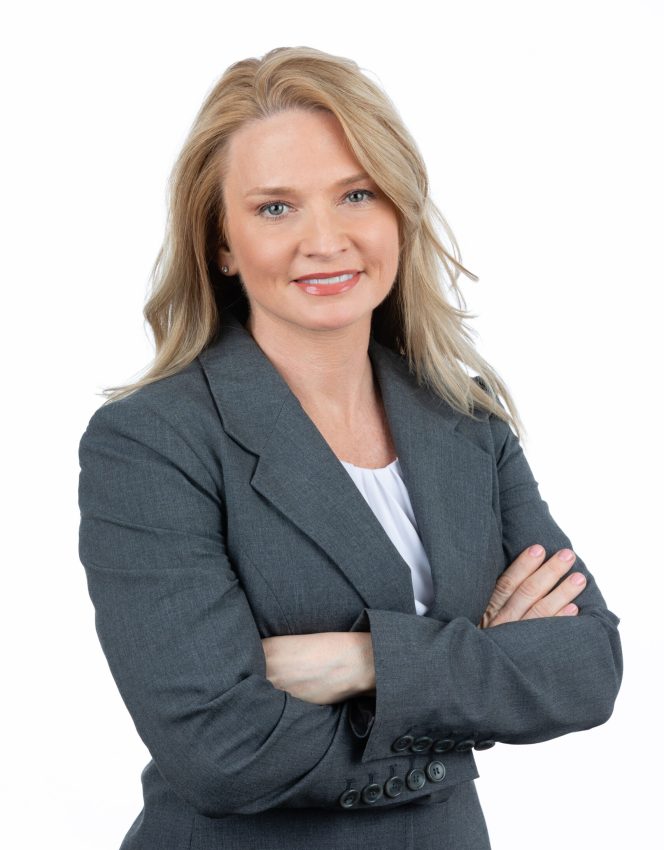
Dr. Cathy Colet
Forensic PsychologistDr. Cathy Colet is a Licensed Clinical and Forensic Psychologist and founder of Forensic and Clinical PsychExperts, LLC.
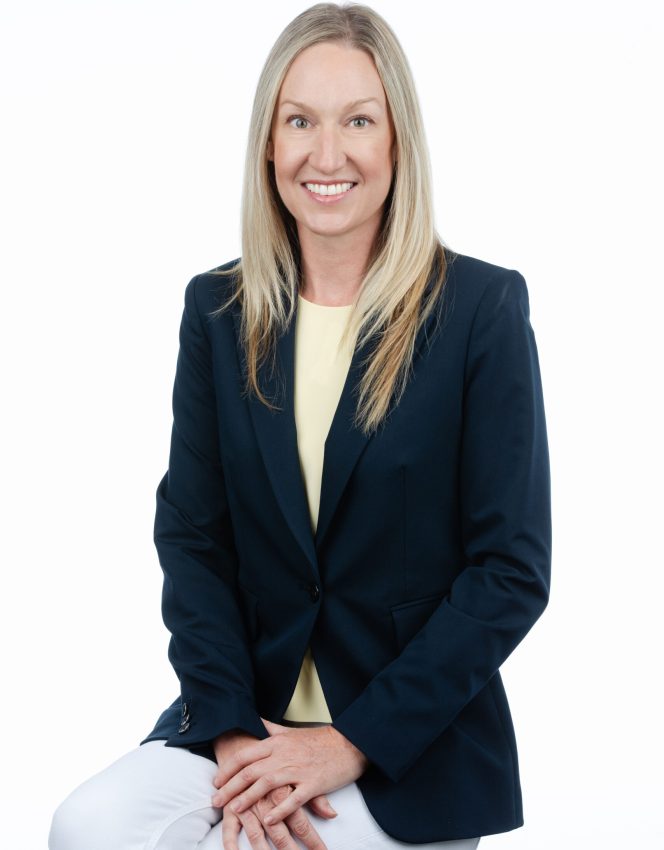
Read MoreDr. Lauren Miller
Clinical and Forensic NeuropsychologistDr. Miller has nearly 20 years of experience as a clinician, consultant, lecturer, and writer.
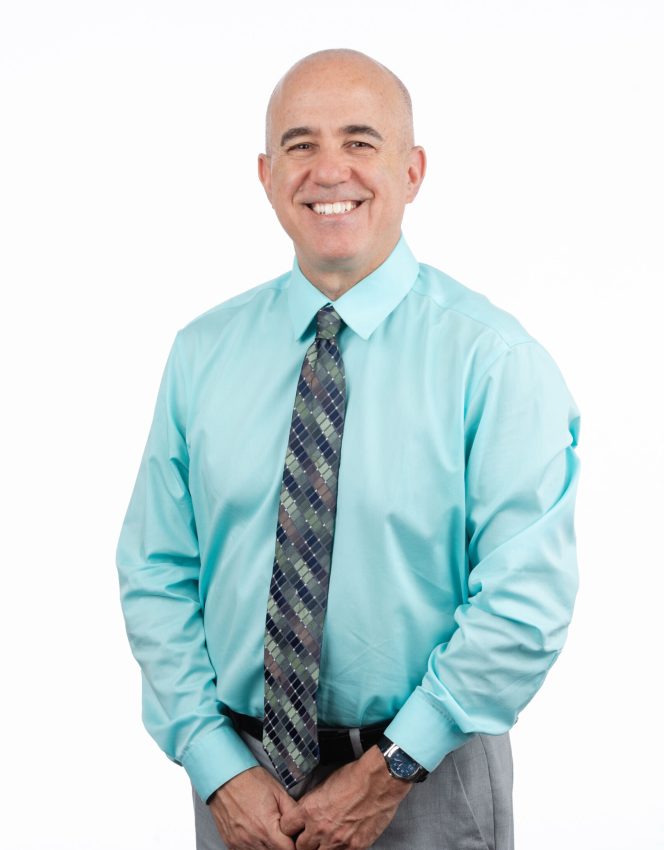
Read MoreDr. Matthew J. Jalazo
Forensic PsychologistDr. Matthew J. Jalazo is a licensed psychologist who has practiced forensic psychology on a full-time basis for the last fifteen years.
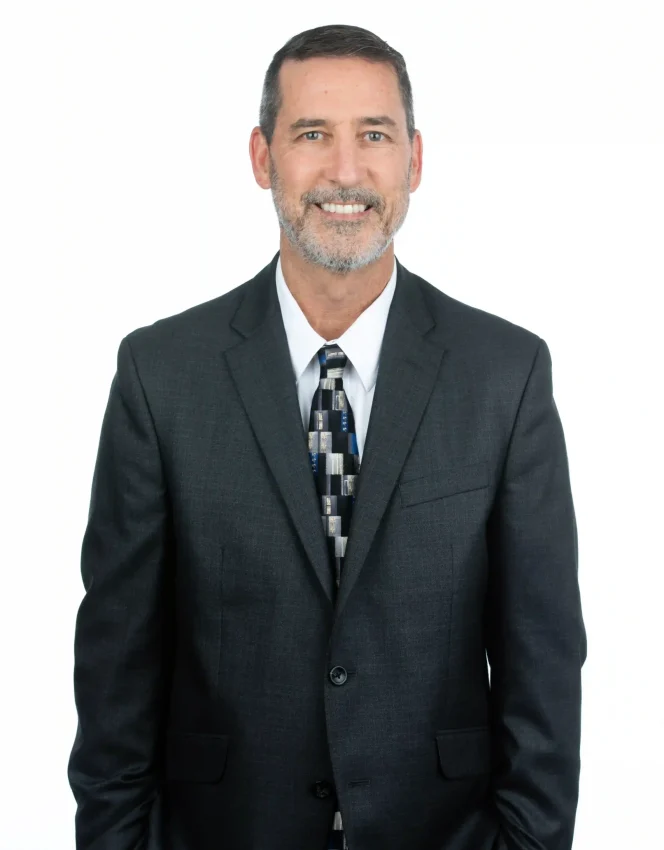
Read MoreDr. Christopher J. Beltran
Forensic PsychologistDr. Beltran is a Licensed Forensic Psychologist with over twenty-five years of experience in criminal and family law
Read MoreClient Testimonials
The forensic evaluation provided by this team was incredibly thorough and meticulously detailed. Their expertise and careful approach made a significant impact on our legal case, providing us with the clarity and support we needed. I can't thank them enough for their outstanding work.
I underwent a neuropsychological evaluation here, and the entire experience was both professional and supportive. The staff took the time to explain each step, and the detailed report offered valuable insights into my cognitive health. This evaluation has been a crucial part of my treatment plan, and I'm very grateful for their help.
My clinical psychological evaluation was a deeply insightful experience. The evaluators were thorough and attentive, helping me understand my mental health on a deeper level. This evaluation has been pivotal in guiding me towards the right treatment options, and I am very appreciative of their efforts.
I am very grateful for the neuropsychological evaluation I received. The staff was professional and took the time to explain everything clearly. The comprehensive report provided invaluable clarity on my condition, which has been instrumental in my ongoing treatment.
“We’re proud to support clients across the length and breadth of the UK and our highly-experienced team of qualified professionals work with many of the country’s leading”
"I have worked with Dr. Colet for several years. I have found her to always be highly professional and an excellent forensic psychologist. Dr. Colet places her clients first and provides each with a lot of care and individualized care, attention to detail, and real-world guidance. I do not hesitate to refer clients to her. Dr. Colet's professional acumen is unparalleled."
“I am truly grateful for what Dr. Colet has done for our family. Everything about her was above and beyond what I had experienced before with other psychologists in the industry. She is very matter of fact and doesn't waste any time getting the job done, and yet there is most definitely a sense of compassionate wisdom and client care manners she demonstrates that make her a wonderful person and expert to have the honor to work with. I recommend her with absolute confidence that she will serve you well.”
Expert Forensic Psychology You Can Trust
Our specialized knowledge in criminal, civil, family, and juvenile law ensures comprehensive psychological analysis tailored to your specific legal challenges. Every assessment meets professional standards and provides the credible evidence your case deserves.
Don’t leave critical psychological evidence to chance. Contact FC PsychExperts today to secure the expert forensic psychology services that give your clients the strongest possible representation.