
Forensic Psychologist In Tamarac, FL
How Broward County Actually Appoints A Forensic Psychologist
The judge picks from a list of three names, and you have no say in who is on it.
Administrative Order 2025-14-Crim / 2025-15-UFC, signed by Chief Judge Carol-Lisa Phillips on 30 June 2025, sets the whole mechanism out. The Office of the Trial Court Administrator maintains a court-appointed expert witness registry. Only experts on that registry can be appointed. Appointment happens only by written court order. Court Projects then, in the order’s own words, accesses the registry “to identify the names of three (3) experts available to conduct the ordered evaluation,” and the judge selects from those three.
Getting onto the registry is a contracting process, not a credential. An expert has to sign a contract with the Circuit. New applicants submit a written request with supporting materials no later than 1 May preceding the fiscal year. Miss that date and you wait a year.
Compare the county next door.
| Palm Beach County (15th Circuit) | Broward County (17th Circuit) | |
|---|---|---|
| Model | County-operated public office | Circuit-contracted registry |
| Name | Forensic Psychology Services Office, Public Safety / Justice Services | Court-appointed expert witness registry, Office of the Trial Court Administrator |
| Can you phone it | Yes, (561) 355-2108, after a court order exists | No public equivalent |
| Who selects the evaluator | The office assigns | Court Projects surfaces three names, the judge picks one |
| How an expert joins | County employment | Written application by 1 May, then a Circuit contract |
| Where the roster lives | Internal to the county office | Registry held by Court Administration, 201 SE 6th Street, Room 20140 |
An attorney who has practised in both counties knows this. An attorney who has only practised in one usually does not, and neither does a defendant’s family. The practical consequence for a Tamarac case: there is no number to call to speed up a court-appointed evaluation, and no way to request a particular evaluator. If who conducts the evaluation matters to your case, the only lever is private retention.
Four Payment Rules That Shape The Court-appointed Report You Receive
Compensation for court-appointed evaluators in Broward is set by flat fee per evaluation type, published in AO 2025-14-Crim. The amounts are public and we do not reproduce them here, because administrative orders get amended and a figure copied onto a marketing page goes stale without warning. Read them at the source, linked below. What does not go stale is the structure, and the structure is where the useful information sits.
Testimony is capped at two hours. The order pays a rate for the first hour and a per-quarter-hour rate after that, up to a hard ceiling of two hours regardless of how long the hearing actually runs. Those economics are built for volume and brevity. They are not built for a contested two-day cross-examination, and that is the plain explanation for why court-appointed reports in high-stakes matters sometimes read thinner than the case deserves.
The expert is paid nothing if the defendant refuses. In the order’s words: “An expert will receive no compensation if he or she is unable to complete a scheduled adult competency evaluation due to the defendant either not showing up or refusing to participate in the examination.” An evaluator who drives to the jail, waits, and leaves without an examination absorbs that cost personally.
An incomplete report is not paid until the court says it is fixed. “If the court deems any competency evaluation or other report to be incomplete, the expert will not be compensated until the court determines that the shortcomings are addressed, even if it requires the expert to conduct a further evaluation.” That clause is new in the 2025 order. It was not in the 2023 version.
Payment is conditioned on the report addressing every statutory factor. Fla. Stat. 916.115(2)(g): “In order for an expert to be paid for the services rendered, the expert’s report and testimony must explicitly address each of the factors and follow the procedures set out in this chapter and in the Florida Rules of Criminal Procedure.” Report and testimony. Chapter and rules. A report that discusses diagnosis and skips the factors is non-compliant on its face.
Two Public Schedules Govern This, And They Do Not Agree
Broward has two live funding channels for court-appointed forensic work, each with its own published rate sheet, and they set materially different amounts for nominally the same adult competency examination.
The Chief Judge’s administrative order governs experts appointed through the Circuit’s registry contracts. The Justice Administrative Commission’s Circuit 17 due process rate sheet governs expert costs in court-appointed counsel cases, and it applies a ceiling across all expert costs in a case combined rather than pricing each evaluation separately. Both documents are current. Both are public. Neither references the other.
Which one applies turns on the appointment route and who is footing the bill. If your case runs on Justice Administrative Commission due process funds, that per-case ceiling is a planning constraint rather than a footnote, because a competency examination plus a psychosexual evaluation plus two hearing appearances can reach it. Budget the testimony before you commission the report.
Both schedules are linked below. Check them at the source rather than relying on any secondhand figure, including ours.

On 1 July 2026 The Pool Of Evaluators A Broward Judge Can Appoint Got Smaller
Six weeks ago a training deadline came due in two places at once, and evaluators who missed it dropped off.
In the statute. Fla. Stat. 916.115(1)(b), as amended: “Existing evaluators as of July 1, 2024, shall complete department-provided annual forensic evaluator training by July 1, 2026, to remain active on the list described in paragraph (c).”
In the Broward administrative order. “All existing evaluators on the Circuit’s Registry as of July 1, 2024 shall complete Department-provided forensic evaluator training by July 1, 2026 to remain active on the Circuit’s Registry.”
Same cohort date, same deadline, two independent consequences. A Broward evaluator who missed it loses active status on the Department of Children and Families list and on the Circuit’s registry.
The bigger change happened a year earlier and got almost no attention. Chapter 2025-143, which began as CS/CS/HB 1091 and took effect 1 July 2025, rewrote the credentialing sentence in Fla. Stat. 916.115. The old text read “To the extent possible, the appointed experts shall have completed forensic evaluator training approved by the department.” The amendment deleted “To the extent possible.” What the statute now requires, in full:
“(a) The court-appointed experts shall: 1. Be a psychiatrist, licensed psychologist, or physician. 2. Have completed initial and annual forensic evaluator training, provided by the department. 3. If performing juvenile evaluations, have completed initial and annual juvenile forensic competency evaluation training provided by the department.”
A qualifier that made training optional in practice is gone. Juvenile work now needs its own separate training track, a distinction most practice pages still do not draw.
One inconsistency worth knowing about
DCF has not updated its own operating procedure to match the statute it administers.
CFOP 155-19, “Evaluation and Reporting of Competency To Proceed,” revised 30 October 2023, still specifies refresher training every two to three years. It makes no reference to Fla. Stat. 916.115, to the annual mandate, or to the 2026 deadline. The statute says annual. The agency’s own procedure says every two to three years, and the procedure is nearly three years stale.
Nothing about that changes the legal requirement, since the statute controls. It does mean an evaluator citing CFOP 155-19 as authority for their training cycle is citing a document that no longer matches the law. If you are vetting an expert and they answer the training question with a policy reference rather than a date, ask again and ask for the date.
The three questions to ask any Broward forensic psychologist
When did you last complete DCF annual forensic evaluator training?
A date, not a policy citation. Post-July-2026 this is the first check, and a vague answer is itself an answer.
Are you currently active on the 17th Circuit registry, and separately on the DCF list?
These are two different rosters with two different gatekeepers. Being on one does not put you on the other.
Have you been qualified as an expert in the 17th Judicial Circuit, and have you ever been excluded on a Daubert challenge?
Florida has applied Daubert since 23 May 2019, when the Florida Supreme Court adopted the standard in In re: Amendments to the Florida Evidence Code, 278 So. 3d 551. The Legislature had codified the language six years earlier in chapter 2013-107 and the Court initially declined it. Under Fla. Stat. 90.702, expert testimony is admissible only if it is “based upon sufficient facts or data,” is “the product of reliable principles and methods,” and the witness “has applied the principles and methods reliably to the facts of the case.” An expert who has never been challenged has usually never been tested.
Broward Built The First Mental Health Court In The Country, And The Felony One Exists For Competency Cases
October 2003. Broward created the first felony mental health court in the United States, by administrative order, specifically for defendants found incompetent to proceed.
This is the piece of local context that changes how a Tamarac criminal matter should be planned, and it is on none of the pages competing for this query.
Broward’s county-level Mental Health Court was established in June 1997, the first court of its kind anywhere in the country, created by administrative order of then-Chief Judge Dale Ross with Judge Ginger Lerner-Wren presiding. The Felony Mental Health Court followed on 17 October 2003, again the first of its kind. The 17th Circuit describes its purpose plainly: it serves persons charged with felony offences who have been deemed incompetent to proceed, regular psychological evaluations are ordered, and hearings are held to determine whether competency has been attained. Competency restoration is among its listed services.
What that means procedurally for a Tamarac defendant:
Competency is a docket, not a one-off motion. A finding of incompetence starts a supervised process with recurring evaluation points. A report written as a single snapshot, with no baseline a later evaluator can measure against, creates work for everyone downstream.
The evaluation gets read by a judge who reads these constantly. A specialised docket produces a specialised reader. Reports that skip the six statutory factors get noticed faster here than in a general division.
Those six factors live in Fla. Stat. 916.12(3) and the expert must consider and specifically include each one: capacity to appreciate the charges, to appreciate the range and nature of possible penalties, to understand the adversarial nature of the legal process, to disclose to counsel facts pertinent to the proceedings, to manifest appropriate courtroom behaviour, and to testify relevantly. The underlying standard in 916.12(1) is whether the defendant “does not have sufficient present ability to consult with her or his lawyer with a reasonable degree of rational understanding” or “has no rational, as well as factual, understanding of the proceedings.”

The Timing You Are Working Against
Under Fla. R. Crim. P. 3.210(b), as amended effective 1 January 2025, status hearings must be held no later than 20 days after the motion date, with a final hearing “absent good cause” no later than 45 days from the motion date. The court may order evaluation by no more than three experts. Under Fla. Stat. 916.12(2), a defendant must be evaluated by no fewer than two experts before the court commits them.
Twenty days to a status hearing is the number that governs scheduling. Records requests, a jail visit, testing, scoring and a written report inside that window is achievable and it is not leisurely. Give us the hearing date on the first call and we will tell you whether it is reachable before you commit to anything.
What Retaining Your Own Evaluator Buys That A Court Appointment Does Not
Scope, selection, and testimony that is not capped at two hours.
The court-appointed track and the retained track are two different products, and the payment rules above explain most of the difference on their own. Set side by side:
| Court-appointed | Privately retained | |
|---|---|---|
| Who chooses the evaluator | The judge, from three registry names | You |
| Referral question | Set by the court order | Set by you, and it can be narrower or broader |
| Records reviewed | What accompanies the order | Everything you send, plus records we request |
| Collateral interviews | Rarely funded within a flat fee | Included where the question needs them |
| Testimony | Capped at two hours | Uncapped |
| Consultation with counsel | Not contemplated by the order | Part of the engagement |
| Opposing-expert review | Outside the appointment | Available as a standalone engagement |
| Who the report goes to | The court | You, before anyone else sees it |
That last row does more work than the rest combined. On a court appointment the report reaches the judge, and you read it at the same time everyone else does. On a retained engagement you hear the findings first, which is what makes the next section possible.
Where retained work earns its cost is the contested matter: a case where the opposing expert has already filed, where the referral question needs reframing, or where testimony will run past two hours. For a routine competency determination on a defendant already in the system, the court-appointed route is often the right answer, and we will say so.
Meet the Team
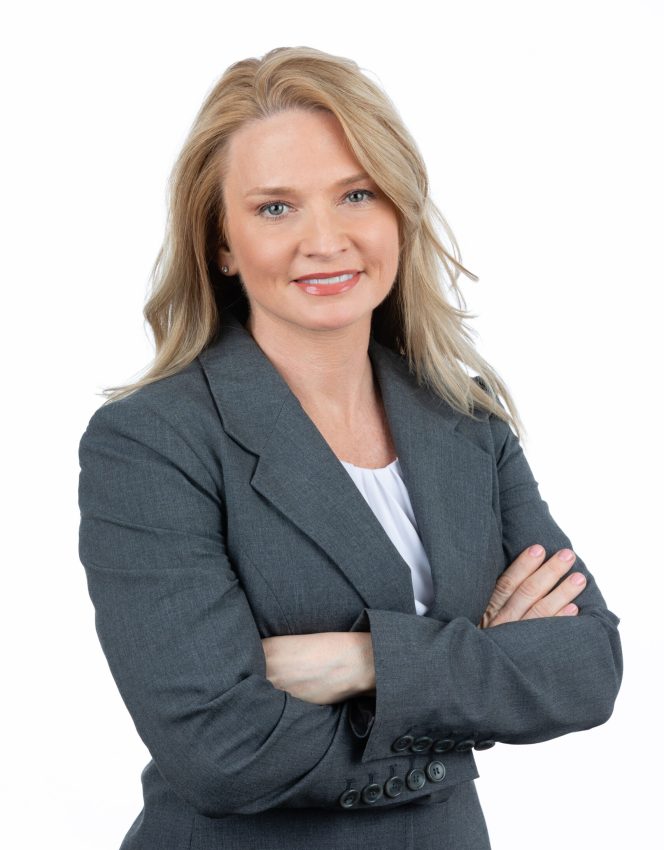
Dr. Cathy Colet
Forensic PsychologistDr. Cathy Colet is a Licensed Clinical and Forensic Psychologist and founder of Forensic and Clinical PsychExperts, LLC.
Read More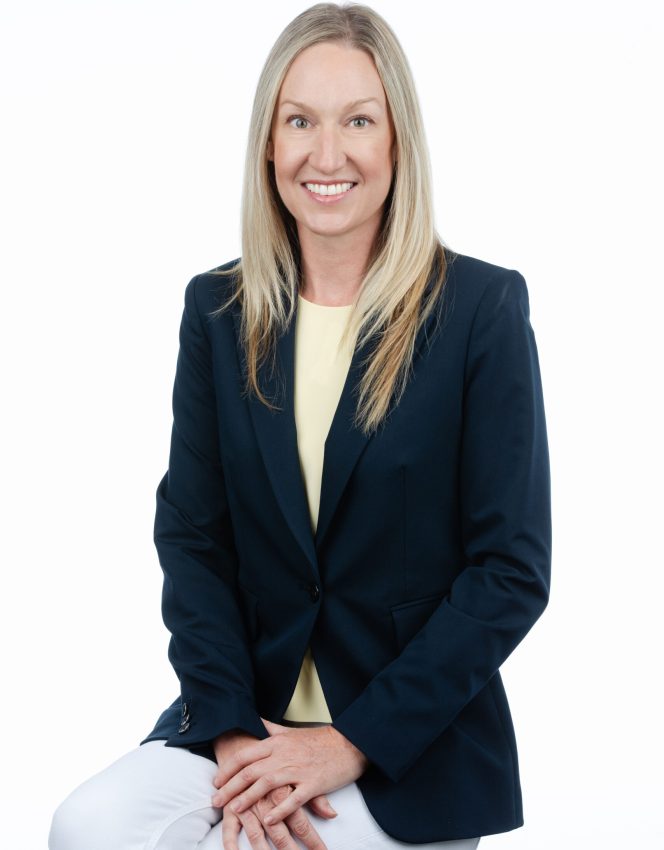
Dr. Lauren Miller
Clinical and Forensic NeuropsychologistDr. Miller has nearly 20 years of experience as a clinician, consultant, lecturer, and writer.
Read More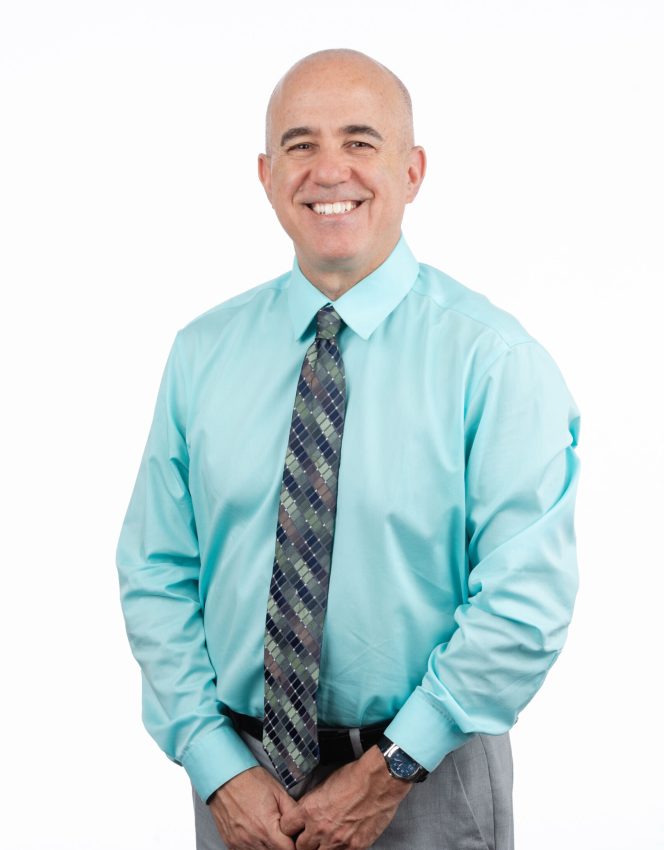
Dr. Matthew J. Jalazo
Forensic PsychologistDr. Matthew J. Jalazo is a licensed psychologist who has practiced forensic psychology on a full-time basis for the last fifteen years.
Read More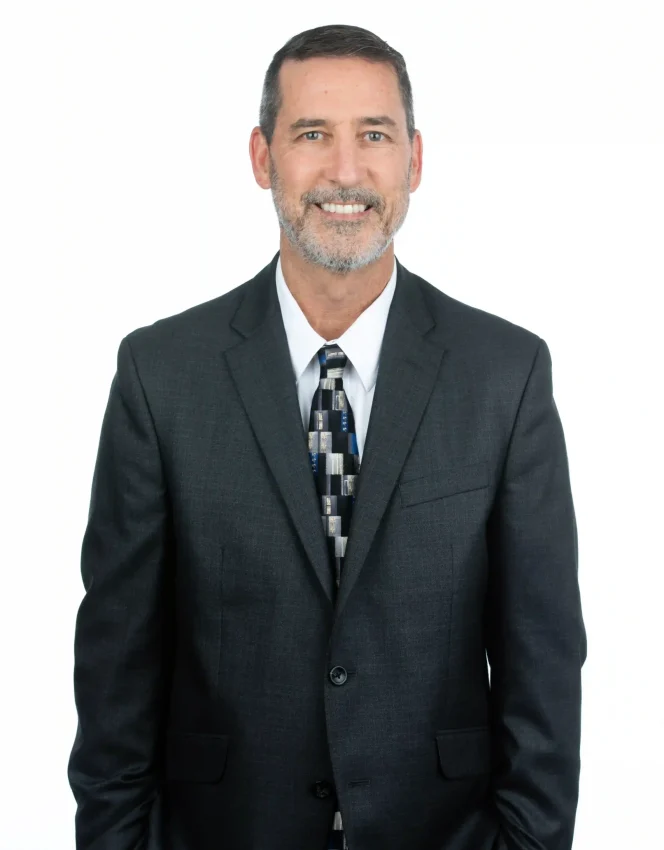
Dr. Christopher J. Beltran
Forensic PsychologistDr. Beltran is a Licensed Forensic Psychologist with over twenty-five years of experience in criminal and family law
Read MoreCriminal, Family, Juvenile, Civil And Immigration Matters From Tamarac
Criminal
Competency to proceed for adults and juveniles, competency to waive Miranda rights, criminal responsibility and the insanity defence, violence risk assessment, sexual behaviour risk assessment, and mitigation including downward departure and diminished capacity.
On insanity, know the burden before you commission the evaluation. Fla. Stat. 775.027 opens with “All persons are presumed to be sane,” and subsection (2) puts the burden on the defendant to prove insanity by clear and convincing evidence. That is a demanding standard and it shapes what a useful report has to contain: contemporaneous records, collateral accounts, and a reconstruction of mental state at the time of the offence rather than a current diagnosis carried backwards.
Family and time-sharing
Florida stopped saying “custody” in 2008. Chapter 2008-61, effective 1 October 2008, replaced custody and visitation with parenting plan and time-sharing throughout Fla. Stat. 61.13, which is now titled “Support of children; parenting and time-sharing; powers of court.”
The instrument a Broward judge orders is a social investigation under Fla. Stat. 61.20, titled “Social investigation and recommendations regarding a parenting plan.” The statute names a psychologist licensed under chapter 490 among the professionals qualified to conduct one. The governing rule is Fla. Fam. L. R. P. 12.363, “Evaluation of Minor Child,” and two of its subdivisions matter to your calendar and your strategy. Subdivision (b) requires the report no later than 30 days before trial or 75 days from the appointment order. Subdivision (e) states that no presumption favours a court-appointed expert’s findings over any other expert’s.
That second point is worth sitting with. A court-appointed evaluator’s conclusions carry no automatic evidentiary advantage. A well-built retained evaluation meets it on level ground.
We also conduct parental capacity evaluations and attachment and bonding assessments. In family work the psychologist’s duty runs to the welfare of the children, whichever party pays. We say that on the first call, because occasionally it ends the call.
Juvenile
Juvenile competency to proceed, violence risk, and sexual behaviour risk assessment, using instruments normed for adolescents rather than adult measures applied to minors. Since 1 July 2025 the statute requires a separate juvenile forensic competency training track for court-appointed work, a distinction most practice pages still collapse into “we also see juveniles.” FC PsychExperts has provided child and adolescent evaluations for the Department of Juvenile Justice, ChildNet, Communities Connected for Kids, and on direct court referral.
Civil and personal injury
Personal and emotional injury evaluations for plaintiff and defence, independent examinations, guardianship and capacity assessments, involuntary commitment evaluations, and psychological autopsies. Dr. Colet’s background includes Level 1 Trauma Centre work covering traumatic brain injury, motor vehicle accidents, medical negligence and catastrophic injury, including assessment of malingering and symptom exaggeration.
A diagnosis alone does not carry a personal injury claim. The report has to connect the event to the impairment, address pre-existing conditions directly rather than around them, and state a prognosis a treating physician can work with.
Immigration
Immigration psychological evaluations covering extreme and exceptional hardship, political asylum, spousal abuse and VAWA petitions, competency to participate in immigration proceedings, and hardship waivers for same-sex couples. Evaluations available at ICE detention centres and correctional facilities.
Full detail on every evaluation type sits on our forensic psychological evaluations page, and our wider Broward County forensic psychology practice page covers the circuit as a whole.
What Happens After You Call
Five stages. The court’s calendar sets the pace, not ours.
Scoping call, 20 minutes, no charge. You describe the referral question, the records you hold, and the hearing date. We tell you which evaluation answers the question, whether the timeline is reachable, and what it will cost. If a court appointment serves your client better than retaining us, we say so on this call.
Engagement. Written fee schedule and engagement letter before any work starts. Records requested in the same pass, because records are the long pole.
Records review. Medical charts, prior psychological reports, arrest and booking records, school records in juvenile matters, legal filings. In retrospective work this is most of the evaluation and it happens before anyone is examined.
Examination. Clinical interview, standardised testing, behavioural observation, with effort and validity testing throughout. We evaluate at our Fort Lauderdale office, at the courthouse, at the Broward jail, or at a treatment facility.
Scoring, integration, report, and a call. Every instrument named. Every source listed. Every conclusion traced to its factual basis. In competency matters the report addresses all six factors under Fla. Stat. 916.12(3) explicitly, because the statute conditions payment on exactly that. The report is followed by a consultation call covering the findings and the weaknesses in them.
Get Expert Support Today
What Happens If The Findings Hurt Your Client
We tell you before it is written down, and you decide what to do next.
This is the question attorneys ask last and worry about first, and no page competing for this query answers it.
A retained evaluation is not a purchased conclusion. If the data points somewhere unhelpful, you hear it on a call before the report exists. At that point you have options that disappear once a report is filed: withdraw the engagement, narrow the referral question, pursue a different evaluation type, or use the finding to reset expectations on a plea or a settlement posture. What you cannot do is have us write something the data does not support. A report built to a predetermined answer fails on cross-examination and takes the retaining attorney’s credibility down with it.
We decline cases for four reasons and we say so on the first call rather than after the retainer clears.
The referral question asks for a predetermined answer. Occasionally an attorney describes the conclusion they need before describing the facts.
The records cannot support a defensible retrospective opinion. If mental state at the time of an offence three years ago rests on one intake note, nobody can reconstruct it. Someone will take that case. It should not be us.
The case needs a psychiatrist. Medication effects, differential diagnosis requiring prescribing expertise. We point you to the right discipline.
A conflict exists. Prior evaluation of a party or a family member gets disclosed and we step aside.
Talk To A Forensic Psychologist About Your Tamarac Case
Twenty-minute scoping call, no charge. Describe the referral question and the hearing date, and we will tell you which evaluation answers it, what it costs, and whether the timeline works. If a court appointment serves your client better than retaining us, we will say so on that call.
Frequently Asked Questions
Is there a forensic psychologist located in Tamarac, FL?
No. No forensic psychology practice maintains an office inside Tamarac city limits. Twenty psychologists are NPI-registered to Tamarac addresses and none carries a forensic taxonomy. Psychology Today lists 24 forensic providers across Broward County and exactly two show a Tamarac location, neither of them a psychologist. Practices serving Tamarac cases work from Fort Lauderdale, Plantation, Hollywood or Deerfield Beach, and most evaluations happen at a courthouse, a jail, or a facility rather than at an office.
How does a Broward County court appoint a forensic psychologist?
By written court order, from a registry. Under Administrative Order 2025-14-Crim, the Office of the Trial Court Administrator maintains a court-appointed expert witness registry, and only experts on that registry may be appointed. Court Projects identifies three registry experts available to conduct the ordered evaluation and the judge selects one. Experts must contract with the Circuit and apply by 1 May preceding the fiscal year. Broward has no public forensic psychology office equivalent to the one Palm Beach County operates.
Who pays for a court-ordered forensic evaluation?
The court pays the experts it appoints, and those fees are taxed as costs in the case. Two separate public schedules govern the amount. The Chief Judge’s administrative order sets flat fees for experts appointed through the Circuit’s registry contracts. The Justice Administrative Commission’s Circuit 17 due process rate sheet governs expert costs in court-appointed counsel cases and applies a ceiling across all expert costs in a case combined. The two documents set different amounts for nominally the same examination, and which applies turns on the appointment route.
What rules govern how a court-appointed evaluator is paid in Broward?
Four matter. Testimony compensation is capped at two hours regardless of how long the hearing runs. An expert receives no compensation if the defendant fails to appear or refuses to participate. A report the court deems incomplete is not compensated until the court determines the shortcomings are addressed. And under Fla. Stat. 916.115(2)(g), payment requires that the expert’s report and testimony explicitly address each statutory factor and follow the procedures in chapter 916 and the Florida Rules of Criminal Procedure.
What changed for Broward forensic evaluators on 1 July 2026?
A training deadline came due in two places. Fla. Stat. 916.115(1)(b) required evaluators active as of 1 July 2024 to complete Department of Children and Families annual forensic evaluator training by 1 July 2026 to remain active on the department’s list. The 17th Circuit’s Administrative Order 2025-14-Crim imposes the same deadline for remaining active on the Circuit’s own registry. Evaluators who missed it lost active status on both. Separately, chapter 2025-143 removed the words “To the extent possible” from the credentialing requirement effective 1 July 2025, which made initial and annual training mandatory rather than aspirational for every court-appointed expert.
What happens if the evaluation findings hurt my client?
You hear it on a call before anything is written. At that point you can withdraw the engagement, narrow the referral question, commission a different evaluation type, or use the finding to reset expectations on a plea or settlement posture. Those options close once a report is filed. What no competent forensic psychologist will do is write a conclusion the data does not support, because a report built backwards from a desired answer fails on cross-examination and damages the retaining attorney along with the expert.
Does a court-appointed evaluator’s report carry more weight than mine?
In family matters, no. Fla. Fam. L. R. P. 12.363(e) states that no presumption favours a court-appointed expert’s findings. In criminal competency matters the court weighs each expert’s report on its merits, and Fla. Stat. 916.115 permits the appointment of no more than three experts, with Fla. Stat. 916.12(2) requiring at least two before the court commits a defendant. Method quality and documentation decide these disputes more often than appointment status does.
How long does a forensic evaluation take?
The court’s calendar usually sets it. Under Fla. R. Crim. P. 3.210(b), a status hearing follows the competency motion within 20 days and a final hearing within 45 days absent good cause. In family matters, Fla. Fam. L. R. P. 12.363(b) requires the evaluation report no later than 30 days before trial or 75 days from the appointment order. Records collection is the variable that moves most, so tell us the hearing date and what records you already hold on the first call and we will tell you whether the window is reachable.
Which courthouse handles Tamarac matters?
Tamarac ZIP codes 33319 and 33321 are assigned to the West Regional Courthouse at 100 N Pine Island Road, Plantation, but that assignment covers county civil and small claims only. Felony criminal matters are heard in the North Building and family law matters in the West Building of the Central Courthouse at 201 SE 6th Street, Fort Lauderdale. Broward’s Felony Mental Health Court, established in October 2003 as the first of its kind in the United States, sits in the same complex and handles defendants found incompetent to proceed.
Will the report hold up under Florida’s admissibility standard?
Florida has applied the Daubert standard since 23 May 2019, when the Florida Supreme Court adopted it in In re: Amendments to the Florida Evidence Code, 278 So. 3d 551. Under Fla. Stat. 90.702, testimony must be based on sufficient facts or data, be the product of reliable principles and methods, and reflect reliable application of those methods to the facts of the case. A defensible report names each instrument administered, states the normative basis for interpretation, documents every collateral source, and traces each conclusion to its factual basis. In competency matters it must also address each factor in Fla. Stat. 916.12(3) explicitly, since payment under Fla. Stat. 916.115(2)(g) is conditioned on it. Admissibility remains the court’s decision.