

Life Coach Vs Therapist: What Florida Law Says
Written By: Michael Vale, Content Writer
Medically Reviewed By: Dr. Cathy Colet, Psy.D., Licensed Psychologist
Last Reviewed: October 25, 2026
If you’re weighing a life coach vs therapist in Florida, start with the license. A licensed therapist can diagnose and treat conditions like depression and ADHD. What you tell them for that care is privileged in court, with limited exceptions. A life coach needs no license, can’t diagnose, and gets no privilege under Florida’s evidence code.
I’m Dr. Cathy Colet, a licensed clinical and forensic psychologist (Florida license PY9058) and the founder of FC PsychExperts. Our practice has served Florida courts since 2008. Our psychologists are court-qualified expert witnesses in Florida’s 1st, 15th, 17th, 19th and 20th Judicial Circuits. That’s why I read this question with court cases in mind, and most guides leave that part out.

Life Coach vs Therapist: What’s the Difference?
A licensed therapist is a mental health professional who assesses, diagnoses and treats conditions like anxiety, depression and PTSD. A life coach helps people set and reach goals, like a career change. Florida requires no license to coach, coaches can’t diagnose, and what you tell a coach isn’t privileged in court.
Both can help. The table shows where Florida law splits them.
The side-by-side
| Factor | Licensed therapist | Life coach |
|---|---|---|
| Who it covers | Psychologist, LMHC, LCSW or LMFT | Anyone who uses the title |
| Florida license | Required under chapter 490 or 491 | None |
| Can diagnose and treat mental illness | Yes | No |
| Can call the work “psychotherapy” | Yes | No, it’s a misdemeanor without a license |
| Privilege in court (section 90.503) | Yes, with exceptions set by law | No |
| Complaints go to | Florida Department of Health | No board. DOH takes reports of unlicensed therapy |

Do Life Coaches Need a License in Florida?
No. Florida licenses psychologists under chapter 490. It licenses clinical social workers, marriage and family therapists and mental health counselors under chapter 491. “Life coach” isn’t a licensed title, so anyone can use it, trained or not.
Coaching has private credentials instead. The International Coaching Federation’s 2023 Global Coaching Study estimated 34,200 coach practitioners in North America in 2022. Those credentials are voluntary, and no state board enforces them.
Titles a coach can’t use
Section 491.012 of the Florida Statutes protects titles like “psychotherapist,” “mental health therapist” and “mental health counselor.” Using one without the matching Florida license is a first-degree misdemeanor. Calling a service psychotherapy or mental health counseling without a chapter 490 or 491 license breaks the same statute. Plain “therapist” and “counselor” aren’t protected, so check the license, not the word on the website.
How to check a Florida license
Search the provider’s name in the Florida Department of Health’s Verify License tool. It shows license status and any disciplinary history. If someone calls their work therapy and doesn’t show up, ask why before you book.

Is What You Tell a Life Coach Privileged in Court?
No. Under section 90.503 of Florida’s evidence code, what you tell 5 groups of professionals for diagnosis or treatment is privileged. Coaches aren’t one of them.
The law covers physicians and psychologists who treat mental health conditions. It covers Florida-licensed clinical social workers, marriage and family therapists and mental health counselors. It also covers advanced practice nurses who focus on mental health and treatment staff at certain licensed facilities.
That gap matters most when a case is open or coming. In custody disputes, criminal cases and injury claims, records that aren’t privileged can become evidence. At FC, I oversee our court-referred therapy, reunification and co-parenting cases. If you’re in a case now, talk with your attorney before you start either one. This isn’t legal advice, and the facts of your case matter.
When does Florida’s therapist privilege not apply?
Section 90.503 lifts the privilege in 3 situations:
- Proceedings to hospitalize you against your will for mental illness, when your provider has reasonable cause to believe you need it
- What you say during a court-ordered exam of your mental or emotional condition, such as a court-ordered custody evaluation
- Cases where you rely on your own mental or emotional condition as part of a claim or defense, like an emotional injury lawsuit
The third one comes up in personal injury cases, where I work with both plaintiff and defense attorneys. Other laws set limits too. Section 39.204 lifts the privilege for communications involving an abuser or alleged abuser when child abuse, abandonment or neglect is known or suspected. Our post on starting therapy during a court case sorts which records stay private and which don’t.

What Is the 2 Year Rule in Therapy?
It’s an ethics rule about romantic and sexual relationships with former clients. The American Psychological Association (APA) ethics code bars psychologists from sex with a former client for at least 2 years after therapy ends. After that, it’s allowed only in the most unusual circumstances. The American Counseling Association (ACA) sets the bar at 5 years for counselors. That’s in its 2014 code, which stays in force until ACA adopts a 2026 revision.
Florida’s March 2026 change
The Florida board that licenses clinical social workers, marriage and family therapists and mental health counselors rewrote its version of this rule in 2026. For sexual misconduct cases, Rule 64B4-10.003 of the Florida Administrative Code used to say the therapist-client relationship lasted at least 2 years after therapy ended.
The current version of the rule, in effect since March 2, 2026, sets no fixed window. A person is presumed to stay a client until the relationship is terminated, and time passing doesn’t settle it alone. The board weighs factors like how therapy ended, how long it lasted and how dependent the client became.

Where criminal law reaches coaches
Board rules bind licensees only. Florida’s criminal statute reaches further. Section 491.0112 makes sexual misconduct by a psychotherapist with a client a third-degree felony. The same goes for a former client when therapy was ended mainly for that purpose.
Its definition of a psychotherapist covers anyone who treats, diagnoses or counsels a mental or emotional condition, or claims to, licensed or not. A coach who starts treating your anxiety moves inside that definition.
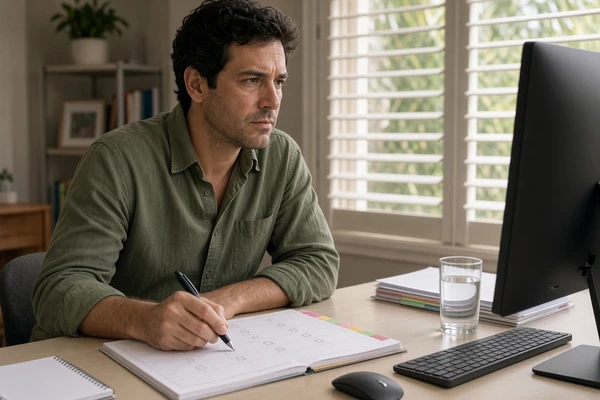
Missed Deadlines: Rule Out ADHD Before You Hire a Coach
Some decision guides send the energized professional who keeps missing deadlines straight to a coach. I’d rule out adult ADHD first. CDC researchers estimate that 15.5 million U.S. adults, or 6.0%, had a current ADHD diagnosis in 2023, and 55.9% of them were diagnosed as adults. About 1 in 3 adults with current ADHD weren’t getting any ADHD treatment.
Missed deadlines alone don’t prove ADHD. A pattern that never lets up deserves testing before you spend months in coaching. APA even publishes practice guidelines for integrating work and career into psychological practice.
An evaluation can separate a habit problem from an attention problem. FC’s psychologists start by gathering background information, then use validated tests and input from family members, teachers or doctors. They write a detailed report and go over the recommendations with you.
A psychological exam here takes 3 to 4 hours of interview and 3 to 4 hours of testing. Our neuropsychological evaluations take the same interview time plus 5 to 6 hours of testing. Dr. Lauren Miller, a clinical and forensic neuropsychologist with nearly 20 years of experience, conducts them.
If testing finds ADHD, the results shape ADHD treatment, and a coach can still help with routines once treatment is in place.

Therapist, Coach or Evaluation First: A 5-Question Check
Work through these in order. The first yes tells you where to start.
- Are you safe right now? If not, call or text 988, or chat at 988lifeline.org. It’s private.
- Is a court case open or likely? Think custody, divorce, criminal charges, an injury claim or immigration. Talk to your attorney, then see a licensed provider, because privilege and records rules apply.
- Have symptoms stuck around? The National Institute of Mental Health says a depression diagnosis requires symptoms most of the day, nearly every day, for at least 2 weeks. If yours have lasted that long, start with a licensed therapist.
- Is there a pattern nobody has checked? Missed deadlines, lost focus or memory slips that keep coming back call for a clinical psychological evaluation first.
- None of the above, and you have a clear goal? A coach is a reasonable pick. Ask about their training, and get the agreement in writing.

Can You See a Therapist and a Life Coach at the Same Time?
Yes, as long as the roles stay separate. Let the therapist handle symptoms and the coach handle goals, and sign a release if you want them to talk to each other.
Coaching has research behind it in the right setting. A 2016 systematic review in PLoS One looked at 52 studies of coaching at work and found it effective. The review also flagged gaps in the research. Its authors excluded studies of life, health and sports coaching, so the results speak to workplace coaching, not life coaching.
If 1 person offers both, ask in writing which service each session is and how it’s documented. Florida’s privilege covers what you say for diagnosis or treatment, so the purpose of your sessions can matter later.
At FC, therapy is led by Jessica T. Aloise, LCSW, a licensed clinical social worker with more than 20 years of experience, under my clinical oversight. Individual sessions run 50 minutes, in person in Jupiter or by secure video anywhere in Florida.

Where to Start
The life coach vs therapist choice gets easier once you answer the court question. If a case is open or likely, or a symptom hasn’t lifted in weeks, start with a licensed provider. Call FC PsychExperts at (561) 870-0411 or send us a message to book licensed therapy or an evaluation. First therapy sessions are usually available within the same week.
Frequently Asked Questions
Life coach vs therapist: which one should I see first?
See a licensed provider first if symptoms have lasted 2 weeks or more. The same goes for a court case or a pattern nobody has checked. The National Institute of Mental Health says a depression diagnosis requires symptoms most of the day, nearly every day, for at least 2 weeks. If none of that applies and you have a clear goal, a coach is a reasonable first step.
Life coach vs therapist in Florida: who needs a license?
Life coaches don’t need one. Florida licenses psychologists under chapter 490 and clinical social workers, marriage and family therapists and mental health counselors under chapter 491. Using a title like “psychotherapist” or “mental health counselor” without the matching license is a first-degree misdemeanor under section 491.012. Plain “therapist” isn’t a protected title, so check the license itself.
Can a life coach diagnose anxiety, depression or ADHD?
No. Diagnosing and treating mental or emotional conditions takes a license in Florida, and coaches don’t hold one for that work. CDC data shows 55.9% of U.S. adults with a current ADHD diagnosis got it as adults, so a licensed evaluation makes sense if attention problems keep showing up.
Is what I tell a life coach privileged in a Florida court?
No. Section 90.503, Florida’s privilege law, covers licensed or certified professionals who diagnose or treat mental health conditions. Treatment staff at certain licensed facilities are covered too. Coaches aren’t on that list, so talk with your attorney before you discuss a pending case with one.
What is the 2 year rule in therapy in Florida?
Nationally, it’s the APA ethics rule that bars psychologists from sex with a former client for at least 2 years after therapy ends. The ACA’s current code sets 5 years for counselors. In Florida, the board that licenses clinical social workers, marriage and family therapists and mental health counselors dropped its fixed 2-year window on March 2, 2026. A person is now presumed to stay a client until the relationship is terminated.
Does life coaching work?
For workplace goals, there’s research support. A 2016 systematic review in PLoS One found coaching effective across 52 studies in organizations, though it flagged gaps in the research. Its authors excluded life coaching studies, so that review can’t tell you whether life coaching works.
Can my therapist also be my life coach?
Some licensed therapists offer both, so ask in writing which service each session is and how it’s documented. Florida’s privilege statute protects what you say for diagnosis or treatment. A session set up as goal coaching may not get that protection in court.

Dr. Cathy Colet, Psy.D., is a Licensed Clinical and Forensic Psychologist and founder of FC PsychExperts in Jupiter, Florida. She provides expert witness testimony across criminal, family, and immigration law, with advanced training in competency evaluations, criminal responsibility, child custody assessments, and VAWA hardship waivers.