
What A Psychoeducational Evaluation In Florida Really Proves
Written By: Michael Vale, Content Writer
Medically Reviewed By: Dr. Cathy Colet, Psy.D., Licensed Psychologist
Last Reviewed: August 3, 2026
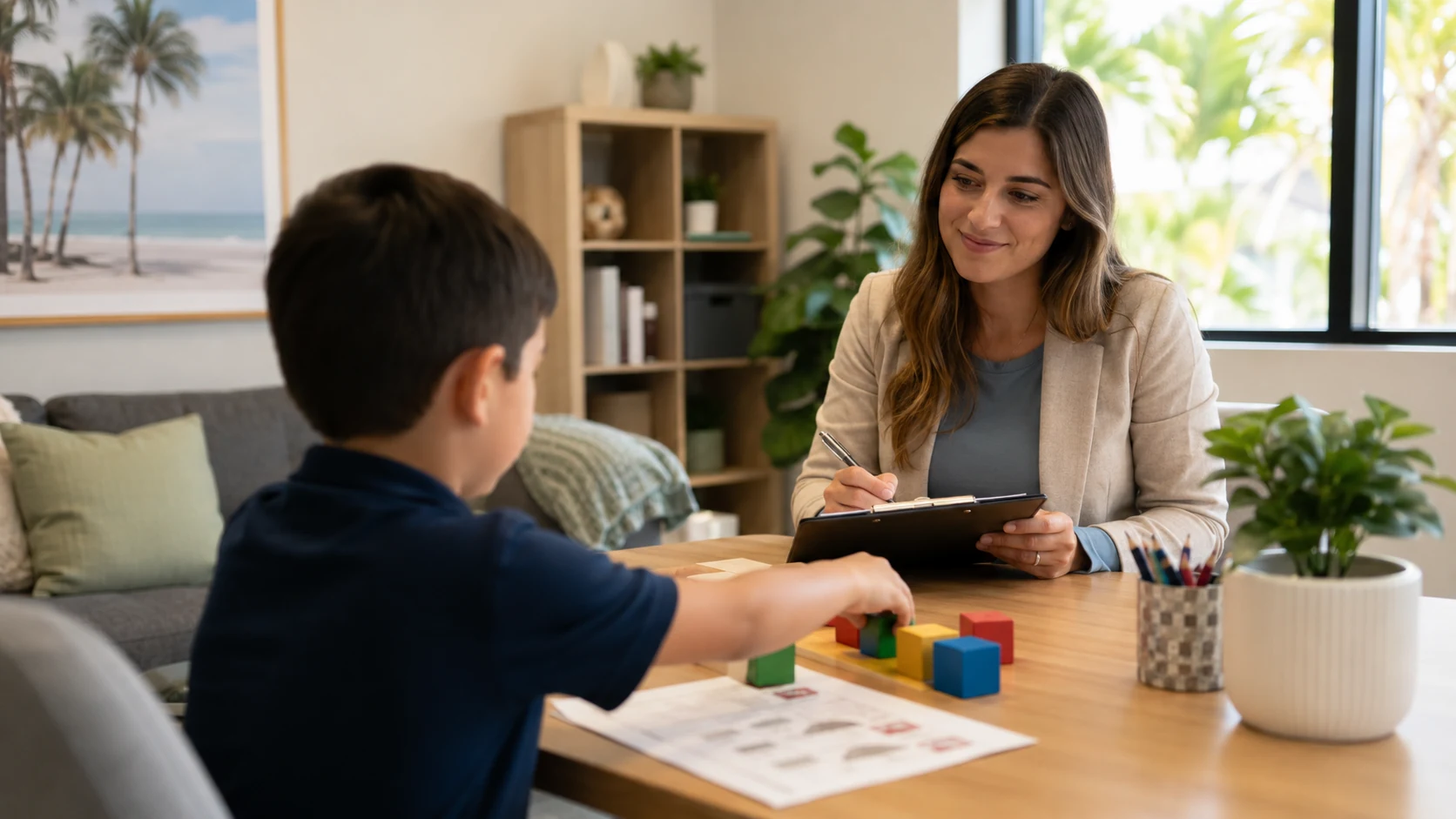
A psychoeducational evaluation in Florida tells you why a student struggles in school and what to do about it. It measures how a child thinks, reads, remembers, and holds attention, then names the cause: a learning disability, ADHD, autism, an anxiety problem, or a mind that needs more challenge, not less. Parents order one for a concrete reason. They want an IEP or 504 plan, a gifted placement, extended time on the SAT, or a second opinion the school has to take seriously.
Now the part most sites skip. In Florida, a private report doesn’t force a public school to do anything. It feeds the school’s own process. Whether it changes that process depends on how defensible the report is.
What Is a Psychoeducational Evaluation?
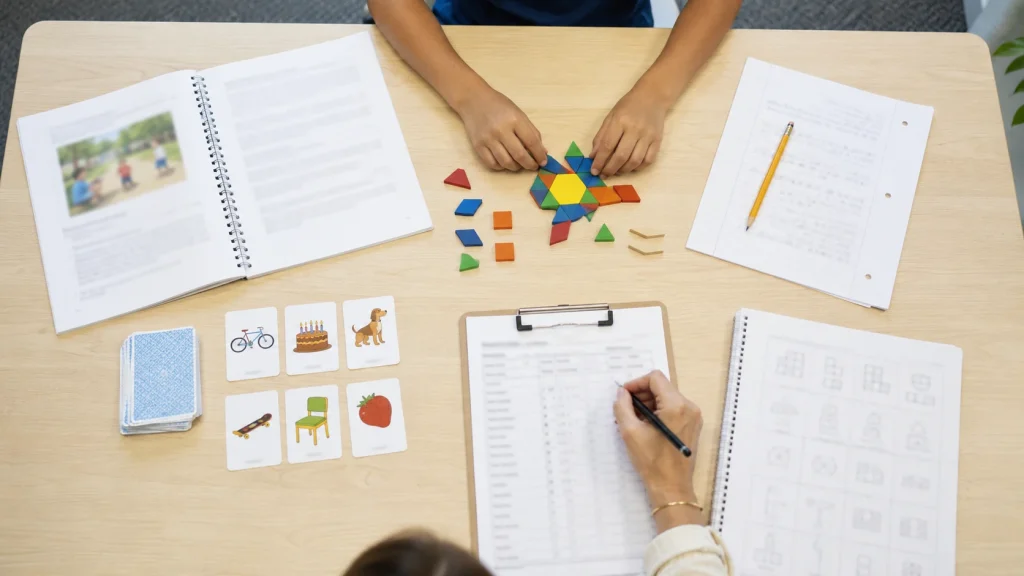
A psychoeducational evaluation is a set of standardized tests that measures a child’s cognitive and academic functioning to explain learning and behavior problems. It assesses attention, memory, language, executive function, and visual-spatial processing, plus academic skills in reading, writing, and math, then connects those results to a diagnosis and to specific school recommendations.
That last step is the point. Scores alone don’t help a parent. The value is the link between a weak score and a plan: what to teach, how to teach it, and which accommodations a child has earned.

Psychoeducational and Neuropsychological Testing Aren’t the Same
Start with a psychoeducational evaluation for school-based problems. Choose a neuropsychological evaluation when there’s a medical or neurological history behind the struggle, like a concussion, a seizure disorder, or a brain injury.
| Psychoeducational | Neuropsychological | |
|---|---|---|
| Best for | Learning, attention, school placement | Brain injury, seizures, complex or overlapping conditions |
| Looks at | Cognitive, academic, emotional and behavioral | Brain-behavior across deeper cognitive domains |
| Common use | IEP, 504, gifted, test accommodations | Medical diagnosis, injury claims, cognitive change |
| Time at FC PsychExperts | to be discussed during the initial consultation | 3 to 4 hours interview plus 5 to 6 hours testing |
Most children with a school concern need the first one. If you’re not sure, a short intake call sorts it out before you spend on the wrong battery.
Will a Private Evaluation Get Your Child an IEP in Florida?
Not on its own. A private psychoeducational evaluation does not obligate a Florida public school to place your child on an IEP. Under the federal IDEA statute, the district must consider an outside evaluation, but it runs its own and applies Florida’s eligibility criteria.
The catch is in how Florida defines the disability. Florida identifies a specific learning disability through a multi-tiered system of supports, not an IQ-achievement gap alone. So a report that only lists scores can stall in an eligibility meeting. A report that documents how the child responded to instruction, ties each finding to Florida’s criteria, and reads like it was written to be questioned is the one that moves the room.
That is the reason a forensic background matters for school testing, not just court testing. Writing to withstand a challenge is the daily job.
How Does Gifted Testing Work in Florida?
Florida sets gifted eligibility by state rule, and it’s stricter than many parents expect. Most districts want evidence of superior intellectual development plus a demonstrated need for the gifted program, recorded on a gifted eligibility matrix. There are two routes: the standard criteria, and an alternative plan, often called Plan B, that widens access for students learning English or from low-income households.
A private IQ test can supply the intellectual piece and speed things up when a school waitlist is long. The district still applies its own matrix.
Scholarships and Test Accommodations an Evaluation Can Support
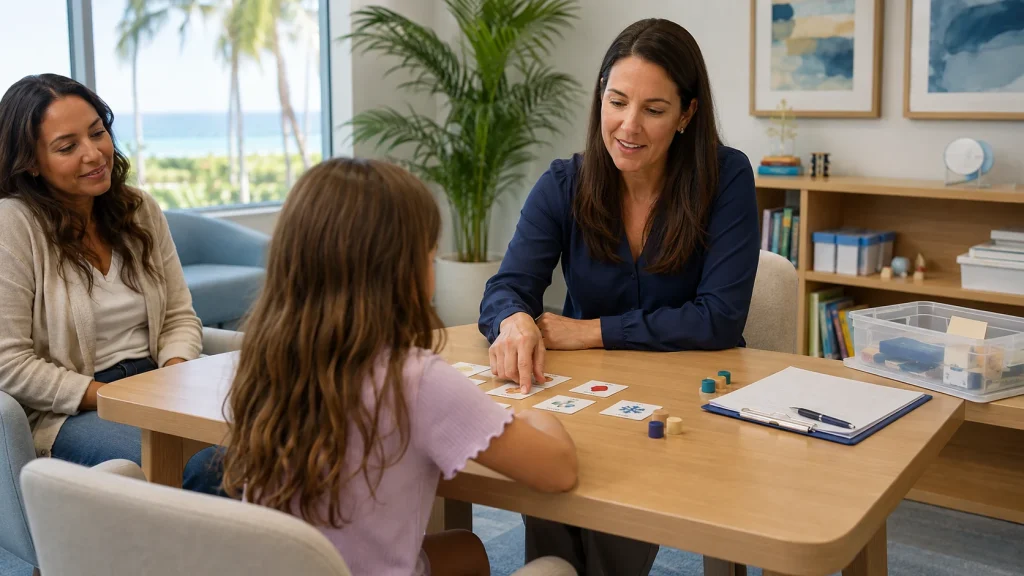
An evaluation can open two doors outside the classroom. First, documented eligibility, such as autism or an intellectual disability, can support an application for the Family Empowerment Scholarship for Students with Unique Abilities, Florida’s education savings account program.
Second, a current evaluation is what the College Board and ACT require before they approve extended time or a separate room for the SAT, AP exams, or the ACT. Each program sets its own documentation age limit and deadline, so confirm them before you schedule testing, not after.
Signs It’s Time to Test
Some patterns are worth testing sooner rather than later. A bright child who reads fine but falls apart over homework. A third grader still guessing at words classmates already decode. A strong talker who can’t spell, whose test scores never match the hours studied. Trouble finishing timed work. Losing the thread of long projects. Constant lost papers.
If a teacher has flagged any of these and a semester of extra help hasn’t moved it, that’s the moment to test. Waiting another year rarely makes the gap smaller.

What Testing Looks Like at Our Jupiter and Fort Lauderdale Offices
Testing happens in person at our Jupiter or Fort Lauderdale office, serving families across Palm Beach and Broward counties. We start with a history intake covering medical, developmental, and school background, add teacher input, then run the battery across attention, memory, language, executive function, and visual-spatial processing, with academic testing and an emotional and behavioral screen. You leave with a written report that names findings and lists specific recommendations for school, home, and accommodations.
FC PsychExperts has evaluated for Florida courts since 2008 under License PY9058, and Dr. Lauren Miller is a forensic neuropsychologist. That training is why our psychoeducational testing for children produces reports written to hold up when a school, a testing agency, or a court questions them.
A psychoeducational evaluation in Florida is only worth what you can do with it. That means a report the school can’t wave away. Call (561) 870-0411 or request an appointment to get a written estimate before you commit.
Frequently Asked Questions
How much does a psychoeducational evaluation in Florida cost?
Most Florida providers charge a single flat fee that covers intake, testing, scoring, the report, and a feedback meeting, and you usually pay out of pocket because private testing is treated as educational, not medical. At FC PsychExperts, you get a written estimate before testing begins.
Will a private psychoeducational evaluation get my child an IEP in Florida?
Not by itself. A Florida public school must consider a private report, but it runs its own evaluation and applies state eligibility criteria through a multi-tiered system of supports. A report that ties findings to Florida’s criteria and documents response to instruction carries more weight than scores alone.
What is the difference between a psychoeducational and a neuropsychological evaluation?
A psychoeducational evaluation targets learning, attention, and school placement. A neuropsychological evaluation goes deeper into brain-behavior questions and suits medical or neurological histories like concussion or seizures. At FC PsychExperts, a neuropsychological evaluation runs 3 to 4 hours of interview plus 5 to 6 hours of testing.
How does gifted testing work in Florida?
Florida sets gifted eligibility by state rule, and most districts require evidence of superior intellectual development plus a documented need, recorded on a gifted matrix. A private IQ test can supply the intellectual piece, though the district still applies its own matrix.
How long does a psychoeducational evaluation take?
Testing is spread across intake, one or more testing sessions, and a feedback meeting where you receive the written report.
What ages do you test?
FC PsychExperts provides psychoeducational testing for children and teens at its Jupiter and Fort Lauderdale offices.
Where do you offer psychoeducational evaluation in Florida?
In person at two offices: Jupiter (210 Jupiter Lakes Blvd, Unit 4-201) and Fort Lauderdale (1451 W. Cypress Creek Road, Suite 300), serving Palm Beach and Broward county families. Call (561) 870-0411 to start.

Dr. Cathy Colet, Psy.D., is a Licensed Clinical and Forensic Psychologist and founder of FC PsychExperts in Jupiter, Florida. She provides expert witness testimony across criminal, family, and immigration law, with advanced training in competency evaluations, criminal responsibility, child custody assessments, and VAWA hardship waivers.