

Psychoeducational Testing In Florida, School Vs Private
Written By: Michael Vale, Content Writer
Medically Reviewed By: Dr. Cathy Colet, Psy.D., Licensed Psychologist
Last Reviewed: July 30, 2026
Most parents are told they need a private evaluation to win their teen extra time on the SAT or ACT. For a child who already has an IEP or 504 plan, that is usually not true. Both testing agencies accept the school’s plan for the same accommodations. So where does private psychoeducational testing actually earn its cost? In the diagnosis, the detail, and the places a school report cannot reach. A school evaluation answers one question: does your child qualify for services? Private testing answers a harder one. What is actually going on, how serious is it, and what should you do about it?
Those are two different jobs. Parents get stuck because the two evaluations look alike from the outside. Both involve a psychologist. Both produce a report. They are not the same thing, and the difference decides what help your child gets.
What is Psychoeducational Testing?
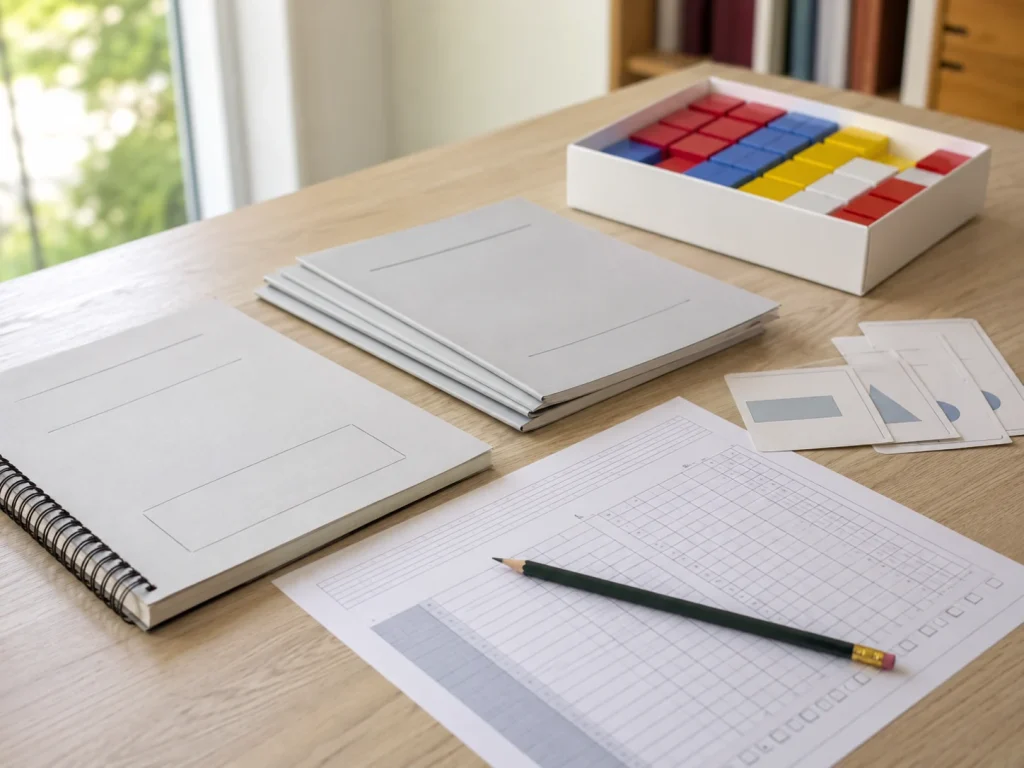
Psychoeducational testing is a set of standardized assessments that measure how a child thinks, learns, and processes information. It looks at cognitive ability, academic skills, attention, memory, and language, then explains why a student struggles in school. A licensed psychologist gives the tests, scores them, and writes a report with a diagnosis and specific recommendations.
A school does a version of this too. The purpose is where they split.
Why a School Evaluation only Checks Eligibility
A school evaluation exists to answer a legal question, not a clinical one: does this child qualify for special education under federal and state rules? In Florida, that runs through Exceptional Student Education (ESE) and the Specific Learning Disabilities rule, Florida Administrative Code 6A-6.03018. The team looks for a qualifying disability that hurts access to the general curriculum and calls for specially designed instruction. If your child fits, the school labels it a Specific Learning Disability in reading, or notes a pattern of weakness.
You may never see the word “dyslexia” in that report. Florida’s own rule lists dyslexia as an example of a learning disability, yet schools tend to stay with the umbrella label. That is not carelessness. School psychologists carry heavy caseloads and work inside district budgets and timelines. They test what the eligibility decision needs, and they stop there. It is a system limit, not a skill gap.
That limit creates blind spots. Phonological processing, rapid naming, orthographic processing, working memory, processing speed. These are the exact areas that tell you what kind of reading problem a child has and how severe it is. If a subtest will not change the yes-or-no on services, it often does not get done.
What a Private Psychoeducational Evaluation Adds
A private evaluation is built to diagnose, not just to qualify. The psychologist tests the full picture: cognitive ability, academic skills, attention, memory, language, processing, and emotional functioning. FC PsychExperts assesses these areas in its psychoeducational testing for children and teens, then names the condition and its subtype.
The report reads differently, too. A school report ends with a status: the student qualifies for services in reading. A private report explains which skills are impaired, why, and what to do first, whether or not the district offers that program. It can also catch what a single-lens school test misses. Reading trouble and attention trouble travel together more than parents expect. In children diagnosed with dyslexia, roughly 30 to 40 percent also meet criteria for ADHD. A school might address one and leave the other alone. A private evaluation looks for both, along with a neuropsychological evaluation when the picture is more tangled.
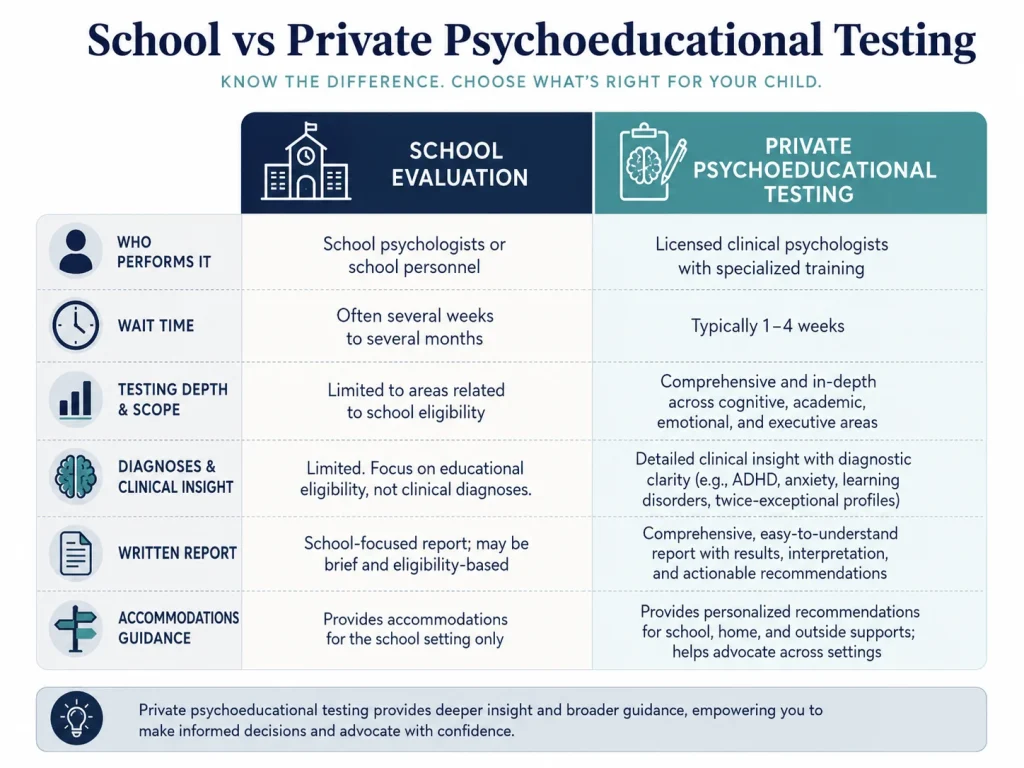
School vs Private Psychoeducational Testing, side by side
Here is the short comparison parents ask for. The gap is widest on diagnosis, recommendations, and where the report is accepted.
| What matters | School evaluation | Private psychoeducational testing |
|---|---|---|
| Main purpose | Decide eligibility for services under IDEA and Florida ESE | Diagnose the problem, measure severity, guide treatment |
| Cost | Free | Out of pocket, fee-for-service; FC provides an itemized bill you can submit for insurance reimbursement |
| What gets tested | Only what the eligibility decision needs | Cognition, academics, attention, memory, language, processing, emotion |
| Says “dyslexia”? | Often uses “Specific Learning Disability” instead | Yes, names the condition and subtype |
| Recommendations | Programs the district already offers | Specific interventions, regardless of school resources |
| SAT and ACT accommodations | A current IEP or 504 is usually accepted on its own | Needed mainly when no IEP or 504 exists |
| College disability services | An IEP alone is often not enough | Usually required, and must be recent |
| Timeline | Bound by state timelines | Set by the practice; ask at your consultation |
Do you need Private Testing for SAT or ACT Accommodations?
Usually not, if your child already has a school plan. This is the myth that costs families the most money. ACT’s accommodations policy states that for a student with a current IEP or 504 authorizing the accommodation, a copy of that plan is enough to show eligibility and need. The College Board treats the school plan as the most common accepted path to SAT accommodations, and often the plan alone will do. You still have to apply, and not every school accommodation transfers, but the school’s documentation is the starting point, not a dead end.
So when does the SAT or ACT actually need private testing? When there is no IEP or 504 to point to. If the school found your child ineligible, or you never went through that process, the testing agencies want a diagnosis from a qualified professional. That is a real reason to test privately. “Your school report will be rejected” is not.
Where Private Testing Actually Changes Things
College is where the school label loses its power. University disability offices set their own rules under the ADA, and most will not accept an IEP by itself. They ask for a full evaluation, usually completed within the past three years, that documents the diagnosis and the current impact. A high school plan written years earlier, with thin testing behind it, does not clear that bar. This is the single most common place families get caught, and it is the strongest honest argument for testing privately before senior year.
The same holds for workplace accommodations and for guiding private tutoring. A precise diagnosis tells a structured literacy tutor exactly which skills to target first. A school eligibility label does not.
What Florida’s Dyslexia Law Means for your Family
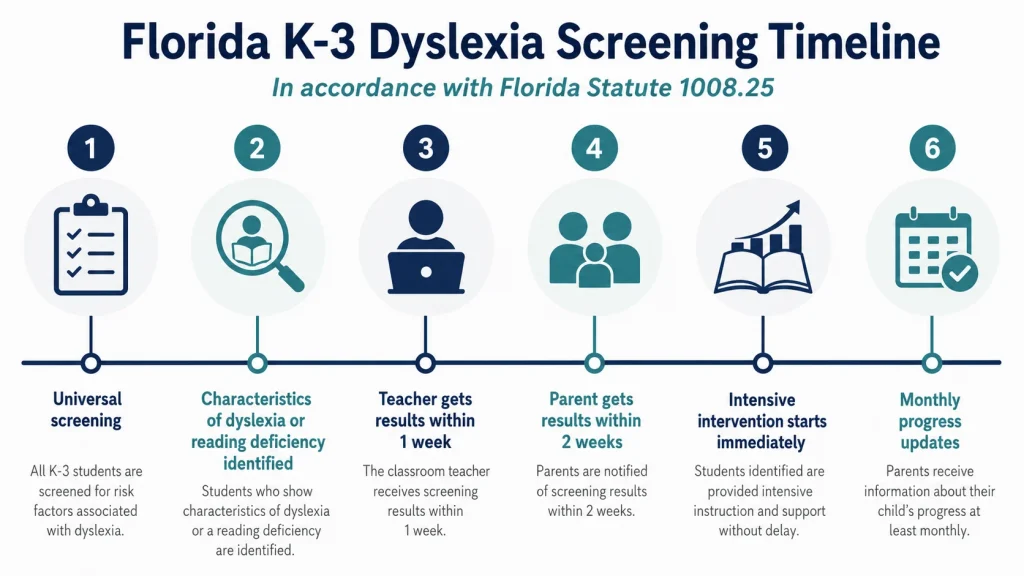
Florida gives a private dyslexia diagnosis real teeth, and most parents have no idea. Under Florida Statute 1008.25, schools must screen K through 3 students for characteristics of dyslexia, share results with parents within two weeks, and start intensive reading intervention right away. Here is the part that matters for private testing: the law says a school may not wait until it finishes its own evaluation to start help for a student whose parent submits documentation from a professional licensed under Chapter 490 showing a dyslexia diagnosis.
Read that again. A private diagnosis from a Chapter 490 licensed psychologist, the license Dr. Cathy Colet holds, can trigger intervention now instead of after a months-long school process. That is an advantage a free school evaluation cannot give you, and it is written into Florida law.
When is Private Psychoeducational Testing worth it?
When waiting has a cost. Parents tend to pursue private psychoeducational testing at four moments: the school says a child does not qualify despite obvious struggle, school services are not producing progress, college and its accommodations are getting close, or several problems seem tangled and nobody has sorted them out. Testing early, when you first suspect something, can save years of the wrong intervention.
Cost is a fair worry. Private testing is out of pocket, and FC PsychExperts is a fee-for-service practice that gives you an itemized bill to submit to your insurer for possible reimbursement. What you buy is not a second opinion for its own sake. It is a diagnosis, a severity level, and a plan, plus a report built to a forensic evidence standard because of the practice’s court background, which means it holds up with schools, testing agencies, and, if it ever comes to it, attorneys. If you want that clarity, book a psychoeducational testing consultation and start with the question a school evaluation will never answer: what is actually going on, and what do we do first?
Frequently asked questions
What is the difference between a school and a private psychoeducational evaluation?
A school evaluation decides whether your child qualifies for special education services under Florida ESE rules. Private psychoeducational testing diagnoses the underlying problem, measures how severe it is, and gives a specific intervention plan. One answers eligibility; the other answers what to do.
Do I need a private evaluation to get SAT or ACT accommodations?
Usually not, if your child already has an IEP or 504 plan. ACT accepts a current plan as sufficient for the same accommodations, and the College Board treats it as the most common accepted pathway. You mainly need private testing for the SAT or ACT when no school plan exists.
Will a school report say my child has dyslexia?
Often not. Florida’s rule lists dyslexia as a type of Specific Learning Disability, but schools usually record the broader Specific Learning Disability label instead of the word dyslexia. A private evaluation names the condition directly.
Is an IEP enough for college accommodations?
Usually not. Most university disability offices require a full evaluation completed within the past three years, not just a high school IEP. This is a common reason families pursue private psychoeducational testing before college.
Does a private dyslexia diagnosis change what my Florida school must do?
Yes. Under Florida Statute 1008.25, a school cannot wait to finish its own evaluation before starting reading intervention once a parent submits a dyslexia diagnosis from a Chapter 490 licensed professional. A private diagnosis can move help forward faster.
How much does private psychoeducational testing cost, and does insurance cover it?
FC PsychExperts is a fee-for-service practice and provides an itemized bill you can submit to your insurer for possible reimbursement. Coverage varies by plan.
How are dyslexia and ADHD related?
They overlap often. Research finds that roughly 30 to 40 percent of children diagnosed with dyslexia also meet criteria for ADHD. A private evaluation screens for both, so one condition is not treated while the other is missed.

Dr. Cathy Colet, Psy.D., is a Licensed Clinical and Forensic Psychologist and founder of FC PsychExperts in Jupiter, Florida. She provides expert witness testimony across criminal, family, and immigration law, with advanced training in competency evaluations, criminal responsibility, child custody assessments, and VAWA hardship waivers.